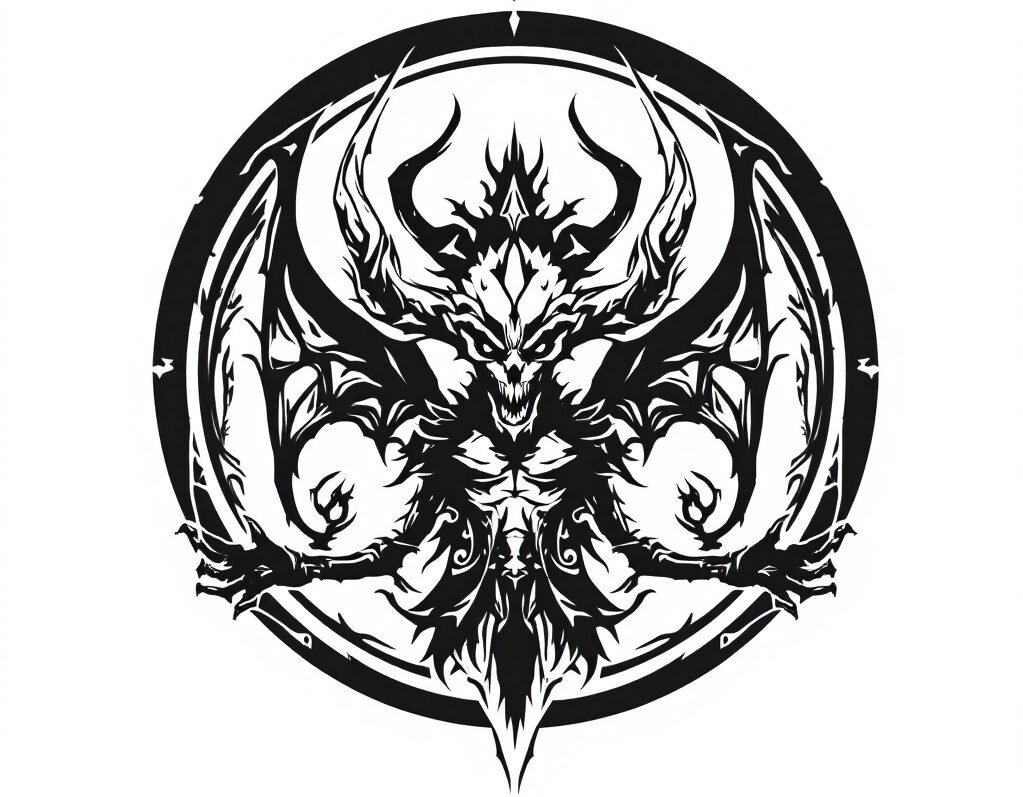
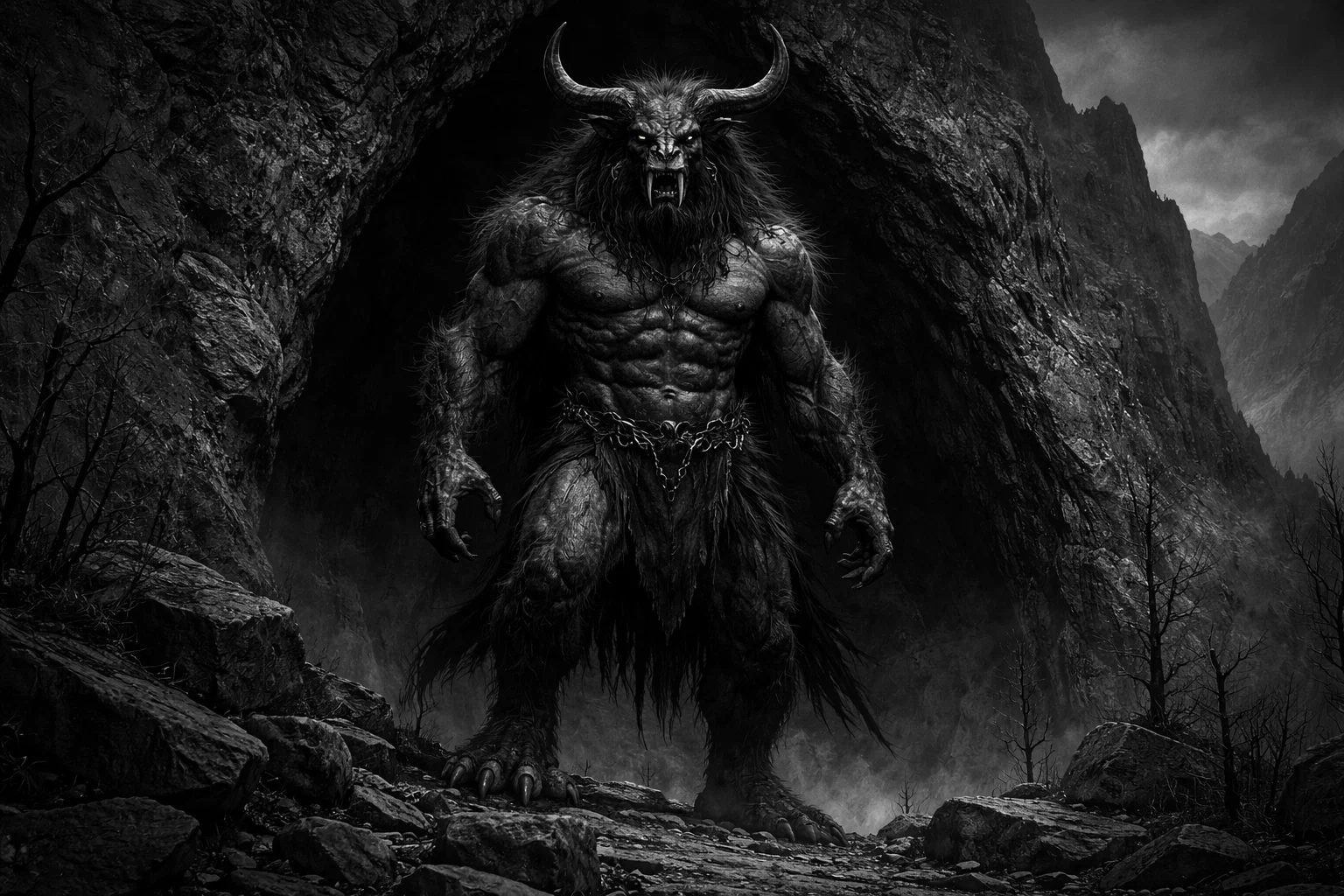

The Dīv (plural: dīvān) is a class of supernatural entity originating in ancient Persian mythology and later integrated into Islamic folklore. They are portrayed as monstrous giants or demons, with great physical strength and magical abilities.
They are usually shown as evil beings who live in wild, remote places. In stories, they often serve as the heroes’ main enemies and symbolize chaos and moral darkness.
Summary
Key Takeaways
| Attribute | Details |
| Names | Dīv (New Persian), Daēva (Avestan), Dew (Pahlavi), Daiva (Old Persian) |
| Type | Giant/Demonic Jinn (comparable to Ifrit in strength) |
| Title | Mazandarani demons, Ahrimanic creatures |
| Gender | Predominantly masculine; feminine equivalents are known as dīve-zan |
| Servitors | Lesser demons and sorcerers |
| Superior Jinn | Ahriman (Angra Mainyu) in Zoroastrianism; Iblis in some Islamic contexts |
| Powers | Sorcery, shape-shifting, immense physical strength, creating storms |
| Appearance | Giant anthropomorphic figures with horns, fangs, and animal tails |
| Etymology | Derived from the Proto-Indo-European ‘deiwos’ (shining one/god) |
| Associated Figures | Rostam, Kayumars, Tahmuras, Ahriman, Solomon |
| Weaknesses | Physical decapitation, specialized talismans, names of God |
| Opposing Holy Figure | Ahura Mazda, Archangel Sraosha, Prophet Solomon |
| Social Structure or Tribe | Organized into warring tribes or kingdoms (e.g., the Dīvs of Mazandaran) |
| Followers/Tribe Size | Varies; often command legions of thousands in epic literature |
| Primary Sources | Avesta, Shahnameh, Bundahishn, Tarikh al-Tabari, Thousand and One Nights |
Who or What is a Dīv?
The Dīv is a supernatural creature that is part demon and part giant. In Persian stories, they are seen as the children or servants of Ahriman, who represents evil. Unlike some Jinn, who can be neutral or good, the dīv is almost always hostile to people and the divine order.
Dīvs are not just spirits; they have physical bodies and can fight humans directly. In later Islamic stories, they are grouped with the Jinn, especially the stronger and more rebellious types like the Ifrit or Marid. Dīvs are known for being very smart, speaking human languages, and using dark magic.
UNLOCK THE FORBIDDEN KNOWLEDGE OF DEMONS. Limited-Time: Up to 29% OFF!
The Encyclopedia of Demons & Demonology 400+ entries • Real history • Exorcisms & Ancient Evils • Possession • Terrifying photos. This is Rosemary Ellen Guiley’s masterpiece of the occult.
Dīv Meaning
The word dīv has an interesting history in Indo-European languages. It comes from the Proto-Indo-European root *deiwos, which meant “celestial” or “shining one.” This root also gave us the Latin word deus and the Sanskrit deva.
In Iran, though, the meaning changed, probably because of Zoroaster’s religious reforms. While Indian devas remained gods, the Iranian daēvas were seen as false gods and later as demons.
In Old Persian, daiva referred to gods who were not to be worshipped, as shown in the “Daiva Inscription” of Xerxes I. In Middle Persian, the word changed to dew and came to mean a demon. In New Persian, it became dīv.
Over time, the word changed from a general term for rejected gods to a specific name for giant monsters living on the edges of the civilized world. This change shows the shift from many gods to Zoroastrian dualism, where the dīv became the opposite of the yazatas, or holy spirits.
How to Pronounce “Dīv” in English
Dīv is pronounced like the English word “deev,” which rhymes with “sleeves.” The “i” is a long vowel. The plural, dīvān, is pronounced “dee-VAHN.”
What Does a Dīv Look Like?
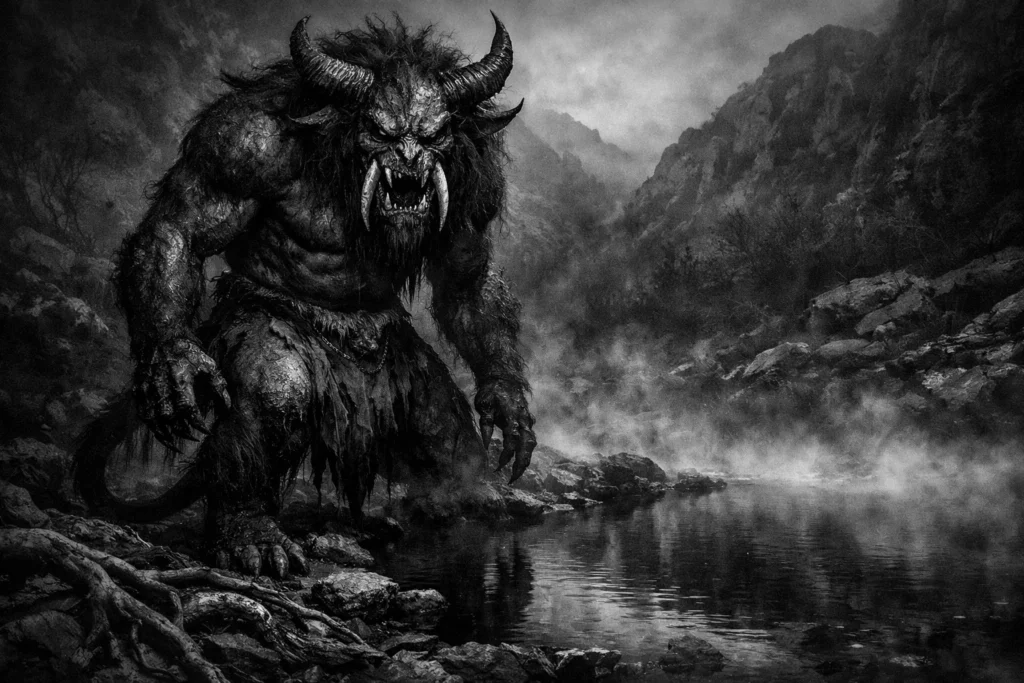
Dīvs are usually described as huge, ugly giants with both human and animal features. Most stories and Persian art show them with horns, often like a goat or bull, and with long fangs or tusks. Their skin can be black, white, red, or blue, and is frequently covered in thick, rough hair.
Besides being large, dīvs often have claws on their hands and feet and tails like animals. Some stories say they have feet that face backward or more than one head, but the single-headed, horned type is most common in the Shahnameh.
Dīvs usually wear little clothing, sometimes just animal skins or simple loincloths. They are often shown holding big clubs or huge rocks as weapons. Their eyes are described as glowing or looking predatory, which adds to their supernatural image.
You may also enjoy:
Setcheh: Egypt’s Soul-Stealing Ancient Demon
November 11, 2025
Bali: The Benevolent Asura King of Hindu Mythology
October 10, 2025
Demon Alastor: The Grand Executioner of Hell
November 17, 2025
Vritra: The Dragon Who Swallowed the Sky in Hindu Mythology
October 7, 2025
Who Is Aka Manto, Japan’s Terrifying Red-Cloaked Yōkai?
October 24, 2025
Andhaka: The Blind Demon Born From Cosmic Darkness
February 6, 2026
Origins
The dīv comes from the ancient Indo-Iranian religious period, before Zoroastrianism. At first, they were probably nature or sky gods. When Zoroastrianism appeared around 1000 BCE, these beings were turned into demons. The Avesta, Zoroastrianism’s holy book, calls the daēvas the “seed of the Evil Mind” who chose to follow the Path of Deceit (Druj).
In stories from before Islam, people believed dīvs lived on earth before humans were created. The Bundahishn says Ahriman made them to fight against the creations of Ahura Mazda. When these stories became part of Islamic tradition, dīvs were seen as rebellious Jinn who refused to obey God.
Persian historians and poets, like Ferdowsi in the Shahnameh, kept these old stories alive by describing dīvs as living in the wild lands of Mazandaran and fighting the early Pishdadian kings. This mixed the idea of a demon with that of a giant from folklore.
Was Dīv Ever Mentioned in the Quran or Hadith?
The word “dīv” does not appear in the Arabic Quran or Hadith because it is a Persian word. Still, Islamic teachings include similar beings under the names Jinn, Shayatin, or Ifrit.
In Persian translations and commentaries on the Quran, like the Tarikh al-Tabari, the Arabic words Jinn or Shaytan are often translated as dīv to help Persian readers understand the text.
1,000+ SPIRITS, GODS & GODDESSES AWAITING YOUR CALL. Limited-Time: Up to 49% OFF!
The ultimate global spirit encyclopedia – 2,000+ entries from every culture on Earth. Fairies • Djinn • Demons • Loa • Angels • Deities • Ancestors Real names • True offerings • Ancient rituals that actually work. Judika Illes’ legendary masterwork – the one book every serious witch, mage, and spirit-worker owns.
Dīv in Other Texts
Dīvs are found throughout Persian epic stories and Zoroastrian religious texts. The best-known source is the Shahnameh (The Book of Kings), where they are the heroes’ main enemies.
| Source | Quote |
| Shahnameh (The White Div Episode) | “The White Div, like a mountain in his bulk, his hair like the fleece of a white sheep, his head like a huge dome.” |
| Avesta (Vendidad 10.9) | “I confess myself a worshipper of Mazda, a foe to the Daevas, a devoted follower of the Law of Zarathustra.” |
| Bundahishn (28.1) | “The evil spirit first created the Council of the Daevas, then he created the other Daevas.” |
Powers and Abilities
Dīvs are much stronger than most Jinn or humans. Their power is often compared to that of an Ifrit. They can change the land itself and survive injuries that would kill ordinary people. Unlike weaker spirits who use whispers, dīvs rely on brute force and powerful magic.
- Immense Strength: Capable of uprooting trees and throwing mountain peaks.
- Weather Manipulation: They can summon localized storms, thick fogs, and sudden frosts to disorient armies.
- Metamorphosis: The ability to take the form of beautiful humans, animals (often dragons or lions), or even inanimate objects.
- Invisibility: They can vanish from human sight at will, allowing for ambushes.
- Stone-Hard Skin: Their hide is often resistant to standard iron weapons, requiring enchanted blades or divine intervention to pierce.
- Sorcery (Jādu): Mastery of illusions and the ability to cast sleep spells or enchantments on entire cities.
Influence on Humans and Possession
Dīvs mainly harm humans from the outside, but they are also linked to moral corruption. In Zoroastrian belief, certain dīvs stand for bad traits: Aēshma for Wrath, Azi for Greed, and Nāñhaiθya for Discontent. If someone gives in to these vices, they are said to be under that demon’s influence.
When it comes to possession, dīvs are believed to cause sudden madness, seizures, or paralysis. Unlike the quiet whispers of the Waswas, a dīv’s presence is often shown by changes in the victim’s surroundings, like strange noises, bad smells, or objects floating in the air. Dīvs are also said to kidnap people, especially beautiful women or skilled craftsmen, to serve them in their mountain homes.
You may also enjoy:
Amaymon: The Infernal King Who Commands Death and Decay
November 17, 2025
Gandharva: God, Spirit, or Demon?
November 13, 2025
Apophis: The Great Serpent of Egyptian Chaos
November 11, 2025
What Is the Akkorokamui, Japan’s Colossal Sea Monster?
November 14, 2025
Jikininki: The Japanese Ghost That Feeds on Human Corpses
February 9, 2026
Who Is Aka Manto, Japan’s Terrifying Red-Cloaked Yōkai?
October 24, 2025
Protection and Exorcism Methods
Old remedies against dīvs use both physical and spiritual barriers. Since dīvs have bodies, stories often mention enchanted weapons made at special astrological times. Iron is a main material for protection, used as nails in the ground or daggers under pillows.
Amulets and talismans with the “Great Name of God” or the Seal of Solomon are thought to bind or drive away dīvs. In Zoroastrian tradition, people use the Sraosha Baj prayer and burn esfand (wild rue) for protection.
Folktales also say that dīvs dislike salt and garlic. To drive out a dīv, a religious leader usually recites special protective verses, such as the Ayat al-Kursi or the Mu’awwidhatayn, to make the spirit appear and then depart.
Dīv Myths, Legends, and Stories
The Seven Labors of Rostam and the White Div
The land of Mazandaran was a realm of darkness, ruled by the Div-e Sepid, or the White Div, a creature of such immense power that it had struck the entire army of King Kay Kavus with blindness. The hero Rostam, mounted on his faithful steed Rakhsh, was forced to undergo seven harrowing labors to reach the demon’s lair and secure a cure for his king.
After reaching the cavern of the White Div, Rostam found a place of absolute shadow, smelling of sulfur and ancient decay. As he stepped inside, the Div-e Sepid rose like a mountain of snow-white flesh, his horns scraping the ceiling of the cave. The demon roared with a sound that shook the earth, mocking the mortal who dared enter his domain.
The two engaged in a titanic struggle that transcended mere combat; it was a collision of cosmic forces. They wrestled until their blood turned the cavern floor into a mire. The White Div used his massive weight to attempt to crush Rostam, but the hero, calling on his divine strength, managed to lift the giant and dash him against the stone walls.
While the demon was dazed, Rostam drew his dagger and severed the creature’s leg. Even maimed, the White Div fought with savage fury until Rostam finally plunged his blade into the demon’s heart. As the life faded from the massive entity, Rostam filled his helmet with the Div’s liver blood.
He returned to the blinded Persian soldiers and, as instructed by the sage Zal, rubbed the blood on their eyes. The dark veil lifted instantly, restoring their sight through the potent, albeit gruesome, essence of the fallen demon king.
Tahmuras, the Binder of Demons
In the early ages of the world, King Tahmuras sat on the throne with a singular ambition: to purge the world of the chaos sown by the spawn of Ahriman. Through asceticism and divine favor, Tahmuras gained the power to command the supernatural. He did not merely hunt the dīvān; he bound them through the power of secret incantations.
The most legendary of his feats involved the King of the Demons, Ahriman himself. Tahmuras fashioned a magical bridle and, through his indomitable will, forced the primary spirit of evil to take the form of a black horse. For thirty years, Tahmuras rode the prince of darkness across the world, using this humiliation to suppress the demonic uprising.
However, the dīvān of the mountains gathered in a great host to liberate their master. They appeared from the earth’s crevices, a terrifying army of horned and taloned monsters holding stone clubs.
Tahmuras met them on the battlefield, his mace glowing with celestial light. He struck down the demons by the thousands until the remaining dīvān fell to their knees and pleaded for mercy. They offered a ransom that Tahmuras could not refuse—they promised to reveal a secret hidden from humanity since the dawn of time.
Once spared, the demons fulfilled their vow by teaching the King the art of the written word. They showed him how to scrape symbols into clay and skin, revealing nearly thirty distinct scripts, including those of the Persians, Greeks, and Indians. As a result, the very tools of human civilization and history were ironically a gift of survival from the captive dīvān.
WHAT SATAN DOES NOT WANT YOU TO KNOW Limited-Time: Up to 30% OFF!
Straight from Rome’s chief exorcist of 30 years – Fr. Gabriele Amorth. Real cases of possession, oppression, and diabolic infestation exposed. How demons attack today • Signs of demonic influence • Weapons that actually work • The terrifying truth the devil fights to keep hidden • Possession • Infestation • True spiritual warfare.
The Div Akvan and the Choice of the Sea
A mysterious, shimmering wild ass began to haunt the royal pastures, luring away the finest stallions of the Persian court. Rostam, sensing the work of a dīv, went out to confront the beast. Each time he attempted to throw a lasso over the golden-maned creature, it vanished into a puff of smoke, only to reappear on a distant ridge, mocking him.
Exhausted by the chase, Rostam lay down to rest near a spring. As he slept, the golden ass transformed into the monstrous Div Akvan, a demon with a head like an elephant and hair like a forest of thorns. With his massive claws, Akvan dug into the earth around the sleeping hero, lifting the entire plot of land into the sky.
Rostam awoke to find himself suspended thousands of feet in the air, held in the clutches of the grinning demon. Akvan, wanting to prolong the hero’s terror, offered him a choice: “Shall I cast you upon the mountain peaks to be eaten by eagles, or shall I drop you into the churning depths of the ocean?” Rostam knew that a dīv always acts in contradiction to a human’s desire.
He cried out, “Whatever you do, do not throw me into the sea! I fear the drowning depths and the monsters of the water; I would much rather perish on the solid stone of the mountains!” Hearing this, Akvan laughed and immediately dropped Rostam into the middle of the ocean.
This was Rostam’s gambit; he was a master swimmer. He fought off sea monsters with his sword, reached the shore, and eventually tracked Akvan back to his lair. There, he surprised the demon and used his heavy mace to shatter the creature’s skull, ending the threat of the shapeshifter forever.
You may also enjoy:
Who Is Taṇhā, the Seductive Demon of Craving in Buddhist Mythology?
October 15, 2025
Tarakasura: The Dark Demon Who Ruled Hell on Earth
December 4, 2025
Bali: The Benevolent Asura King of Hindu Mythology
October 10, 2025
Barbas: The Lion Demon Who Spreads Disease
March 3, 2026
Andhaka: The Blind Demon Born From Cosmic Darkness
February 6, 2026
Lamia: The Queen Cursed to Devour the Children of Others
January 7, 2026
The Div of Mazandaran and the King’s Hubris
King Kay Kavus, lured by the songs of a disguised dīv musician, became obsessed with conquering the enchanted province of Mazandaran, a land known to be the stronghold of the demon race. Despite the warnings of his generals that no mortal king could hold a land ruled by sorcery, Kavus led his army into the mountain passes.
As they entered the heart of the valley, the sky turned the color of bruised fruit, and a gargantuan dīv general known as Arzhang appeared on the horizon. He did not attack with swords, but with the elements themselves. He summoned a storm of fire and stones that rained down on the Persian camp, followed by a magical mist that turned the day into the deepest night.
The soldiers found themselves trapped in a sensory void. Within this darkness, the dīvān moved like shadows, plucking men from their horses. By the time the mist cleared, Kay Kavus and his entire retinue were captives in a lightless fortress, their eyes clouded by a demonic curse that rendered them sightless in the presence of any light.
They remained in this wretched state, a perfect example to the dangers of encroaching on the territories of the dīvān, until the arrival of Rostam.
Dīv vs Other Jinn
| Jinn Name | Associated Traits/Influence | Rank/Origin | Key Traits/Powers |
| Ifrit | Malice and rebellion | High-ranking; Quranic | Great strength, fire-based |
| Marid | Arrogance and water | Elite; Arabian folklore | Shape-shifting, ocean-dwelling |
| Ghul | Gluttony/Cannibalism | Scavenger; Arabian lore | Feeds on dead, haunts deserts |
| Si’lat | Deception/Seduction | Forest spirit; Folklore | Expert mimicry, feminine form |
| Palis | Drainage/Weakness | Foot-licker; Persian lore | Licks soles of feet to drink blood |
| Qareen | Constant temptation | Personal companion; Hadith | Whispers evil thoughts to humans |
| Hinn | Lowly/Animalistic | Weakest class; Folklore | Often appear as black dogs |
| Shiqq | Physical deformity | Lower demon; Pre-Islamic | Half-human appearance, attacks travelers |
| Nasnas | Chaos/Terror | Hybrid; Folklore | Hopping entities with half-heads |
| Zar | Sickness/Trance | Possession spirit; African/Persian | Causes chronic illnesses |
| Shaytan | Pure disobedience | Follower of Iblis; Quranic | Incite sin and disbelief |
Position Among Jinn
Among supernatural beings, dīvs are at the top for physical strength. In Persian stories, they are seen as the nobility of the demon world. Unlike Jinn, who are often alone or wander, dīvān are said to have kings, armies, and strong castles.
Dīvs have a complicated relationship with other Jinn. Later Islamic texts often group them together, but old Persian stories say dīvs see themselves as better than the smaller, lighter Jinn. Dīvs act as Ahriman’s generals and enforcers. In tales about the Prophet Solomon, dīvān are among the hardest spirits to control, often requiring his magic ring to work, such as building the Temple or diving for pearls.
Mystical Correspondences
| Attribute | Details |
| Planet | Saturn (associated with darkness and obstacles) |
| Zodiac Sign | Capricorn (earthly, cold, and rigid structures) |
| Element | Earth (specifically cold, mountain stone) |
| Direction | North (the direction of darkness in Persian myth) |
| Color | Black, Indigo, or Dirty White |
| Number | 7 (reflecting the 7 arch-demons or 7 labors) |
| Crystal/Mineral | Black Onyx or Iron Ore |
| Metal | Lead (heavy and dull) |
| Herb/Plant | Aconite (Monkshood) and Mandrake |
| Animal | Elephant, Bull, or Serpent |
The dīv’s mystical traits highlight their heavy, earthbound, and blocking nature. They are linked to Saturn, showing their role as “dwellers of the depths” and their connection to old curses and slow decay. In ancient Persian beliefs, the North is their main direction, as it was seen as the gate to the underworld, where cold winds and demons came from.
These links show that dīvs are seen as heavy and solid beings. Unlike the fiery desert spirits, dīvs are cold and stony, like the tough peaks of the Alborz mountains. The number 7 connects them to the planets they were said to have corrupted, and animals like the elephant show their huge, unstoppable power.
Dīv’s Sigil
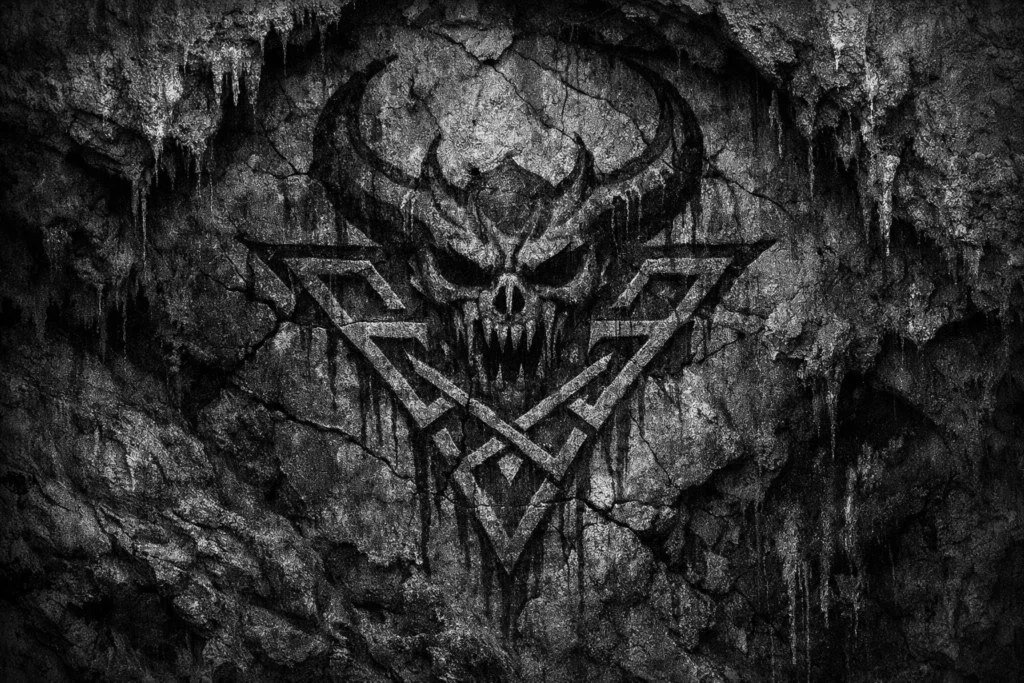
The dīv does not have one universal symbol like those in Western magic books. In Persian occult traditions, they are shown with talismans that have special geometric shapes or square grids (Wifq) filled with numbers linked to their names. Some old manuscripts use a drawing of a horned head or a hand with three claws as a symbol for dīvs or as a focus for protective charms.
Summoning and Rituals
Old stories about dealing with dīvān portray them as very dangerous and hard to control. Rituals use bad-smelling incense and strong protective circles made from iron filings or charcoal. Unlike Jinn, who might be called for wishes, dīvs were usually summoned by dark sorcerers to fight in wars or guard hidden treasure.
To bind a dīv, people usually call on the authority of the Prophet Solomon or use heavy chains marked with holy names. Old magic books warn that if the person shows fear or makes a mistake while saying the binding words, the dīv will crush them right away, instead of using tricks like other Jinn might.
You may also enjoy:
Who Is Agaliarept, the General of Hell Under Lucifer?
October 8, 2025
Empusa: The Blood-Drinking Wraith of Greek Mythology
November 20, 2025
Si’la: The Seductive Jinn Who Lures Travelers to Their Doom
October 9, 2025
Tarakasura: The Dark Demon Who Ruled Hell on Earth
December 4, 2025
Aamon: The Infernal Marquis of Lust, Feuds, and False Prophecies
September 29, 2025
What Is a Dīv? The Terrifying Giant Demon of Persian Myth
January 22, 2026
Frequently Asked Questions
What is the difference between a Dīv and a Shaitan?
While both are malevolent, a Dīv is primarily a physical, giant-like entity from Persian mythology characterized by immense strength and sorcery. A Shaitan (or Shaytan) is typically a spiritual whisperer from Islamic theology that influences the human heart (qalb) through suggestion. Dīvs are often portrayed as a distinct race with their own kingdoms. In contrast, Shaitans are followers of Iblis focused on moral corruption.
Are there female Dīvs in Persian folklore?
Yes, female demons are known as Dīve-zan or Pari-e-Afsaneh in certain contexts. Unlike the monstrously masculine dīvs, female dīvs in folklore are often depicted as wicked hags or deceptive shape-shifters who use illusions to lure travelers to their deaths. In some specific regional tales, they are described as having sagging breasts that they fling over their shoulders while running.
What is the “Div-e-Sepid” and why is it white?
The Div-e-Sepid (White Div) is the chieftain of the demons of Mazandaran. Its white color is not a sign of purity but represents extreme age, primordial power, and icy coldness. In Zoroastrian symbolism, white can sometimes be associated with the “blinding” light of false gods, and the White Div specifically uses this trait to magically blind the Persian armies.
Can a Dīv be killed by normal weapons?
Standard weapons are generally ineffective against a Dīv’s stone-like hide. To kill a Dīv, a hero typically requires a consecrated weapon, such as the bull-headed mace (gurz) of the Pishdadian kings, or must use the Dīv’s own strength against it. Decapitation is the only surefire way to ensure a Dīv does not use its sorcery to heal its wounds or reattach severed limbs.
Where do Dīvs live according to legend?
Dīvs are said to inhabit “The Land of Darkness” or the rugged, unmapped regions of the Alborz Mountains and the forests of Mazandaran. They prefer subterranean caverns, ruins of ancient cities, or fortresses built atop cloud-shrouded peaks, far removed from the “civilized” world of Iran (Iranshahr).
Do Dīvs have any connection to the Ghul?
In later Islamic-Persian folklore, the Dīv and Ghul are sometimes grouped together, but they remain distinct. The Ghul is a scavenger that haunts graveyards and deserts to consume the dead. In contrast, the Dīv is a warrior-sorcerer who seeks to enslave humanity and overthrow kings. The Dīv is considered much higher in the supernatural hierarchy than the lowly Ghul.
