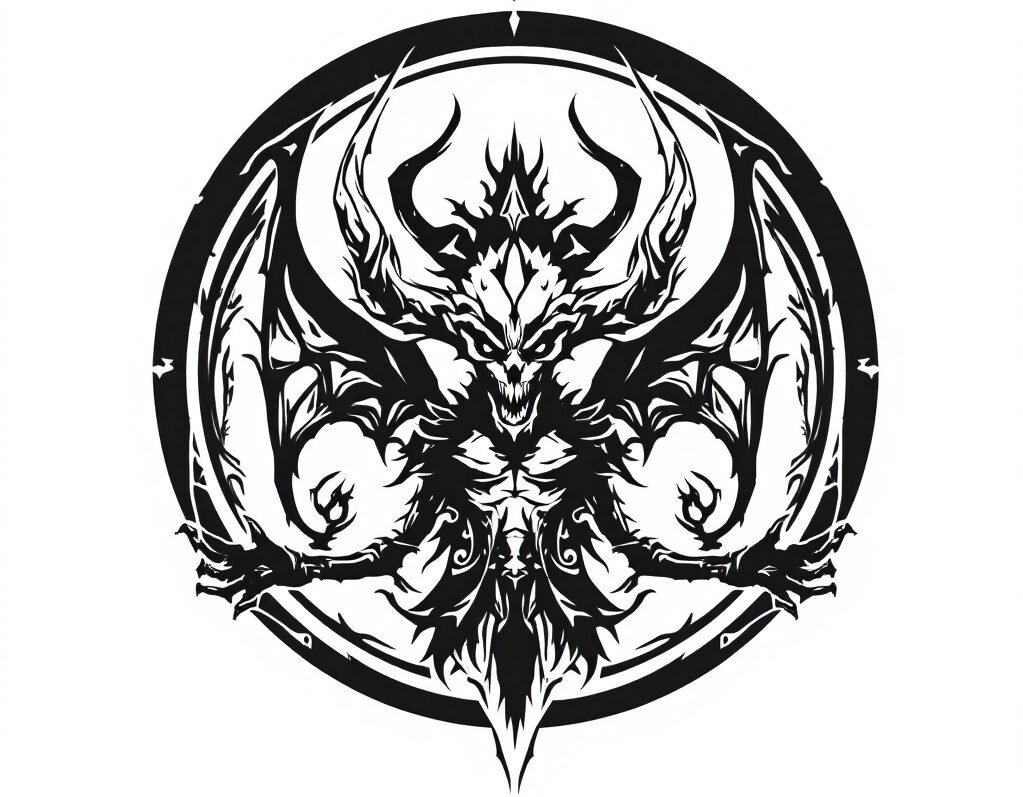
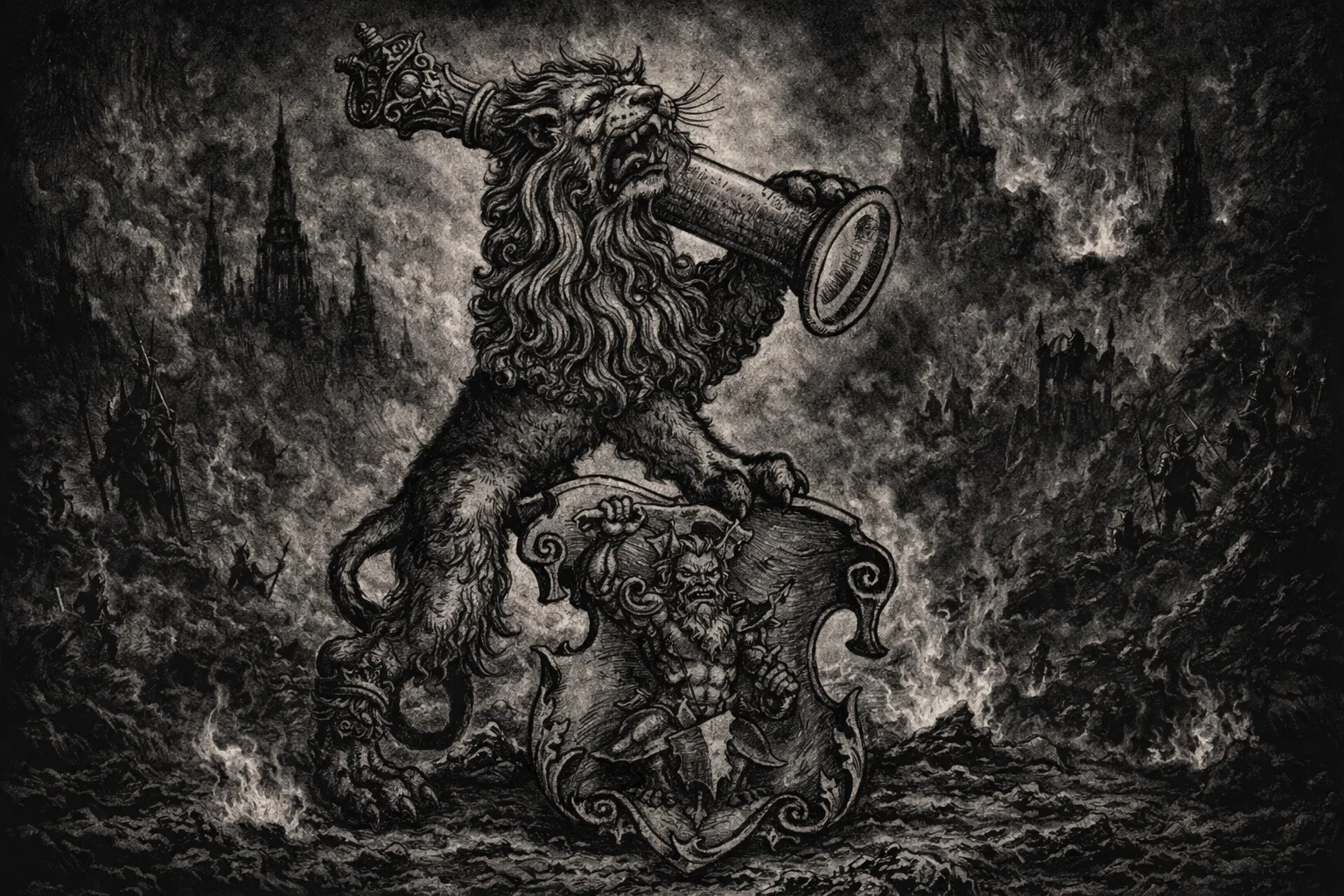
Many Goetic entities are known for single acts of malice. However, Barbas (Marbas) stands out for combining mechanical skill with the power to cause decay. He is seen as the master behind the “invisible rot,” able to build complex structures or break down the human body through disease.
The demon connects the careful skill of engineering with the chaos of disease. To people in medieval times, he was a reminder that the same knowledge used to build a civilization could also be used to destroy it through illness.
This article looks at modern stories about Barbas using sources like the Ars Goetia and Pseudomonarchia Daemonum to create a historical profile based on evidence [View Full Bibliography ↓]
Summary
Key Takeaways
| Attribute | Details |
| Names | Barbas, Marbas |
| Title | Great President |
| Gender | Male |
| Role | Architect of diseases, bringer of plagues, and master of transformations. |
| Rank | President |
| Hierarchy | Subordinate to the higher kings of the Goetia; commands 36 legions of lesser spirits. |
| Legions | 36 Legions |
| Powers | Causes and spreads infectious diseases, transforms human appearances into hideous shapes, and reveals secrets of a malicious or stolen nature. |
| Associated Figures | Solomon (as the binder), and other Goetic Presidents such as Buer. |
| Weaknesses | Bound by the secret seal of Solomon, constrained by the names of the Tetragrammaton. |
| Opposing Angel/Saint | The Angel Mahasiah. |
| Pantheon | Christian / Solomonic Occultism |
| Primary Sources | Ars Goetia, Pseudomonarchia Daemonum, Dictionnaire Infernal, The Discoverie of Witchcraft. |
Who or What is Barbas?
Barbas is a high-ranking demon known as a President in the infernal world. In Christian demonology and Solomonic tradition, he is seen as a powerful spirit to be approached with great caution, as he can influence the body and the mechanical world.
Unlike some other demons, he is not described as a fallen angel from a specific angelic group. However, he is well established in 16th and 17th-century grimoires as one of the main seventy-two spirits that King Solomon is said to have trapped.
As a Great President, he is known for his technical skills, which can sometimes be harmful. He is skilled in the ‘mechanical arts,’ meaning he can make tools and buildings. He also uses this knowledge to create illnesses and physical changes.
The demon first appears as a lion, showing his strength, and only changes into a human when someone with his sigil commands him.
“Barbas” Meaning
The name Barbas likely comes from Latin or even older languages. One common theory is that it comes from the Latin word ‘barba,’ which means ‘beard.’ This could refer to the lion’s mane, which looks like a beard, or to the way philosophers and experts in mechanical arts were often shown with beards in medieval times.
In many occult texts, the name is used interchangeably with Marbas. Some researchers think this might be a variant of a pagan god’s name or a local spirit added to Christian demonology during the Middle Ages.
The names Barbas and Marbas appear in different translations of the Pseudomonarchia Daemonum and the Ars Goetia. Reginald Scot’s The Discoverie of Witchcraft (1584) uses ‘Barbas,’ while later English versions of the Lesser Key of Solomon use ‘Marbas.’
No matter how you spell it, the name is always connected to authority, secret knowledge, and a predatory nature. For centuries, it has been identified as the fifth spirit among the 72, making sure people do not confuse him with other lion-like demons like Buer or Purson.
How to Pronounce “Barbas” in English
Barbas is pronounced BAR-bas in English. The first part, ‘Bar,’ rhymes with ‘car’ and has a strong ‘a’ sound. The second part, ‘bas,’ sounds like ‘bus’ or the end of ‘canvas.’ For Marbas, say MAR-bas, keeping the same pattern.
You may also enjoy:
Chort: The Sinister Slavic Demon of Chaos and Bad Luck
March 10, 2026
Who Is Adrammelech in Demonology and the Bible?
October 1, 2025
Who Was Hiranyakashipu, the Demon King of Hindu Mythology?
October 6, 2025
What Is a Qareen and Why Does It Follow Every Human Being?
October 8, 2025
Who Is Aka Manto, Japan’s Terrifying Red-Cloaked Yōkai?
October 24, 2025
Who Is Astaroth in Demonology and the Ars Goetia?
February 20, 2026
What Does Barbas Look Like?
Most demonology texts describe the demon in the same way. When first summoned, he appears as a large, powerful lion. This form is meant to be intimidating and shows his predatory side. The lion shape also represents his rank and his connection to the sun and fire.
Barbas does not remain a lion. When the conjurer gives the command, he changes into a human. In this form, he is usually described as a serious or calm man.
Unlike some demons who appear as handsome soldiers or clever women, the demon’s human form is usually that of a scholar or craftsman, showing his connection to mechanical arts. Even as a human, he still seems a bit wild or fierce, reminding people of his lion side.
Relevant Historical & Grimoire Mentions
Barbas does not appear in the Bible, but his history starts in the early modern period in important catalogs of the infernal hierarchy.
Original:
“Marbas, alias Barbas, præses est magnus, se ostendens in specie leonis ferocissimi: sed ad mandatum exorcistæ induit formam humanam. Respondet perfectè de occultis, morbos inducit & curat: confert sapientiam, artemque mechanicam: & homines in alias mutat formas. Triginta sex legionibus præest.” [Johann Weyer, Pseudomonarchia Daemonum, 1577]
Translation:
Marbas, alias Barbas, is a great president, manifesting himself in the form of a most ferocious lion: but at the command of the exorcist he putteth on a human form. He answereth perfectly of occult things, induceth and cureth diseases: bestoweth wisdom, and mechanical art: and changeth men into other shapes. He is over thirty-six legions.
Johann Weyer’s 16th-century entry is the main source for Barbas’s description. By calling him “President,” Weyer showed a shift from the old feudal titles like “Kings” and “Dukes” to a more academic or administrative system in demonology.
From a religious point of view, Marbas’s ability to both cause and cure disease shows his control over the physical world. In times when people saw little difference between magic and divine punishment, Marbas was a scary example of how health could be changed by those with secret knowledge.
“The Fifth Spirit is Marbas. He is a Great President, and appeareth at first in the form of a Great Lion, but afterwards, at the request of the Master, he putteth on Human Shape. He answereth truly of things hidden or secret. He causeth diseases and cureth them. Again, he giveth great Wisdom and Knowledge in Mechanical Arts; and can change men into other shapes. He governeth 36 Legions of Spirits.” [S.L. MacGregor Mathers, The Goetia: The Lesser Key of Solomon the King, 1904]
Mathers’ translation is very similar to Weyer’s 1577 text. Still, its place in the Ars Goetia shows how the demon became part of the “Solomonic” revival in the early 1900s. The detail that he first appears as a lion suggests that the person summoning him must face his wild side before he can take human form and share secrets.
During this time, the “Mechanical Arts” linked to Marbas came to mean more than just blacksmithing or simple engineering. After the Industrial Revolution, occultists saw Marbas as a patron of complex and sometimes dangerous machines that were changing people’s lives.
Original:
“Marbas, grand-président aux enfers; il apparaît sous la forme d’un lion furieux; quand il est en figure humaine, il répond aux questions les plus cachées; il envoie les maladies et les guérit; il donne une grande sagesse et de l’habileté dans les arts mécaniques; il change les hommes en d’autres formes. Il commande trente-six légions.” [Jacques Collin de Plancy, Dictionnaire Infernal, 1863]
Translation:
Marbas, great president in Hell; he appears in the form of a furious lion; when he is in human form, he answers the most hidden questions; he sends diseases and cures them; he gives great wisdom and skill in the mechanical arts; he changes men into other shapes. He commands thirty-six legions.
De Plancy’s 19th-century French entry is important for how people picture the demon today. While the text is similar to older sources, the Dictionnaire Infernal included famous woodcut illustrations by Louis Le Breton that shaped Marbas’s modern look.
This source highlights the “furious” nature of Barbas’s lion form, which matched the Victorian interest in the wild side of human nature. The power to “change men into other shapes” is often seen not just as a physical change but also as a change in a person’s soul or character.
Powers and Abilities
Barbas’s powers are about changing the physical world and uncovering secret knowledge. As a Great President, he is not just influential; he is also known for being able to transform and shape things.
One of his main powers is the ability to change people into other shapes. This is seen as a kind of ‘demonic glamour’ or a curse that makes someone look like an animal or a twisted version of themselves. This power is usually harmful and can make people feel alone or tormented.
Barbas is known for causing and spreading diseases. Some sources say he does this by sending out harmful spirits or upsetting the body’s natural balance. While he is sometimes said to ‘cure’ these illnesses, it usually just means he stops a curse he started, not real healing.
His skill in mechanical arts means he can share secret technical knowledge. This includes building complex structures and making tools. In the infernal world, he helps build ‘mansions’ or fortresses for other spirits and gives humans the skills to make weapons or devices that can cause harm or pride.
The demon can also reveal secrets, especially those involving theft or deception, helping people discover what others have hidden.
You may also enjoy:
Who Is the Jann in Islamic Mythology and Why Is He Feared?
October 2, 2025
The Kumbhāṇḍa: Grotesque Demons of Buddhist Hell
November 13, 2025
Who Is Abalam in Demonology? The Demon King That Serves Paimon
September 30, 2025
Mahakala: The Dark Guardian Who Consumes Evil
October 16, 2025
Gandharva: God, Spirit, or Demon?
November 13, 2025
Mechanics, Malady, and the Leonine Shadow
Barbas is known for both building amazing things and causing serious diseases. In medieval and early Renaissance times, people did not see this as a contradiction, but as proof of his complete control over the physical world.
As a President of Hell linked to the mechanical arts, Barbas shows the dark side of the idea that the world works like a machine. In the 16th century, people saw the human body as the ultimate machine, so a spirit who knew the secrets of mechanics could also know how to cause problems within it.
This mix of skills suggests that Barbas is linked to iatrogenesis, which means harm caused by a healer. It also shows the fear that the same tools used to build civilization could one day be used to destroy it.
His careful, mechanical way of spreading disease sets him apart from more chaotic demons like Abaddon or Beelzebub. While those demons represent wild destruction, Barbas works with the skill and precision of a craftsman.
His power to change people’s shapes is another example of his skill—he can reshape the human body because he understands its hidden design. Psychologically, he represents the idea of the Shadow Scientist, showing how the urge to control nature can lead to both progress and harm, depending on one’s intentions.
Barbas’s lion form connects him to ancient ideas about the sun, which can both give life and cause disease. In classical myths, Apollo was both a healer and a bringer of disease, and Barbas takes on this double role in the Goetic hierarchy.
By appearing as a lion, an animal linked to the hot sign of Leo, Barbas shows the destructive power of the sun that can ruin crops and cause illness. He is the “Great President” of fever and disease, showing that the same knowledge used to heal can also be used to harm.
Barbas vs Other Christian Demons
| Demon Name | Associated Sin/Temptation | Rank/Origin | Key Traits/Powers |
| Asmodeus | Lust | King (Ars Goetia) | Breaks marriages, teaches geometry and astronomy. |
| Belial | Lawlessness | King (Ars Goetia / Dead Sea Scrolls) | Grants high titles, commands 80 legions. |
| Buer | Philosophy/Healing | President (Ars Goetia) | Teaches moral philosophy, appears as a centaur. |
| Astaroth | Sloth/Pride | Duke (Ars Goetia) | Answers truly of the past and future, foul breath. |
| Paimon | Obedience/Pride | King (Ars Goetia) | Teaches all arts and sciences, rides a dromedary. |
| Beelzebub | Gluttony | Prince (Various) | Lord of the Flies, incites false worship. |
| Valac | Greed/Envy | President (Ars Goetia) | Locates hidden treasures and serpents. |
| Balam | Incitement to Lust | King (Ars Goetia) | Gives true answers to things past and to come. |
| Foras | Theft/Discovery | President (Ars Goetia) | Makes men invisible and teaches logic. |
| Gaap | Malice/Ignorance | President/Prince (Ars Goetia) | Causes love or hatred, delivers familiar spirits. |
| Zagan | Deceit | King/President (Ars Goetia) | Turns wine into water and blood into wine. |
| Botis | Discord | President/Earl (Ars Goetia) | Causes and reconciles friendships/foes. |
| Caim | False Logic | President (Ars Goetia) | Speaks in the voices of burning coals. |
Rank in the Hierarchy of Hell
In the infernal hierarchy, Barbas is a Great President, which is a mid-to-high rank. He does not have as much power as the Kings, such as Bael or Paimon, but he is an important leader. He commands 36 legions, leading thousands of spirits skilled in crafts and diseases.
Barbas often works with other demons, especially other Presidents like Buer and Foras. While Buer is known for teaching and healing, or for causing disease, Barbas focuses more on building and mechanical skills.
Among the 72 spirits, Barbas is under the four great Kings of the cardinal directions—Amaymon, Corson, Ziminiar, and Gaap—who supervise the Presidents. His role is similar to a ‘technical director’ in the abyss, providing other demons with the tools they need to carry out their plans against humans.
Mystical Correspondences
| Attribute | Details |
| Planet | Mercury |
| Zodiac Sign | Aries (10° – 20°) |
| Element | Fire |
| Direction | East |
| Color | Orange or Yellow |
| Number | 5 (His spirit number) |
| Crystal/Mineral | Carnelian or Fire Opal |
| Metal | Mercury (Quicksilver) |
| Herb/Plant | Chicory or Storax |
| Animal | Lion |
Barbas is closely linked to the planet Mercury, which matches his role as a master of information and mechanics. Mercury stands for communication, intelligence, and the flow of information. With Barbas, these traits become ways to reveal secrets and create complex diseases.
Barbas is also connected to the zodiac sign Aries, which fits his lion form and gives him a fiery, aggressive energy. Old grimoires say he is best summoned on Wednesday, the day of Mercury, to use this fast and changing power.
The element of Fire is also important for Barbas. It matches the heat of a lion and the fire used in the crafts he teaches. This fire is not for giving life, but for building his ‘mansions’ and causing the fevers of the diseases he spreads.
Talismans for Barbas often use the metal mercury, showing his power to change from lion to man and back again. These symbols help keep him connected to the physical world and link his strength to the East, where the sun rises, and his lion power is at its peak.
Barbas’s Sigil
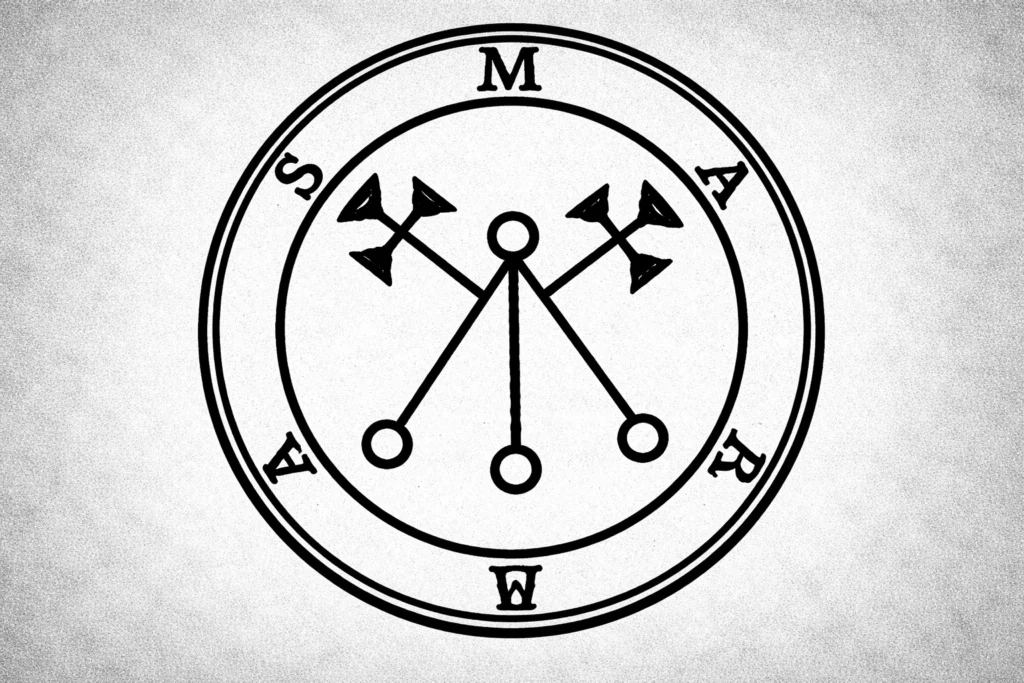
The Sigil of Barbas is a complex geometric symbol found in the Ars Goetia. It is considered the demon’s ‘signature’ and is needed to bind him. In the past, people would draw the sigil on a lamen or a metal plate, often made of tin or mercury-coated lead, and wear it during rituals.
The sigil acts as a spiritual tether. Without it, Barbas’s lion form was believed to be uncontrollable and dangerous for the summoner. The sigil was used to compel him to take human form and to ensure he answered questions honestly rather than lie.
You may also enjoy:
Demon Alastor: The Grand Executioner of Hell
November 17, 2025
Abura-sumashi: The Potato-Headed Yōkai That Punishes Greed
October 23, 2025
What Is a Bhuta? The Backward-Footed Ghosts of Hindu Horror
February 5, 2026
Aamon: The Infernal Marquis of Lust, Feuds, and False Prophecies
September 29, 2025
Mara: The Buddhist Demon King of Desire and Death
October 13, 2025
Bibliography
Author’s Note: Looking at these sources, I noticed a strong contrast between the official, administrative title of “President” in Weyer’s Pseudomonarchia Daemonum and the more wild, predatory image in De Plancy’s Dictionnaire Infernal. Earlier texts focus on his mechanical skills, but by comparing them with the Testament of Solomon, I could see how Barbas is both an architect and a bringer of disease. Comparing these old Latin descriptions with modern sources shows a clear pattern: Barbas is not a spirit of random chaos, but a symbol of the careful precision needed to both build and break down the human body.
- Weyer, Johann. Pseudomonarchia Daemonum. Edited and translated by Joseph H. Peterson, digital edition, 2000. Twilit Grotto: Esoteric Archives.
- Henson, Mitch, and Jeff Wellman, editors. Lemegeton: The Complete Lesser Key of Solomon. Metatron Books, 1999. Internet Archive.
- Solomon, King of Israel (attributed). The Key of Solomon the King (Clavicula Salomonis). Translated and edited by S. Liddell MacGregor Mathers, George Redway, 1889. Internet Archive.
- Collin de Plancy, Jacques. Dictionnaire infernal: répertoire universel des êtres, des personnages, des livres, des faits et des choses qui tiennent aux esprits. 6th ed., Henri Plon, 1863. Internet Archive.
- McCown, Chester Charlton, editor. The Testament of Solomon. J. C. Hinrichs’sche Buchhandlung, 1922. Internet Archive. Edited from manuscripts at Mount Athos, Bologna, Holkham Hall, Jerusalem, London, Milan, Paris, and Vienna.
- Gasdia, Russell. Frightful Demons and Faithful Prayer: Possession, Exorcism, and Religious Sentiments in Johann Weyer’s De Praestigiis Daemonum and Reginald Scot’s The Discoverie of Witchcraft. Academia.edu.
- Summers, Montague. The history of witchcraft and demonology. Project Gutenberg, 28 Oct. 2025. Originally published by Alfred A. Knopf, 1926.
- Håkansson, H. Seeing the Word: John Dee and Renaissance Occultism. Renaissance Quarterly, 2003. Academia.edu.
- Bane, Theresa. Encyclopedia of Demons in World Religions and Cultures. McFarland & Company, 2012. Internet Archive.