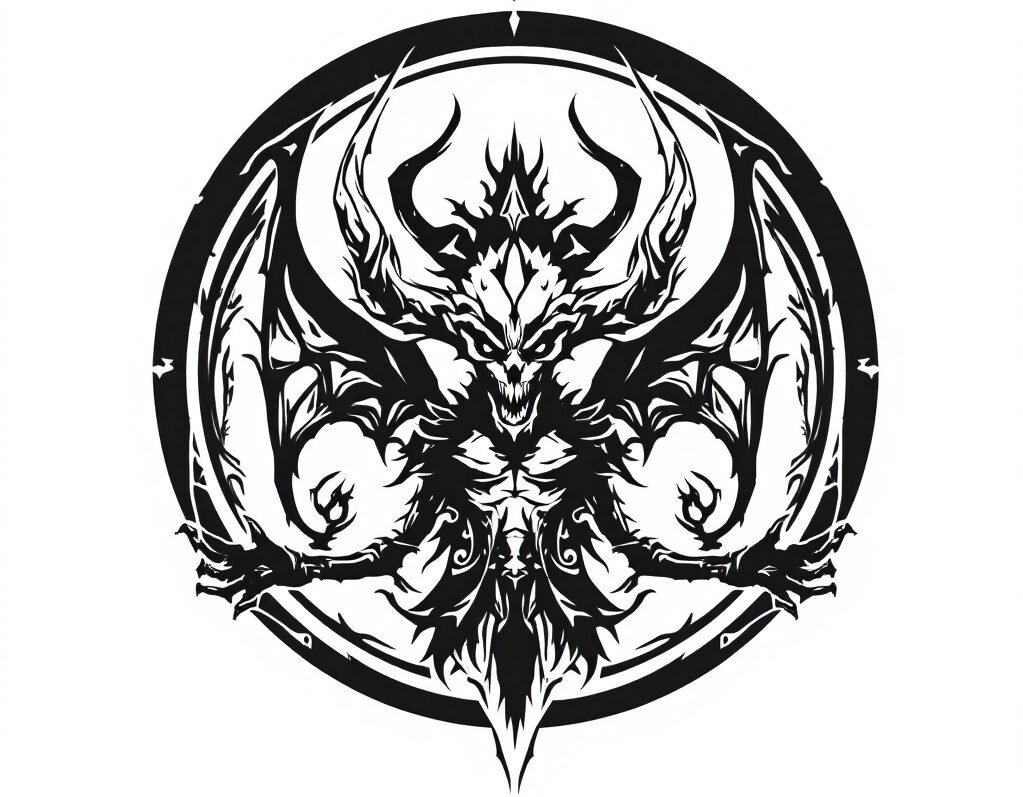
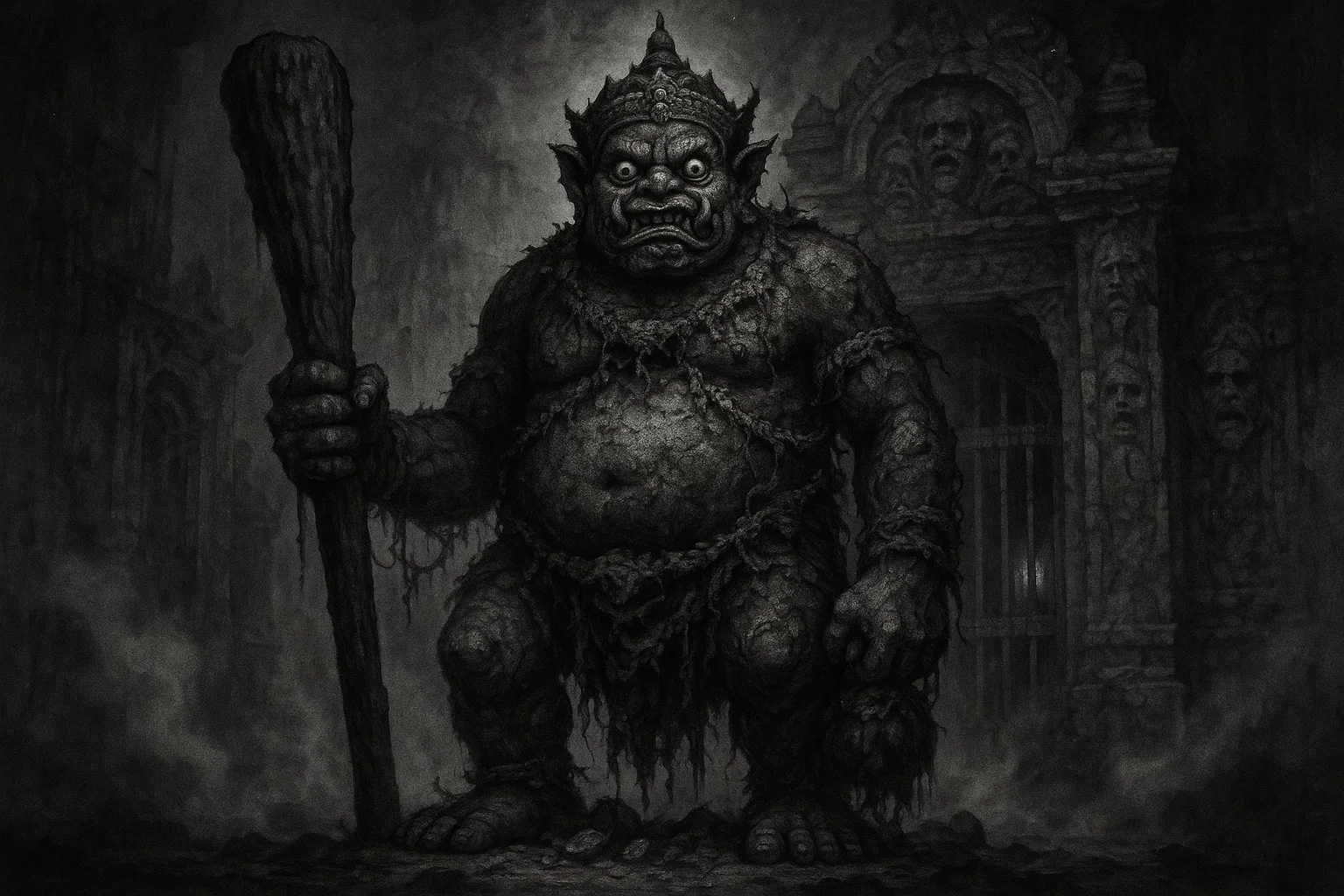
Yakshas are important because they show the struggle between untamed nature and the order brought by the Dharma. They are more than just forest spirits; they stand for the earth’s raw power, which needs to be guided for spiritual reasons.
Looking at how they act as both dangerous threats and strong protectors, we can see how Buddhism turned local earth spirits into supporters of a universal moral order. These beings are also important in Hindu mythology (see the Hindu Demons category for more details).
This research remains accurate by comparing the Abhidharma-kosa and the Lotus Sutra to clearly show where these beings fit in the Buddhist Desire Realm and how they serve under the Four Heavenly Kings. [View Full Bibliography ↓]
Summary
Key Takeaways
| Attribute | Details |
| Names | Yaksha (Sanskrit), Yakkha (Pali), Yecha (Chinese), Yaksa (Korean), Gnod sbyin (Tibetan) |
| Title | Earth-dwellers, Guardians of the Treasures, Ten Kings of the Yakshas |
| Region | India, Sri Lanka, Tibet, China, Southeast Asia |
| Type | Buddhist nature spirit, Class of semi-divine beings |
| Gender | Male (Yaksha) and Female (Yakshini) |
| Realm | Desire Realm (Caturmaharajika heaven and the Human realm) |
| Obstacle/Threat | Disease, consumption of human vitality, physical violence in wilderness |
| Associated Figures | Vaisravana (Kubera), Gautama Buddha, Padmasambhava, Hariti |
| Weapon/Item | Club (gada), vajra, or noose |
| Weaknesses | Conversion to Buddhism, recitation of the Atanatiya Sutta, merit transfer |
| Associated Deity/Figure | Vaisravana (King of the North), Avalokiteshvara |
| Pantheon | Buddhist (with significant Vedic and Hindu overlaps) |
| Primary Sources | Pali Canon (Digha Nikaya), Mahamayuri Vidyarajni Sutra, Lotus Sutra |
Who or What is the Yaksha?
The Yakshas are a varied group of nature spirits who live on the edges of human society.
In Buddhism, they are ranked between the heavenly devas and suffering ghosts. They are known for their great strength and control over nature, but their morals are mixed. Some are seen as kind guardians of sacred places and treasures, while others are feared as dangerous predators in forests and mountains.
Yakshas include everything from small local spirits to powerful generals who serve the Four Heavenly Kings. In early Buddhism, stories about converting one of these beings often showed the Buddha’s power over local spirits.
After conversion, they usually promise to protect the Buddhist community, changing from threats into protectors of the teachings, known as Dharmapalas.
“Yaksha” Meaning
The word comes from the Sanskrit root yaj, meaning to worship, sacrifice, or honor”. This shows that these beings were once local gods or earth spirits who needed offerings to be kept happy. In the Pali tradition, Yakkha can refer to any non-human spirit, even devas, but usually to those with a more earthly nature.
As the name spread across Asia, its sound and meaning transitioned. In China, it became Yecha, and these spirits became part of the underworld, often shown as guards in Hell who punish wrongdoers.
In Tibet, they are called Gnod sbyin, which means ‘harm-givers,’ showing their old reputation for causing trouble and sickness before being subdued by figures like Padmasambhava. Even with these differences, they are still seen as guardians of the earth’s riches. Yakshas can be either very violent or fiercely protective.
You may also enjoy:
Who Is Hariti, the Mother of Ogres in Buddhist Mythology?
December 8, 2025
Pazuzu: The Ancient Demon Who Fought Evil with Evil
November 4, 2025
Abadir: The Demon Servant of Chaos and Dispersion
September 30, 2025
What Is Baku? The Bizarre Yōkai That Eats Nightmares
January 28, 2026
Apophis: The Great Serpent of Egyptian Chaos
November 11, 2025
Who Were the Hinn, the First Spirits of Creation?
November 12, 2025
How to Pronounce “Yaksha” in English
To say Yaksha in Sanskrit, stress the first part, which sounds like ‘YUK,’ as in ‘duck.’ The second part is a soft ‘shuh.’ So, in English, it’s pronounced YUK-shuh.
For the Pali version, Yakkha, you still stress ‘YUK,’ but the second part has a breathy ‘k’ sound, making it YUK-khuh.
For East Asian versions, the Chinese Yecha is pronounced YEH-chuh, with ‘YEH’ rhyming with ‘bed.’ The Korean Yaksa is said as YUK-sah, keeping the strong ‘k’ sound and ending with a more open ‘ah’ than in Sanskrit.
What Does the Yaksha Look Like?
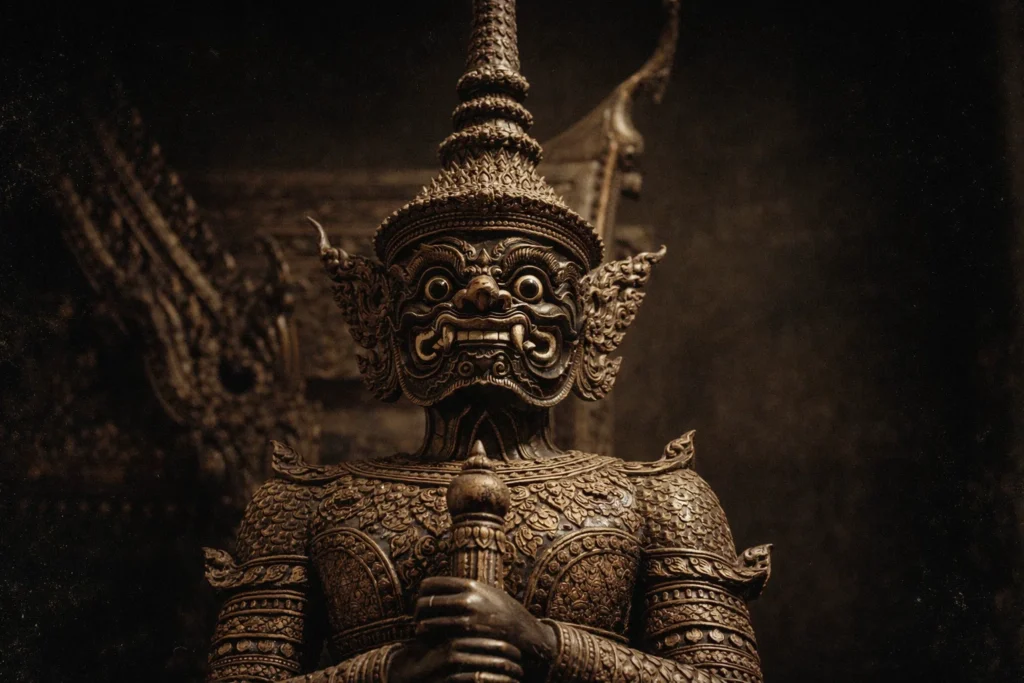
Descriptions of these spirits’ looks vary a lot based on their rank and character. The kind ones are shown as strong, princely figures with jewels, showing their role as guardians of underground riches. They usually have powerful bodies, big eyes, fancy clothes, and often hold a heavy club or a pot of plenty.
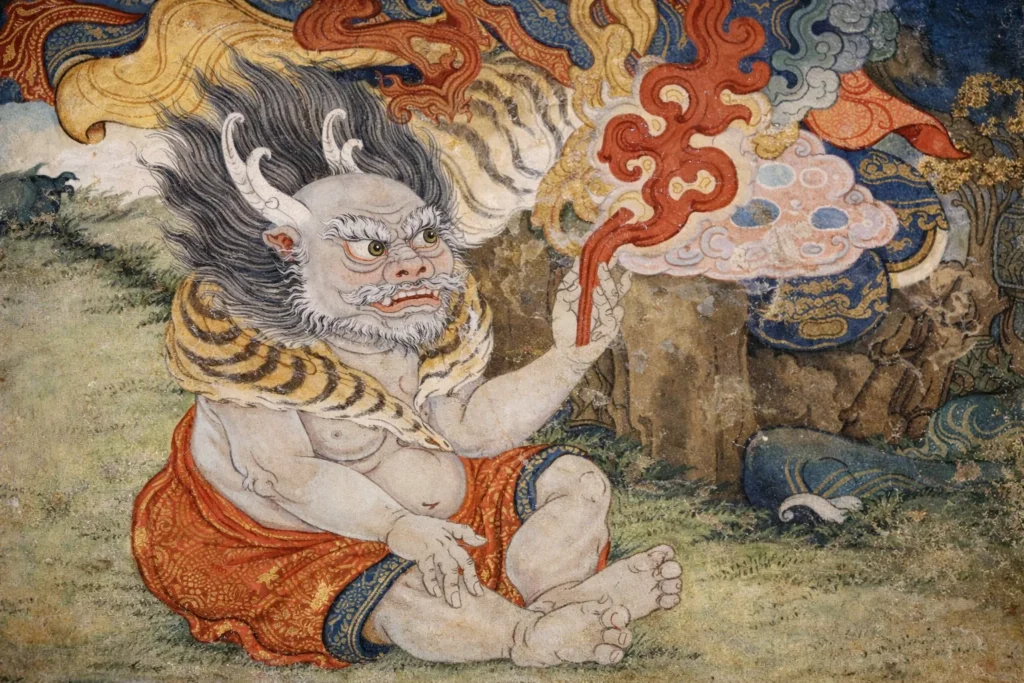
On the other hand, the more aggressive or ‘demonic’ types are shown with wild, scary features. Early Buddhist texts and art show them with bulging eyes, big fangs, and large bellies. They might have dark or red skin and hair that sticks up like flames.
In Chinese and Japanese art, they often look even more monstrous, with blue or green skin, claws, and horns, similar to Oni or Hell guards. Female Yakshinis are usually shown as very beautiful women, using their looks to attract travelers before showing their real, dangerous side.
Origins
These beings existed before Buddhism. They started in ancient Indian folk religion as spirits of trees, groves, and mountains.
In the Vedic period, Yakshas were tied to nature’s mysterious power and often linked to Kubera (Vaisravana), the god of wealth. As Buddhism spread, it didn’t reject these beliefs; rather, it incorporated them into its own system.
In the Pali Canon, specifically the Atanatiya Sutta, it is explained that while many of these spirits are hostile to humans because humans do not follow the Buddha’s precepts, their leaders—the Four Heavenly Kings—provided the Buddha with a protective incantation to keep his followers safe. This signifies the formal treaty between the Buddhist order and the spirit world.
As Buddhism traveled along the Silk Road, these spirits mixed with local ones in Tibet and China. Over time, they evolved from simple forest beings into important figures in Esoteric Buddhism, protecting certain directions and secret teachings.
Powers and Abilities
These spirits are much stronger than humans or ghosts, but they don’t live as long or have the same refinement as higher devas. Their power is mostly physical and tied to the natural world around humans.
- Transformation: The ability to assume various forms, ranging from beautiful humans to terrifying monsters or animals.
- Invisibility: They can move through the human world without being detected by the physical senses.
- Disease Infliction: Many are believed to be able to “possess” humans or sap their ojas (vital energy), causing physical wasting or mental illness.
- Superhuman Strength: Capable of moving mountains or shattering boulders with their characteristic clubs.
- Environmental Control: Influence on local weather patterns, crop fertility, and water flow.
- Treasure Guardianship: They possess the “divine eye” to see hidden riches buried within the earth or sea.
Myths, Legends, and Stories
The Conversion of Alavaka in the Alavaka Sutta
The story of Alavaka is a well-known example of the Buddha meeting a dangerous spirit. Alavaka lived in a banyan tree in the forest and forced the local king to offer a human sacrifice each day.
When the Buddha visited him, Alavaka tried to scare him off with nine different storms, like showers of hot coals and blinding sand, but the Buddha was not harmed.
Next, Alavaka tested the Buddha with difficult questions, threatening to harm him if he failed to answer. For example, Alavaka asked, “What is a man’s best treasure? What, well-practiced, brings happiness?” The Buddha answered, “Faith is a man’s best treasure. The Dharma, well-practiced, brings happiness.” Moved by the Buddha’s wisdom and calm, Alavaka gave up violence and chose to follow a peaceful path.
You may also enjoy:
Demon Alastor: The Grand Executioner of Hell
November 17, 2025
Vaisravana: The Golden Guardian King Who Rules the North
October 16, 2025
Who Is Asmodeus in Demonology and the Bible?
February 18, 2026
Who Is Astaroth in Demonology and the Ars Goetia?
February 20, 2026
Who Is Hariti, the Mother of Ogres in Buddhist Mythology?
December 8, 2025
The Legend of Hariti, the Mother of Demons
Hariti was once a spirit in Rajgir with hundreds of children. Still, she fed them by taking and eating other people’s children. The desperate townspeople asked the Buddha for help.
To show her the pain she caused, the Buddha hid her youngest and favorite son under his alms bowl. Hariti searched everywhere, filled with panic and sorrow.
When Hariti found the Buddha, he asked her, “If you suffer so much for losing one child out of hundreds, how much more must the mothers who had only one child suffer when you ate them?”
Deeply regretful, Hariti accepted the five precepts. The Buddha told the monks to share their food with her and her children at every meal, turning her from a child-eater into a protector of children and a goddess of fertility.
The Guardian Vaisravana and the Heavenly Kings
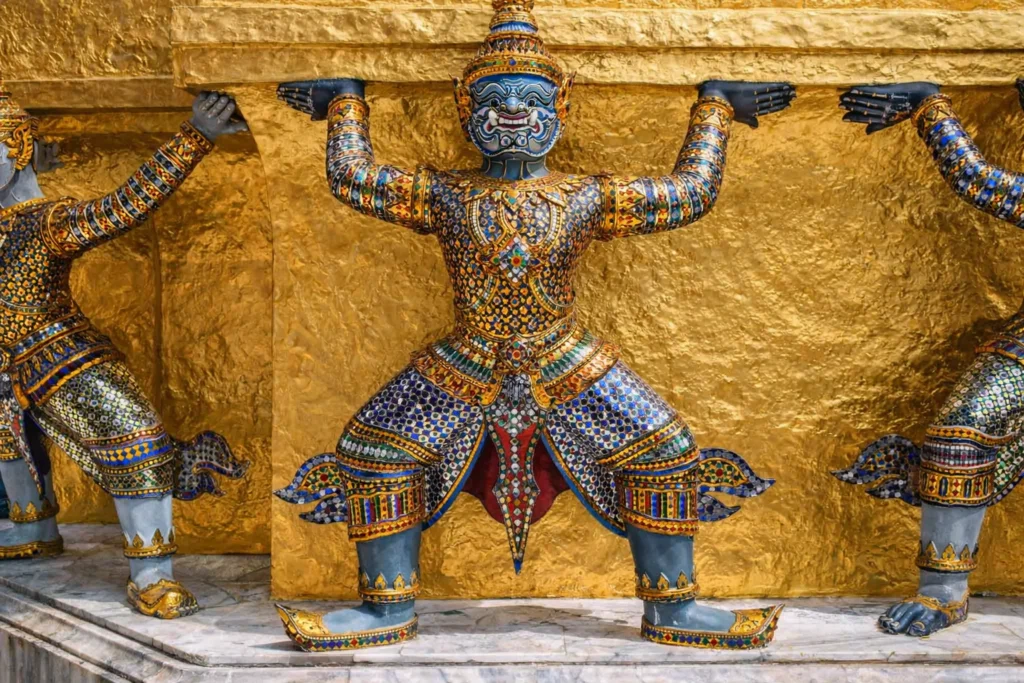
In the Lotus Sutra and the Golden Light Sutra, Vaisravana, also called Kubera, is the leader of the Yakshas and one of the Four Heavenly Kings who protect the world. He lives on the northern side of Mount Meru.
According to the myths, Vaisravana leads a large army of spirits to protect those who recite the Dharma. He is usually shown holding a stupa and a mongoose that spits out jewels, showing his role as a giver of both spiritual and material security.
His story shows that when these beings follow the Dharma, they become the main protectors of the Buddhist community from outside threats.
Yakkha as a Political Mirror of Empire
I find it interesting that the oldest large stone statues in India, from the 3rd and 2nd centuries BCE, are not of the Buddha but of Yakkhas, like the well-known Parkham Yaksha. These statues are huge, stiff in posture, and have pot-bellied bodies that show high status. They served as Kshetrapalas, or protectors of the land.
I think the huge size of these statues, often more than seven feet tall, shows a time when the growing Mauryan state needed to recognize the old gods of the land to prove its own power. For someone living in 250 BCE, a Yakkha represented the earth’s life and wealth. Ignoring him could mean risking the land’s fertility.
The key insight here is in the Conversion Narrative from the Atanatiya Sutta and the Alavaka Sutta. I believe these stories serve as a mythological record of cultural assimilation. When the Buddha converts a violent spirit like Alavaka, he is not only performing a miracle but also showing that local tribal laws are being replaced by the universal Dhamma.
The spirit’s so-called monstrous traits, like fangs, eating human flesh, and being aggressive, are really just exaggerated descriptions of pre-Buddhist sacrificial cults. By including these beings as Dharmapalas, or Protectors of the Teachings, the early Buddhist community turned what could have been a source of rebellion into a loyal force that defended the monastery.
Also, when I look at the Yakshini Jirambi terracotta from the 3rd century CE and the Hariti stories, I see a deep reflection of parental and social worries. Hariti started as a child-stealer, representing infant mortality, but became a protector of children. This transition shows how the spirit helped people cope with shared grief.
By creating rituals to calm the Demon Mother, people in ancient times felt they could control the unpredictable tragedies of nature. This made the Yakkha group a special link between the wild chaos of the forest and the safe order of the stupa. It shows the main struggle of a society trying to move past old fears but still needing the earth’s protection.
Yaksha vs Other Similar Entities
| Demon Name | Associated Obstacle/Role | Origin/Source | Key Traits/Powers |
| Mara | Temptation and death | Pali Canon | Illusion, control over desires |
| Preta | Insatiable hunger | Abhidharma | Wasting body, invisible to humans |
| Rakshasa | Consumption of flesh | Ramayana / Sutras | Great speed, shape-shifting |
| Asura | Pride and warfare | Vedas / Sutras | Vast strength, magical combat |
| Kumbhanda | Sapping of energy | Buddhist Cosmology | Distorted forms, shadow-dwelling |
| Garuda | Predation (on Nagas) | Jatakas | Flight, immense size |
| Naga | Control of water/weather | Vinaya | Venom, weather manipulation |
| Dakin | Ecstatic wisdom/ferocity | Vajrayana | Flight, spiritual energy |
| Piśāca | Mental confusion | Puranas / Sutras | Feasting on corpses, possession |
| Bhuta | Haunting / Unrest | Folk Traditions | Intangibility, mimicking voices |
| Gandharva | Sensual distraction | Vedic / Buddhist | Mastery of music and fragrance |
Mystical Correspondences
| Attribute | Details |
| Planet | Jupiter (Expansion and Wealth) |
| Zodiac Sign | Capricorn (Earthly authority) |
| Element | Earth |
| Direction | North |
| Color | Yellow or Gold (Wealth) and Green (Protection) |
| Number | 8 (Eight Great Generals) |
| Crystal/Mineral | Jade or Citrine |
| Metal | Gold |
| Herb/Plant | Banyan or Ashoka tree |
| Animal | Mongoose or Lion |
| Trait/Role | Guardianship and Abundance |
These spirits are closely linked to the earth. People often call on them in rituals to promote the fertility of the land and to protect buildings. Their ties to the North and the color yellow come from their leader, Vaisravana, who rules the northern direction and guards great wealth.
In rituals, especially in Tibeto-Himalayan traditions, people offer to these spirits to prevent them from causing health problems or disrupting building projects.
Since they are thought to live in certain trees and stones, many believe that disturbing nature without first asking the spirits can cause illness. Their role is still an important part of the stories that shape how people relate to the wild.
You may also enjoy:
Who Is Agaliarept, the General of Hell Under Lucifer?
October 8, 2025
Aim (Aym): The Great Duke of Hell in the Ars Goetia
November 11, 2025
Andrealphus: The Peacock Demon Who Twists Minds and Bodies
January 19, 2026
Iblis, the Jinn King of Darkness and Deception
September 29, 2025
Who Is Azazel, the Demon Blamed for Human Corruption?
February 24, 2026
Bibliography
Author’s Note: For this article, I focused on connecting the protective roles described in the Discourse on Atanatiya Protection with the more wild and predatory images from the Saṃyutta-Nikāya. Modern archaeology from Unnikrishnan and Dokras helped me see how these beings transitioned from wild spirits to respected protectors, as shown in the Princeton Dictionary of Buddhism. By comparing De Nebesky-Wojkowitz’s work on Tibetan deities with early Pali sources, I traced how Yaksha evolved from a simple demon into a cultural bridge between local beliefs and Buddhist cosmology.
- Aggacitta Bhikkhu, translator. Discourse on Atanatiya Protection. Edited by Looi Sow Fei, Kumara Bhikkhu, and Ang Siew Mun, Sasanarakkha Buddhist Sanctuary, 2003. Sasanarakkha.org.
- Ṭhānissaro Bhikkhu, translator. The Sutta Nipāta: The Discourse Group. Dhammatalks.org, 2021.
- Dharmachakra Translation Committee, translators. The Queen of Incantations: The Great Peahen. 84000: Translating the Words of the Buddha, 2023. 84000 Reading Room.
- Feer, Léon, editor. The Saṃyutta-Nikāya of the Sutta-Piṭaka: Part I. Sagātha-Vagga. Published for the Pali Text Society, Henry Frowde / Oxford University Press, 1884. Internet Archive.
- Dokras, Dr. Uday, and Anh Nguyen Thi Tam. Origin of the Yakshas. Indo Nordic Author’s Collective, 2022. Academia.edu.
- Unnikrishnan, Sandhya M. Aestheticization of Yakshi Cult: Iconographic Representation of Yakshi Through Ages. Heritage: Journal of Multidisciplinary Studies in Archaeology, vol. 8, no. 2, 2020, pp. 550-59. Heritage University of Kerala.
- Nguyen, Anh & Dokras, Uday. (2022). The Yakshas Divine Creatures of the Spiritual World. ResearchGate.
- Buswell, Robert E., Jr., and Donald S. Lopez, Jr. The Princeton Dictionary of Buddhism. Princeton University Press, 2014. Internet Archive.
- Tauscher, Helmut. Kanjur. Brill’s Encyclopedia of Buddhism, Vol. 1, Brill, 2015.
- De Nebesky-Wojkowitz, René. Oracles and Demons of Tibet: The Cult and Iconography of the Tibetan Protective Deities. Mouton & Co., 1956. Internet Archive.