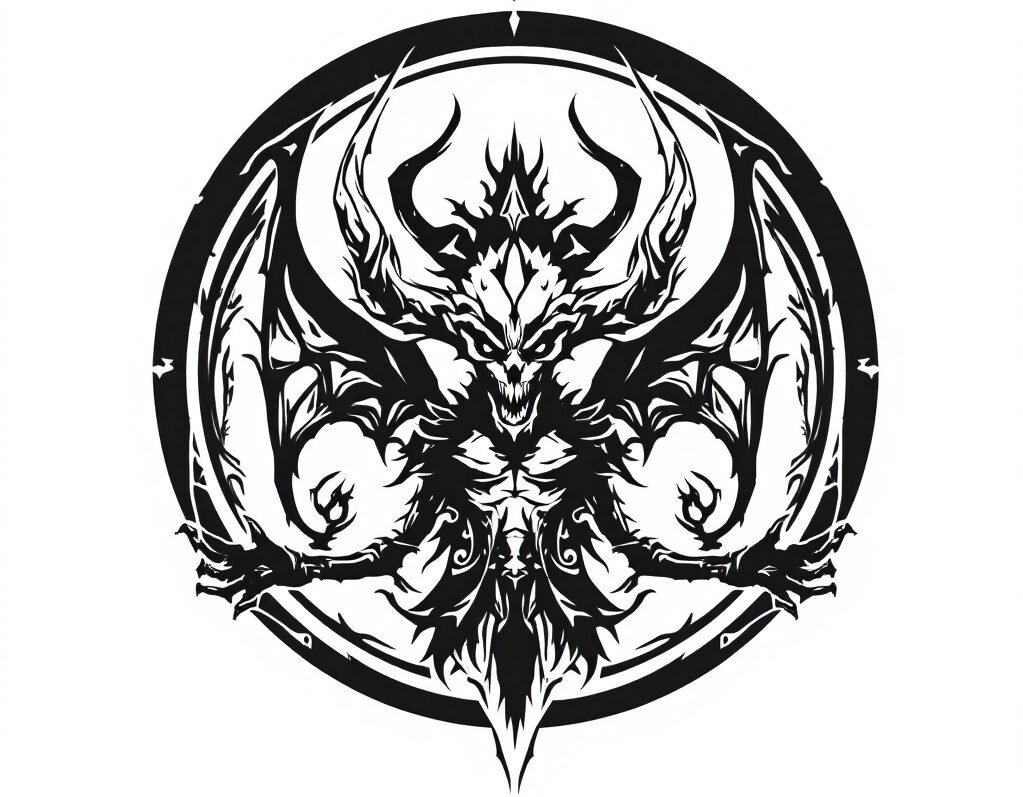
Aeshma is the main force of disruption in the Zoroastrian struggle between Asha (truth and order) and Druj (falsehood and chaos). Unlike other figures tied to natural disasters or diseases, Aeshma acts more like a psychological and social threat.
He is remarkable because he does not merely destroy from the outside. Instead, he corrupts people’s inner morals, turning social unity into dangerous, destructive anger.
My article below remains true to the original Persian moral philosophy by focusing on the main ideas in the Gathas and the Bundahishn, thereby maintaining consistency with traditional sources in the description of Aeshma. [View Full Bibliography ↓]
Summary
Key Takeaways
| Attribute | Details |
| Names | Aeshma, Aēšma, Aesma-daeva |
| Title | The Demon of Wrath, The Bloody Mace |
| Origin | Ancient Iranian/Zoroastrian (Avestan period) |
| Gender | Male |
| Genealogy | One of the arch-demons (daevas) serving Ahriman (Angra Mainyu) |
| Role | Personification of fury, rage, and violent discord |
| Associated Deity | Sraosha (the yazata of obedience and divine justice) is his direct antagonist |
| Brings | Blood-letting, unprovoked violence, social instability, and religious corruption |
| Weaknesses | Divine law, religious discipline, and the protective mantras of the Gathas |
| Realm/Domain | The physical world of humanity, where he incites discord |
| Weapon/Item | The bloody mace (wazra) |
| Symbolism | The corrosive nature of unchecked anger and moral decay |
| Sources | The Avesta, Vendidad, Bundahishn |
Who or What is Aeshma?
In Zoroastrianism, Aeshma is a daeva, or demon, created by Ahriman, the spirit of destruction. He does not stand for justified anger, but instead represents wild, irrational rage that breaks down the social and spiritual order set by Ahura Mazda.
Aeshma’s role is to stir up ‘blood-lust’ in people, pushing them toward violence, theft, and religious wrongdoing. By corrupting human nature, he becomes a main tool for Ahriman to block creation’s progress. He is also known for spreading lies, breaking sacred promises, and disturbing peaceful communities.
“Aeshma” Meaning
The name Aeshma comes from the Avestan word aēšm-, which means ‘impulse,’ ‘excitement,’ or ‘fury.’ It is related to the Sanskrit word iṣma, meaning ‘moved’ or ‘driven,’ showing that Aeshma is seen as a force that moves with wild, unstoppable energy.
Over time, in the Avesta and later Pahlavi texts, the word came to mean the kind of rage that leads to killing. Today, people might call it simple anger, but in ancient times, it was seen as a deep spiritual illness.
In Middle Persian, the name Kheshm confirmed Aeshma’s role as a demon fighting against piety and obedience.
How to Pronounce “Aeshma” in English
To say Aeshma in English, start with ‘Ae’ as either ‘eye’ or ‘eh,’ then add a soft ‘sh’ sound, and finish with ‘ma.’ Most researchers say it as ‘EYE-sh-ma.’ Make sure to stress the ‘sh’ sound, which sets this name apart from other Avestan words.
Origins
Aeshma’s origins are closely linked to the Zoroastrian reforms of the 6th century BCE, but his story also draws from older Indo-Iranian myths.
In the earliest parts of the Avesta, especially the Gathas credited to Zarathustra, the daevas were transformed from gods to evil spirits, which created a world divided between Asha (Truth) and Druj (Falsehood), and led to the need for special beings to show how moral corruption works.
Aeshma became a clear example of the daeva idea during the Achaemenid period. People needed a creature to represent lasting wrath, since ordinary anger was seen as temporary. Aeshma stood for a constant state of spiritual unrest that weakened social and religious bonds.
By calling the urge to kill and destroy a demon, Zoroastrian priests created a way to explain social problems, which turned violent chaos from a personal weakness into an outside threat, making it easier to argue for strict obedience to divine law as protection.
Aeshma likely combined traits from older Iranian gods of war or storms, like the Vedic Indra or Vayu. Before Zoroastrianism, these gods were linked to wild, violent actions and stormy weather. As Zoroastrian beliefs grew stronger, the powerful energy of these gods lost its divine status and became Aeshma’s ‘impulse.’
Aeshma is also closely related to Vritra, a serpent-like monster from Indo-Iranian myth known for blocking cosmic order by holding back waters. Similarly, Aeshma blocks human order by stopping people from working together and following religious rules.
As a result of this transition, Aeshma became the main agent of Druj, which made the fight for morality a real, daily struggle against a constant and powerful force, not just an idea.
What Does Aeshma Look Like?
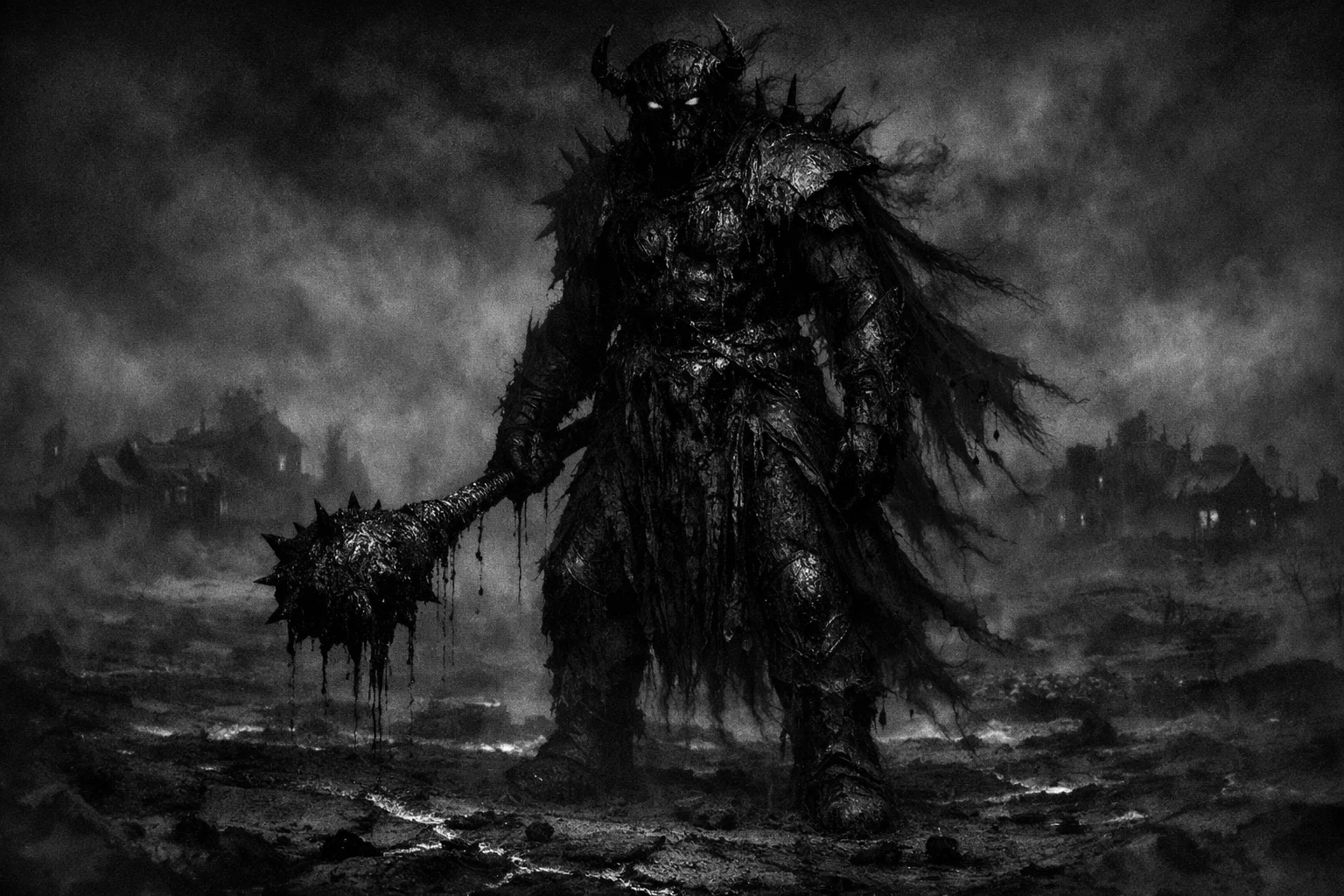
Images and texts usually show Aeshma as always aggressive and wild-looking. He is often pictured holding a wazra, or mace, sometimes stained to show his title ‘of the bloody mace.’ His weapon represents his blunt and random violence.
Aeshma’s look shifts, since he is often believed to live in people’s minds. When shown as a person, he is described as frightening and wild, maybe with messy features and eyes full of endless fire.
In my view, this image has a purpose: the ‘bloody mace’ is more than a weapon. It represents ignoring intelligence. By using a club instead of a sword, Aeshma shows the victory of raw, thoughtless violence over reason.
You may also enjoy:
Who Are the Yaksha, and Why Did Buddhists Fear Their Wrath?
October 20, 2025
Who Was Ravana in Hindu Mythology and Why Was He Feared?
October 3, 2025
Vaisravana: The Golden Guardian King Who Rules the North
October 16, 2025
Agubanba: The Blind Yōkai That Preys on Young Women
October 23, 2025
Who Is Al-Abyad? The White King Jinn Who Rules Love and Chaos
January 26, 2026
Connections to Other Ancient Demons
| Name | Genealogy | Type | Appearance |
| Apep | Egyptian | Chaos Monster | A colossal serpent |
| Lamashtu | Babylonian | Disease Spirit | Lion’s head, donkey’s body |
| Pazuzu | Mesopotamian | Storm Demon | Hybrid: canine/human/bird |
| Tiamat | Babylonian | Primordial Chaos | Multi-headed chaos dragon |
| Azazel | Canaanite/Hebrew | Scapegoat Demon | Goat-like or desert dweller |
| Banshee | Celtic | Spirit of Death | Wailing female specter |
| Humbaba | Sumerian | Forest Guardian | Faces of intestines, lion’s maw |
| Gugalanna | Sumerian | Bull of Heaven | Massive celestial bull |
| Sekhmet | Egyptian | Divine Wrath | Lioness-headed goddess |
| Asmodeus | Avestan/Jewish | Spirit of Lust/Wrath | Hybrid, often winged |
Aeshma Powers and Abilities
Aeshma works as a psychological trigger, making people’s bad traits stronger until they turn into real violence. He is said to affect a person’s ‘breath’ or spirit, causing sudden mood shifts.
- Violence: Directly triggers combat and blood-letting among humans.
- Corruption of Vows: Undermines the sanctity of oaths and religious commitments.
- Psychological Manipulation: Instills irrational fear and paranoia to provoke impulsive, lethal actions.
- Chaos: Acts as a field commander for other daevas during earthly conflicts.
Rituals, Amulets, and Protective Practices
Fighting Aeshma was mainly about prevention, based on the idea of Asha (Order). Since Aeshma stood for inner chaos, people used careful rituals to turn the fight outward and strengthen both community and cosmic boundaries.
Incantations and Ceremonies
The primary ritualistic defense was the recitation of the Ahuna Vairya, the most sacred prayer in Zoroastrianism, which was believed to be the creative and protective word spoken by Ahura Mazda.
In the Vendidad, which is a manual for purification and the repulsion of daevas, the recitation of specific sacred formulas was required to “break” the influence of Aeshma.
Rituals often started with the Pādyāb, a washing of hands, face, and feet to clear away physical and spiritual dirt. Next came the Kushti ceremony, where the sacred cord around the waist was untied and retied. This act symbolized connecting the person to divine order and was meant to build a ‘spiritual barrier’ against chaos.
If someone seemed to be ‘under the influence’ of wrath, the Āšipu or Magi would perform a ritual to drive it out, which often included burning frankincense or myrrh in a barasman, a bundle of blessed metal or plant stalks. The smoke was believed to make the place unwelcoming for demons.
Amulets and Talismans
To guard against the ‘Bloody Mace,’ people used objects made from materials thought to resist Druj naturally.
- Iron Rings and Nails: Iron was the main protective material. People often buried it under their doorways to keep ‘wrath’ from entering the home. Its cold, hard nature was seen as the opposite of Aeshma’s hot, wild energy.
- Hematite Seals: People wore cylinder seals with images of protective yazatas or Asha patterns around their necks. These seals often had Avestan letters on them, acting as protective ‘spells’ to keep the demon out of the wearer’s mind.
- The Nine-Knot Cord: Talismans sometimes used cords tied with nine knots, with special protective verses spoken over them, meant to ‘tie up’ chaos and stop it from turning into real violence.
Professional Practitioners
The Magi were the main go-betweens. Instead of fighting Aeshma with force, they used careful rituals and sounds to maintain purity. They also kept the Atar, or sacred fire, burning as a symbol of Asha.
By keeping the fire burning, the Magi ensured the light of truth remained in the community, which was believed to drive away Aeshma’s darkness. They also identified when someone was troubled and gave the right prayers and rituals to help them find balance again.
You may also enjoy:
Who Is Ambolin, the Demon of Nighttime Dread
December 1, 2025
What Is the Akkorokamui, Japan’s Colossal Sea Monster?
November 14, 2025
Banasura: The Thousand-Armed Demon King
October 10, 2025
Ifrit: Demon of Fire Who Serves Iblis in Islamic Tradition
September 30, 2025
Who Are the Yaksha, and Why Did Buddhists Fear Their Wrath?
October 20, 2025
Iblis, the Jinn King of Darkness and Deception
September 29, 2025
Bibliography
Author’s Note: In my research, I decided to compare the main moral ideas from the Gathas with the ritual rules in the Vendidad, which helped me show Aeshma as a real part of theology, not just a later folk story. The Bundahishn was key to placing him in the Sassanid-period demon hierarchy and to showing how he actively causes disorder, unlike other chaos spirits. Using these main Zoroastrian texts, I confirmed that his ‘bloody mace’ is not just a symbol but shows his real role in breaking social and spiritual order. By bringing these sources together, I could connect his impact on individuals with his broader role in Ahriman’s service.
- Irani, D. J. The Gathas: The Hymns of Zarathushtra. Zarathushtra.com, 1999.
- Darmesteter, J. (translator). (1880). The Zend-Avesta, Part I: The Vendîdâd. Clarendon Press. (Original work published 1880). Internet Archive.
- Bundahishn: Zoroastrian Cosmogony and Cosmology. Translated by Edward William West, 1897. Electronic edition prepared by Joseph H. Peterson, 1997. Avesta.org.
- Choksy, Jamsheed K. THE ZOROASTRIAN NĀHN PURIFICATION RITUALS. Journal of Ritual Studies, vol. 1, no. 2, 1987, pp. 59–74. JSTOR, http://www.jstor.org/stable/44368342. Accessed 4 May 2026.
- Daryaee, Touraj, and Soodabeh Malekzadeh. Notions of Kingship and Zoroastrian Demonology. INDIA AND IRAN IN THE LONGUE DURÉE, Ed. A. Patel & T. Daryaee, Jordan Center for Persian Studies, 2017, Pp. 61-74. Academia.edu.