
The Akaname is a lesser-known yōkai in Japanese supernatural traditions. According to myth, the creature appears in unclean places to perform a grotesque task: licking the dirt from the ground with its long tongue.
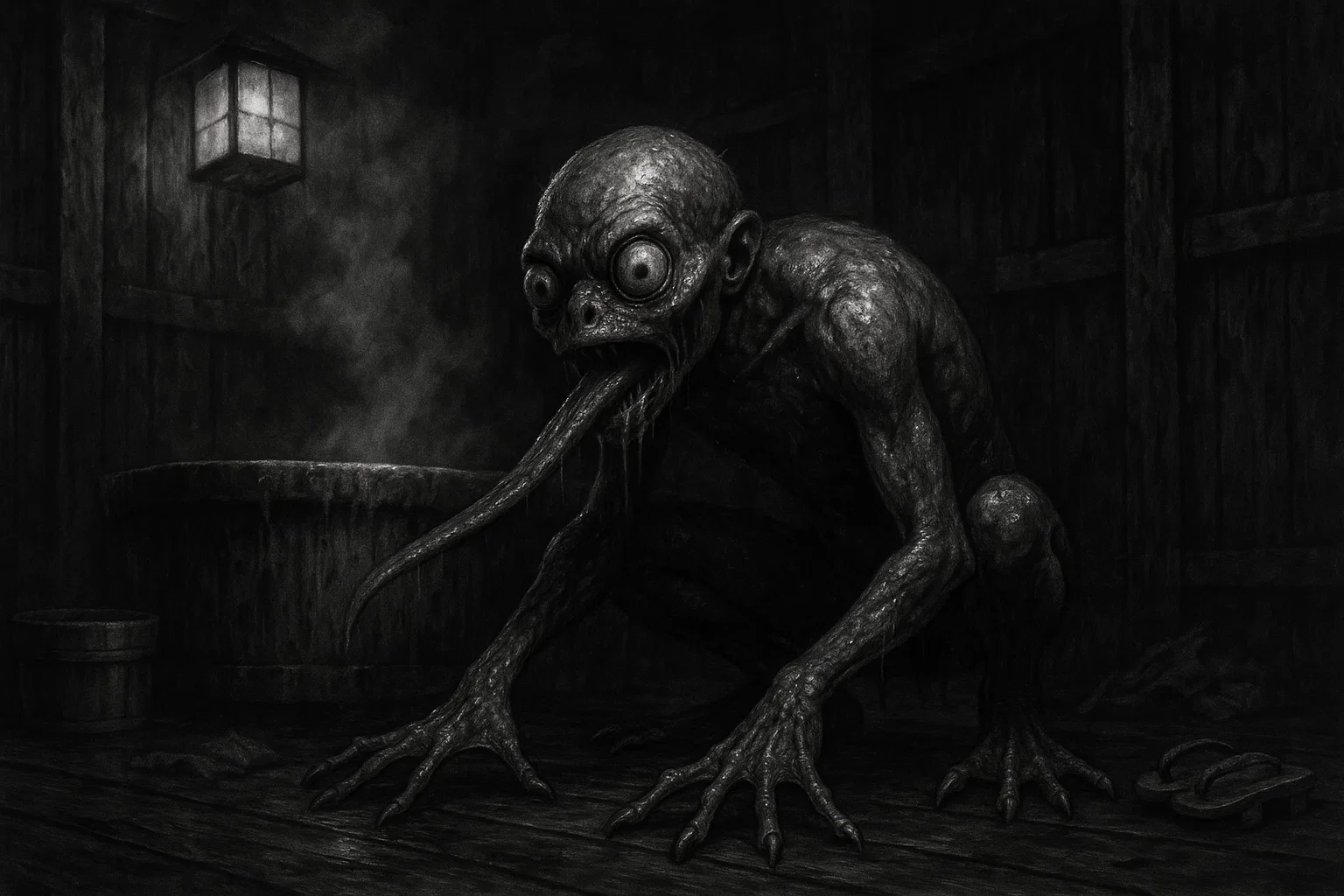
The yōkai, often depicted as a small, humanoid figure with slimy skin and an elongated tongue, licks away grime, mold, and filth accumulated in bathrooms or other neglected areas.
Unlike many yōkai that harm humans directly, the Akaname focuses on dirt itself—yet its presence serves as a rough reminder of hygiene’s importance in daily life.
In folklore, the Akaname does not attack people; rather, it embodies the consequences of neglect: by thriving in squalor, it indirectly warns against laziness and poor habits.
Summary
Key Takeaways
| Attribute | Details |
|---|---|
| Names | Akaname; alternate names include noro or yatai no kami in some regional tales |
| Translation | Filth licker (from aka meaning filth or dirt, and name meaning to lick) |
| Title | Bathroom ghost; filth licker |
| Type | Obake (shape-shifting spirit); sometimes classified under tsukumogami-like entities due to association with household neglect |
| Origin | Born from accumulated grime and human neglect in bathrooms or damp areas; not a spirit of the dead but a manifestation of uncleanliness |
| Gender | Ambiguous; often depicted as male or genderless, though some illustrations show feminine traits |
| Appearance | Small, frog-like humanoid with moist, reddish skin; long, prehensile tongue; clawed hands and feet; bulging eyes |
| Powers/Abilities | Exceptional tongue for licking filth; ability to appear in unclean places; minor shape-shifting to fit tight spaces |
| Weaknesses | Repelled by thorough cleaning; salt, incense, or ofuda charms; bright lights or frequent maintenance |
| Habitat | Bathrooms, especially old wooden ones; damp cellars, abandoned houses, or any filthy nook |
| Diet/Prey | Grime, mold, soap scum, and bathroom filth; does not consume humans |
| Symbolic Item | None; occasionally associated with a broom or cleaning rag in modern depictions |
| Symbolism | Consequences of neglect and poor hygiene; importance of cleanliness in Shinto purity rituals |
| Sources | Gazetteer of Japanese Yōkai by Toriyama Sekien; various Edo-period hyakki yagyō emaki (night parade scrolls) |
Who or What is Akaname?
The Akaname stands out in yōkai lore as a creature tied to the mundane horrors of everyday neglect rather than grand battles or spectral vengeance. It typically manifests in spaces where dirt builds unchecked—primarily bathrooms, but also any damp, forgotten corner of a home.
Folklore describes it as a small, amphibious being that appears at night to lap up the accumulated filth with its unnaturally long tongue; this act, while repulsive, does not directly endanger lives. Instead, the Akaname functions as a hygienic enforcer: its appearance signals that a space has fallen into disrepair, prompting humans to restore order.
Classified generally as an obake, the Akaname lacks the tragic backstory of yūrei or the martial prowess of oni. It represents a practical superstition rooted in Japan’s emphasis on cleanliness, especially in Shinto practices where purity (harae) wards off misfortune.
Alleged encounters with the Akaname are extremely rare in tales. However, when these encounters happen, they emphasize avoidance through diligence—scrub the bath, and the creature stays away.
“Akaname” Meaning
The term Akaname derives directly from Japanese linguistics, combining aka (垢), which refers to filth, grime, or bodily dirt such as skin flakes and soap residue, with name (舐め), the stem of the verb nameru, meaning to lick or lap up.
Together, it translates literally as “filth licker”—a straightforward yet evocative name that captures the yōkai’s defining behavior. This etymology reflects Edo-period (1603–1868) folk beliefs, where everyday language shaped monster nomenclature to convey moral lessons succinctly.
Historical variations appear sparingly across regions. In some Tohoku dialects, it shifts to akaname or aka-nameru, emphasizing the licking action with elongated vowels that mimic the sound of a tongue dragging across surfaces.
Early 18th-century gazetteers, influenced by concerns about urban hygiene during population growth, standardized the kanji as 垢舐, reinforcing its association with bathroom scum rather than general waste.
By the Meiji era (1868–1912), as public baths (sentō) became common, the name evolved in popular prints to include yuya no kai (bathhouse monster), though Akaname remained dominant.
How to Pronounce “Akaname” in English
In English, pronounce Akaname as “ah-kah-nah-meh.” Break it down syllable by syllable: “ah” like the “a” in father; “kah” rhyming with car; “nah” as in nah; and “meh” similar to may but shorter.
Stress falls evenly, though slight emphasis on the first and third syllables mimics natural Japanese cadence. Avoid blending into “ack-a-name”—keep each vowel clear and open for accuracy.
What Does Akaname Look Like?
Depictions of the Akaname across folklore and art consistently portray a diminutive, grotesque figure adapted to its filthy domain.
It typically measures no taller than a child, with a hunched posture that allows it to squeeze into narrow drains or behind tubs. The skin appears slick and moist, often in shades of reddish-brown or murky green, resembling the slime it consumes; this coating protects it from harsh cleaners and enables silent movement over wet tiles.
Bulging, frog-like eyes protrude from a rounded head, providing keen night vision in dim, steamy environments. At the same time, a wide mouth dominates the face—housing the signature elongated tongue that can extend up to several feet.
Clawed hands and feet, webbed in some illustrations, aid in clinging to slippery surfaces or scraping off stubborn grime. Hair is absent or sparse, matted with residue, and the body lacks clothing, emphasizing its primal, unclean nature.
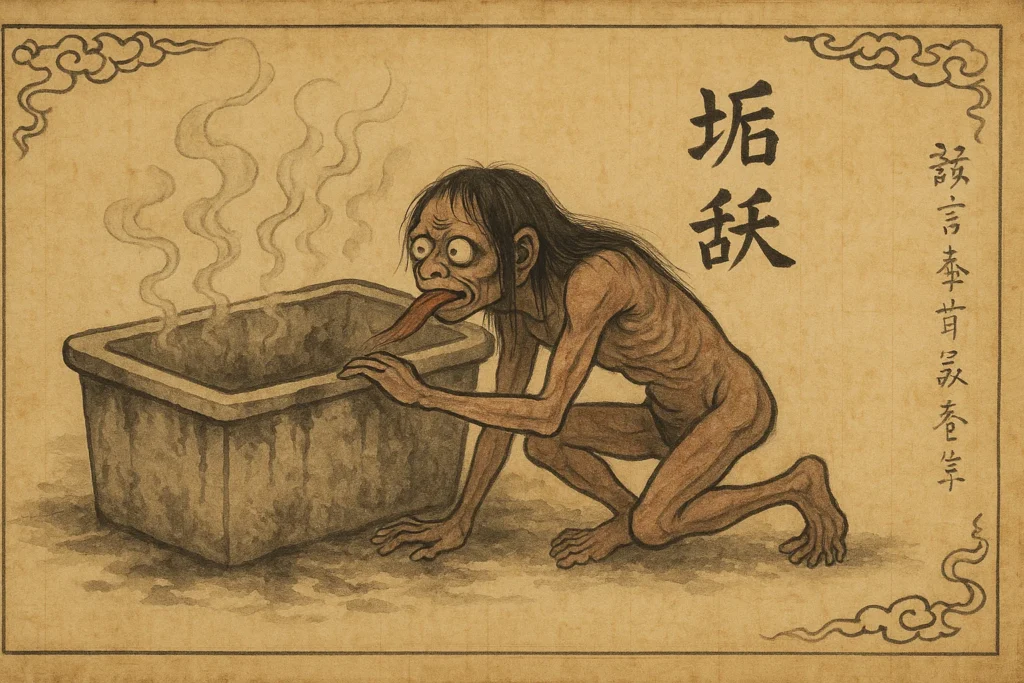
In Toriyama Sekien’s Gazetteer of Japanese Yōkai (1776), the Akaname is shown crouched in a wooden bathhouse, tongue outstretched toward moldy walls, with bony limbs and a potbelly from constant feasting on dirt. Later ukiyo-e prints from the 19th century add variations: some give it wart-like bumps for texture, others depict it with suction-cup fingers for better grip.
Regional tales from Kyushu describe a more humanoid form with elongated ears. Still, the core remains amphibious and repulsive—evoking toads or salamanders fused with human elements.
Modern manga and anime, such as in GeGeGe no Kitarō, retain these traits but soften them for appeal. However, traditional sources stress the revulsion to deter poor hygiene.
Overall, the Akaname’s form prioritizes function: every feature serves its role as a nocturnal cleaner of the neglected.
You may also enjoy:
Ammit: Devourer of the Dead in Ancient Egyptian Mythology
November 10, 2025
Allocer: Great Duke of Hell and the 52nd Spirit of the Ars Goetia
November 17, 2025
Amaymon: The Infernal King Who Commands Death and Decay
November 17, 2025
Azhi Dahaka: The Three-Headed Dragon of Zoroastrian Mythology
January 14, 2026
Mahakala: The Dark Guardian Who Consumes Evil
October 16, 2025
Al-Ahmar: The Tuesday King of the Seven Jinn
February 13, 2026
Habitat
The Akaname confines itself to environments defined by moisture, darkness, and accumulatedpheric neglect—primarily traditional Japanese bathrooms (yuya or furoba), but extending to any damp, unclean space.
Old wooden sentō (public bathhouses) from the Edo period serve as prime habitats, where steam condenses into mold and soap scum builds on planks untouched by scrubbing. These structures, often dimly lit and infrequently maintained in rural areas, provide ideal cover; the creature slips through cracks in flooring or hides in drainage pipes during the day, emerging after midnight when humans retire.
Beyond baths, folklore places the Akaname in cellars, abandoned wells, or the under-sinks of neglected homes—anywhere water lingers and dirt accumulates without intervention.
In urban legends from Tokyo’s pre-modern eras, it haunts overcrowded tenements with shared facilities, thriving on communal filth. The preference originates from necessity: dry, clean areas offer no sustenance, while bright, ventilated modern bathrooms with tiles and drains deter it entirely.
Shinto beliefs amplify this; purity rituals (misogi) cleanse spaces spiritually, making sanctified homes inhospitable. Seasonal factors play a role, too—humid summers accelerate mold growth, leading to more sightings in folklore compilations.
Origins and History
The Akaname appears prominently in Japan’s Edo-period yōkai catalogs, reflecting societal shifts toward urbanization and hygiene awareness amid growing populations.
Its earliest detailed depiction appears in Toriyama Sekien’s Gazetteer of Japanese Yōkai (Hyakki Tsurezure Bukuro, 1776), part of his influential series of illustrations of supernatural beings.
Sekien, drawing from oral traditions and earlier scrolls, portrays it as a bathroom denizen—likely inspired by practical concerns over disease in crowded cities, where poor sanitation led to outbreaks like cholera. This timing aligns with the Tokugawa-era (1603–1868) emphasis on public baths as social hubs, yet also hotspots for neglect in lower-class dwellings.
Pre-Edo traces are faint; no mentions appear in ancient texts such as the Kojiki (712) or Nihon Shoki (720), suggesting the Akaname is a relatively modern construct rather than an archaic myth. It may evolve from broader obake categories in medieval hyakki yagyō (night parade) emaki, where unnamed filth spirits lurk in backgrounds.
Buddhist influences during the Muromachi period (1336–1573) could contribute, as temples stressed ritual purity; unclean spaces invited kegare (pollution), manifesting as creatures. The Sengoku wars (1467–1603) displaced populations, leading to abandoned homes rife with grime—fertile ground for such tales.
By the Meiji Restoration (1868 onward), Western hygiene reforms diminished traditional wooden baths, pushing the Akaname into obscurity or nostalgia.
Folklorists like Kunio Yanagita in the early 20th century documented regional variants during fieldwork, noting its role in moral education. Post-WWII modernization—widespread plumbing and cleaners—further marginalized it, relegating the yōkai to pop culture revivals in anime and games.
Natural disasters (such as floods that created moldy ruins) sporadically revived this monster’s myths and legends.
Sources
The Akaname attains its canonical form in Edo-period illustrated works but does not appear in Japan’s foundational mythic compilations.
Additional scrolls, such as Bakemono Emaki (17th century), feature similar unnamed creatures. Still, no direct Akaname quotes exist beyond Sekien’s entry and its derivative prints.
| Source | Quote |
|---|---|
| Gazetteer of Japanese Yōkai (Hyakki Tsurezure Bukuro by Toriyama Sekien, 1776) | “垢舐 (あかなめ) – 湯屋の隅に潜み、垢を舐め取る。” (English translation: “Akaname – Lurks in the corners of bathhouses, licking away filth.”) |
Famous Akaname Legends and Stories
The Neglected Bathhouse of Edo
In a bustling Edo neighborhood during the late 18th century, a public bathhouse owner grew lax in his duties amid gambling debts; patrons complained of slippery floors and foul odors, yet he ignored the warnings. One moonless night, as the last customer departed, strange slurping sounds echoed from the changing room.
The owner, investigating with a lantern, glimpsed a small, reddish figure crouched by the tub—its tongue, thin and pink like a serpent’s, darting across the walls to devour layers of accumulated scum. Terrified, he fled and summoned a Shinto priest the next day.
The priest performed harae rituals, sprinkling salt and burning incense throughout the premises; workers scrubbed every plank until it gleamed.
That evening, the sounds ceased, and the Akaname vanished—never to return as long as cleanliness prevailed.
The Rural Farmhouse Encounter in Tohoku
Far north in a snowy Tohoku village around the Meiji era, an elderly widow lived alone in a creaky farmhouse with a rudimentary outdoor bath shed. Winters buried paths in snow, making daily scrubbing impossible; mold crept along the wooden benches, and grime thickened unchecked.
One frigid evening, as she prepared tea inside, wet smacking noises drifted from the shed—like a dog lapping at a bowl, but rhythmic and insistent.
Peering through a crack in the door, she beheld the Akaname: a squat, frog-skinned being no larger than a toddler, perched on the edge of the tub with eyes glowing faintly in the dark. Its tongue uncoiled fully three feet, sweeping away black residue in broad strokes; it paid her no mind, focused solely on its feast.
Shaken but wise in folklore, the widow gathered salt from her pantry and scattered it around the shed’s perimeter while chanting purification prayers.
By dawn, the creature had retreated into the drains, leaving the bath unnaturally spotless—though she vowed never to let filth build again.
The Urban Apartment Haunting in Post-War Tokyo
In the chaotic rebuilding of 1950s Tokyo, a young salaryman rented a cramped apartment in a wartime-damaged building; the shared bathroom down the hall fell into disuse, with lazy tenants leaving mildew-stained tiles and drains clogging weekly.
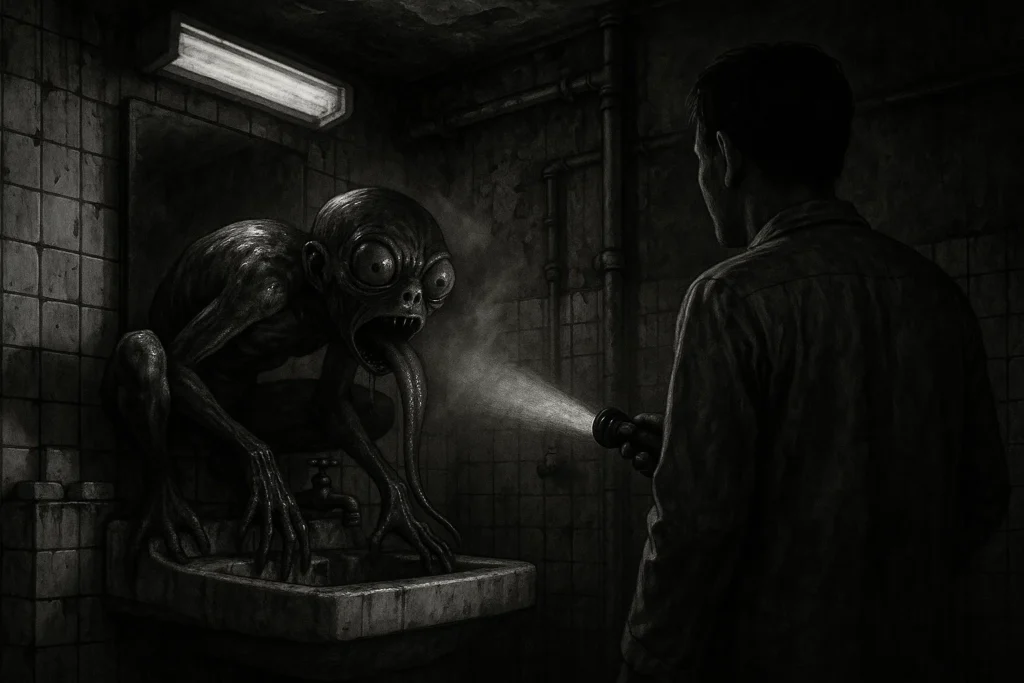
Late nights after overtime, he heard scraping and licking from the facilities—dismissing it at first as rats. But one insomniac evening, flashlight in hand, he confronted the source: the Akaname, slick and bulging-eyed, tongue flicking rapidly over the sink, consuming soap film and hair clumps.
Rather than panic, he recalled childhood tales and rallied neighbors for a group cleaning; armed with brushes, bleach, and ofuda from a nearby shrine, they scoured the space until it shone.
The noises stopped immediately, and the yōkai was sighted no more—transforming a communal eyesore into a pristine facility.
You may also enjoy:
Who Was Hiranyaksha, the Golden-Eyed Asura?
October 7, 2025
Who Is Ariton, the Infernal King of the Eastern Gate?
February 17, 2026
Who Is Astaroth in Demonology and the Ars Goetia?
February 20, 2026
Gandharva: God, Spirit, or Demon?
November 13, 2025
Alû: The Mesopotamian Demon of Malevolence and Pestilence
November 10, 2025
What Is a Tengu? Origins, Powers, and Dark Folklore
January 29, 2026
Akaname Powers and Abilities
The Akaname possesses modest supernatural talents geared toward survival in grimy confines rather than confrontation, making it far less formidable than aggressive yōkai like the oni or kappa. Therefore, it ranks low in threat hierarchies—more nuisance than destroyer—yet its abilities ensure persistence where humans falter.
Compared to shape-shifters like kitsune, which manipulate illusions on a grand scale, or gashadokuro that crush armies, the Akaname operates on a domestic level; its “power” lies in exploiting neglect, not raw strength.
Akaname’s powers and abilities include:
- Filth Licking: Uses an extendable, adhesive tongue to efficiently consume grime, mold, and residue; restores energy from unclean matter.
- Nocturnal Adaptation: Thrives in darkness with enhanced senses; eyes adjust to low light, skin camouflages against dirty surfaces.
- Space Compression: Squeezes into tiny gaps like drains or cracks; body flexes amphibiously for evasion.
- Grime Detection: Senses accumulated filth from afar; drawn instinctively to neglected areas like a moth to flame.
- Minor Regeneration: Heals from minor damage by absorbing bathroom scum; vulnerable outside filthy environments.
How to Defend Against Akaname
Defenses against the Akaname center on prevention through rigorous hygiene, as the creature materializes only where dirt invites it; direct confrontation is unnecessary and rare.
Folklore stresses proactive measures: daily scrubbing of bathrooms with brushes and hot water eliminates sustenance, rendering the space inhospitable. Salt scattered along thresholds or in drains acts as a barrier—its purifying properties in Shinto rituals dissolve the yōkai’s slimy coating upon contact, forcing retreat.
Incense burning, particularly mugwort or sandalwood, fills the air with cleansing smoke; priests recommend this during oharai ceremonies to expel kegare.
Ofuda (paper talismans) inscribed with protective kanji, affixed to doors or walls, ward off intrusion—especially those from shrines dedicated to purity deities like Suijin.
Bright lighting deters nocturnal visits; installing lanterns or modern bulbs in bath areas disrupts its habitat. In group settings like sentō, communal cleaning rotations ensure no buildup. If an encounter occurs, chanting Buddhist sutras or Shinto norito while cleaning drives it away without harm.
Ultimately, the most effective shield is habit: consistent maintenance starves the Akaname, preventing manifestation altogether and aligning with cultural values of order over chaos.
Akaname vs Other Yōkai
| Name | Category of Yōkai | Origin | Threat Level | Escape Difficulty |
|---|---|---|---|---|
| Kappa | Tsukumogami-like | River spirit from drowned children or turtles | High (drowns victims) | Medium (sumo wrestling or cucumber offering; requires strength or wit) |
| Yuki-onna | Yūrei | Spirit of women frozen in snowstorms | High (freezes breath) | High (recognize and flee warmth; hard in blizzards) |
| Tengu | Obake | Fallen yamabushi monks with bird features | Medium (pride inducement) | Medium (humility or fans; evasion in mountains) |
| Kitsune | Animal spirit | Foxes gaining tails over centuries | Variable (possession) | High (exorcism or Inari shrines; deception complicates) |
| Oni | Oni | Demonic ogres from hell or cursed humans | Very High (club attacks) | Low (iron weapons or beans; direct combat possible) |
| Rokurokubi | Obake | Women with stretching necks at night | Low (startles only) | Low (dawn returns normal; hide head to trap) |
| Noppera-bo | Yūrei | Faceless ghosts from vengeful spirits | Low (psychological fear) | Low (ignore and walk away; no physical harm) |
| Gashadokuro | Yūrei | Giant skeletons from starved battlefield dead | Very High (crushes) | Very High (run far; immense size and speed) |
| Jorogumo | Animal spirit | Spider transforming after 400 years | High (ensnares in webs) | Medium (fire or swords; webs burn but she’s cunning) |
| Futakuchi-ona | Obake | Women cursed with second mouth on head | Medium (eats double) | Medium (feed or shave head; ongoing curse) |
| Kuchisake-onna | Yūrei | Mutilated woman from vanity or accident | High (scissors attack) | High (confuse with answers; pursuit relentless) |
| Tanuki | Animal spirit | Raccoon dogs with shape-shifting leaves | Low (pranks) | Low (laugh off illusions; no real danger) |
| Nekomata | Animal spirit | Cats with forked tails after old age | Medium (controls dead) | Medium (bells or fish; fire weakness) |
Symbolism
| Attribute | Details |
|---|---|
| Element | Water (due to bathroom moisture and damp habitats) |
| Animal | Frog or toad (amphibious traits, slimy skin, and licking behavior) |
| Cardinal Direction | None specifically; loosely West in Onmyōdō for water associations |
| Color | Reddish-brown (filth-toned skin in depictions) |
| Plant | None; salt or mugwort for repulsion rituals |
| Season | Summer (humidity fosters mold and grime) |
| Symbolic Item | None; cleaning tools like brooms in preventive lore |
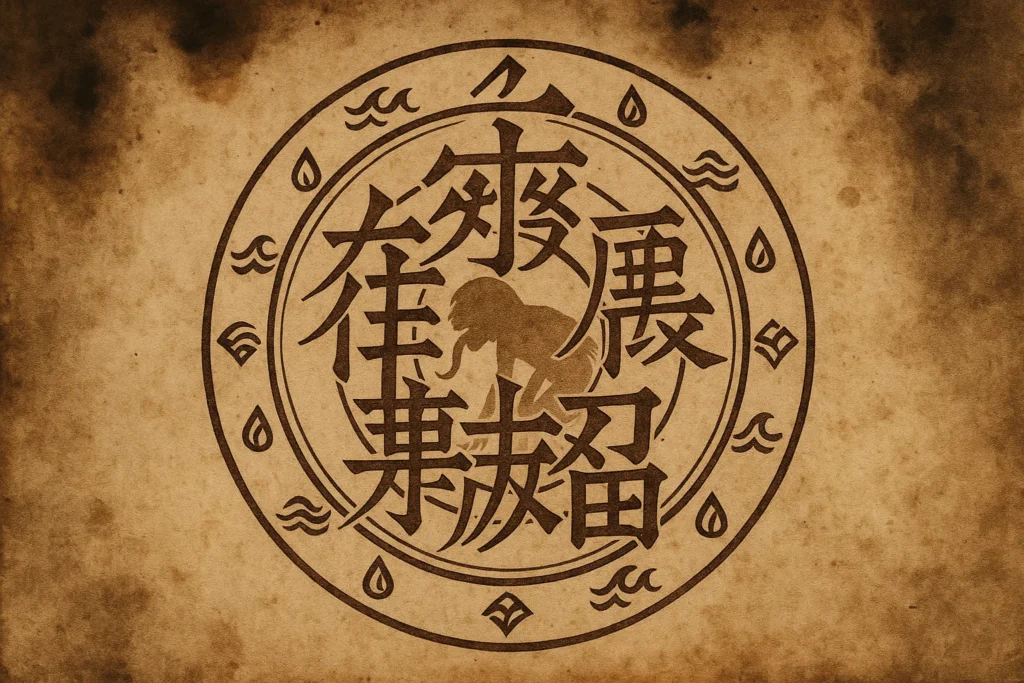
The Akaname embodies the cultural imperative of cleanliness in Japan, where Shinto purity rituals view dirt as spiritual pollution that invites misfortune. It represents neglected domestic spaces—bathrooms symbolizing transition and renewal—warning that laziness breeds chaos, even supernaturally.
In broader yōkai lore, it contrasts benevolent cleaners like zashiki-warashi, highlighting the role of hygiene in harmony.
Though absent from major festivals, the Akaname influences proverbs such as “clean house, peaceful spirit,” which are echoed in modern hygiene campaigns. Artistically, it appears in ukiyo-e as comic grotesquery, reinforcing taboos against squalor amid urbanization.
Its symbolism highlights social order: in a society valuing group welfare, personal neglect affects all, making the yōkai a subtle enforcer of communal responsibility.
You may also enjoy:
What Is a Dīv? The Terrifying Giant Demon of Persian Myth
January 22, 2026
Chort: The Sinister Slavic Demon of Chaos and Bad Luck
March 10, 2026
Who Were the Hinn, the First Spirits of Creation?
November 12, 2025
Barbas: The Lion Demon Who Spreads Disease
March 3, 2026
Empusa: The Blood-Drinking Wraith of Greek Mythology
November 20, 2025
Kuchisake-onna: Folklore, Origins, and Urban Legend History
February 10, 2026
Frequently Asked Questions
What is the Akaname yokai?
The Akaname is a Japanese yokai, an obake or spirit that haunts unclean bathrooms and damp areas, emerging at night to lick away accumulated grime, mold, and filth with its long, prehensile tongue. Depicted in Edo-period illustrations like those by Toriyama Sekien, it embodies the cultural emphasis on hygiene in Shinto purity rituals, serving as a cautionary figure rather than a direct threat to humans.
Is the Akaname evil or dangerous?
The Akaname is not inherently evil but rather a mischievous or neutral entity focused on consuming dirt rather than harming people directly; folklore portrays it as shy and avoidant of humans, thriving only in neglected spaces. One rare legend describes how the monster transforms into a beautiful woman in a hot spring to lick a man’s back clean—down to his bones—highlighting potential peril from its insatiable appetite.
What is the origin story of the Akaname?
The Akaname arises from human neglect, born spontaneously in spaces choked by grime rather than from a specific myth like drowned souls for kappa. First illustrated in Sekien’s 1776 works amid Edo sanitation woes, it personifies fears of disease in crowded bathhouses. Evolving through oral tales, it now symbolizes moral hygiene in yokai lore, with no ancient Kojiki mentions indicating its relatively modern folklore roots.
Is Akaname based on a real creature or phenomenon?
The Akaname draws on observable phenomena like bathroom mold and slime, anthropomorphizing them into a yokai to enforce cleanliness in pre-modern Japan, where poor sanitation bred illness. No literal creature exists, but its red, slimy form echoes real bacteria, such as Serratia marcescens, in damp tiles.
Has the Akaname appeared in anime or games?
Yes, the Akaname appears in anime like GeGeGe no Kitaro as a comedic bathroom haunter and in games like Onmyoji as a support shikigami with mold-based heals and scaling on crit rate for ranged DPS. Yokai Watch includes it as a classic yokai for befriending, while Nioh nods to its folklore in yokai encounters.
