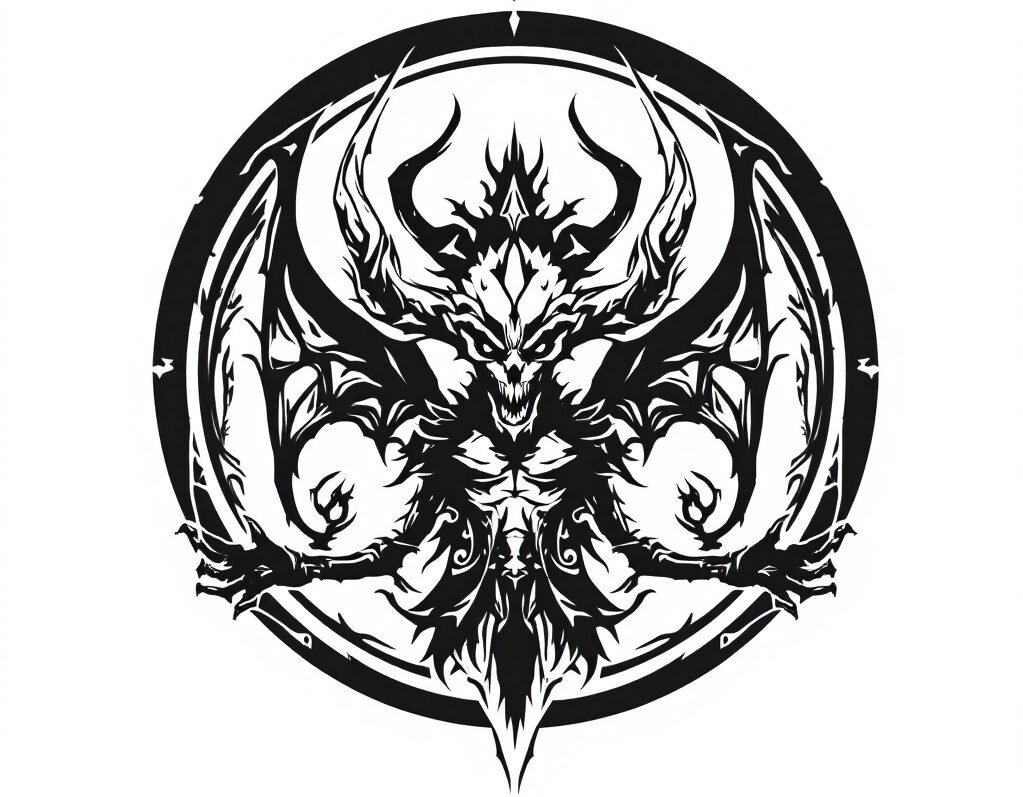
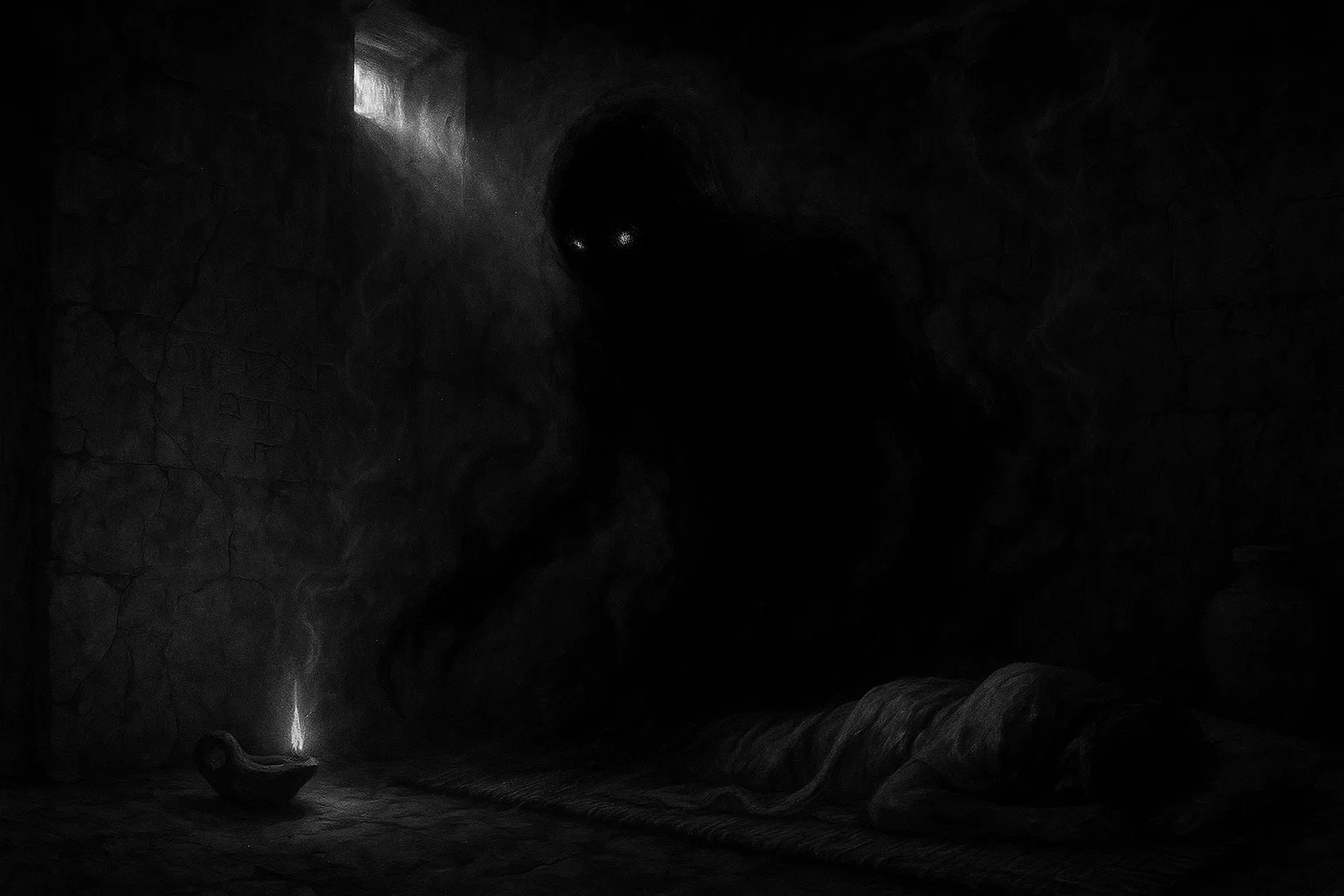
The Alû represents the fear of the unseen and shapeless in Mesopotamian beliefs. Most underworld beings have clear animal features, like a lion’s head or eagle’s talons, but this spirit is different because it has no clear physical form. It symbolizes chaos and silence, living in the spaces between life and death.
Unlike Lamashtu, who actively hunts in nurseries, the Alû is a quiet, suffocating presence that drains energy from people as they sleep. It is a link between physical illness and the Underworld’s heavy influence.
I based this article on a careful study of the Utukkū Lemnūtu tablets and the Maqlû series, making sure the traits I describe match real Neo-Assyrian protective traditions. [View Full Bibliography ↓]
Summary
Key Takeaways
| Attribute | Details |
| Names | Alû, Gallû (sometimes associated), Utukku (broad classification) |
| Title | The Shadow Demon, The Formless One, The One Who Covers |
| Origin | Sumerian and Akkadian Mesopotamia, c. 3rd to 1st Millennium BCE |
| Gender | Primarily Male, though often described as having no distinct form |
| Role | Underworld spirit, source of sleep paralysis and nocturnal terror |
| Associated Deity | Ereshkigal (as a denizen of her realm), Marduk (as an opposing healer) |
| Brings | Coma, sleep apnea, loss of speech, and physical wasting |
| Weaknesses | Exorcism by an Āšipu, magical amulets, and specific incantations |
| Realm/Domain | Irkalla (The Mesopotamian Underworld), ruins, and dark corners |
| Weapon/Item | A metaphorical “net” or “garment” used to envelop victims |
| Symbolism | The terror of the unknown and the weight of death |
| Sources | Utukkū Lemnūtu (Evil Spirits) series, Maqlû tablets |
Who or What is Alû?
The Alû is an evil spirit from the Sumerian and Akkadian traditions of ancient Iraq. It is often counted among the seven evil spirits, called the sebittu, and comes from the Underworld to trouble people.
Unlike the Lilitu, who is known for sexual predation, the Alû hunts at night and attacks people while they sleep. It is often described as “covering” someone, like a garment, a description that modern researchers connect to sleep paralysis.
In Mesopotamian beliefs, this demon was more than just a monster; it was part of the Underworld’s influence on the living. It lived in empty places like ruins, abandoned houses, and dark alleys, waiting to enter someone’s bedroom.
The creature’s main goal was to rob a person of their awareness and speech, drawing them partly into the silent world of Irkalla while they were still alive.
You may also enjoy:
Mahabali (Bali): The Benevolent Asura King
October 10, 2025
Nasnas: The Monstrous Demon Hybrid That Haunted Pre-Human Earth
November 12, 2025
Ammit: Devourer of the Dead in Ancient Egyptian Mythology
November 10, 2025
Who Was Hiranyakashipu, the Demon King of Hindu Mythology?
October 6, 2025
Edimmu: The Mesopotamian Wind Demon That Steals Life
November 6, 2025
“Alû” Meaning
The name Alû comes from the Sumerian word Gallû, which transformed over time as the Akkadian language developed. At first, the word was linked to storms that brought sudden darkness. Later, in Akkadian, it came to mean a certain kind of sluggish demon.
Historically, the name means “that which covers” or “envelops.” This is important because it describes how the demon attacks—not by biting or clawing, but by coming down on its victim. Some word lists also connect the name to “leper” or someone “unclean,” showing that the demon also stood for social isolation and physical decline.
Some sources use the name for lewdness or madness, but its main meaning is still the heavy, shadowy force that affects people at night.
How to Pronounce “Alû” in English
To say the name in English, use two syllables. The first is a short “a” like in “father,” and the second is a long “oo” as in “blue.” The stress goes on the last syllable, so it sounds like ah-LOO. The circumflex over the ‘u’ means the vowel should be held a bit longer.
Origins
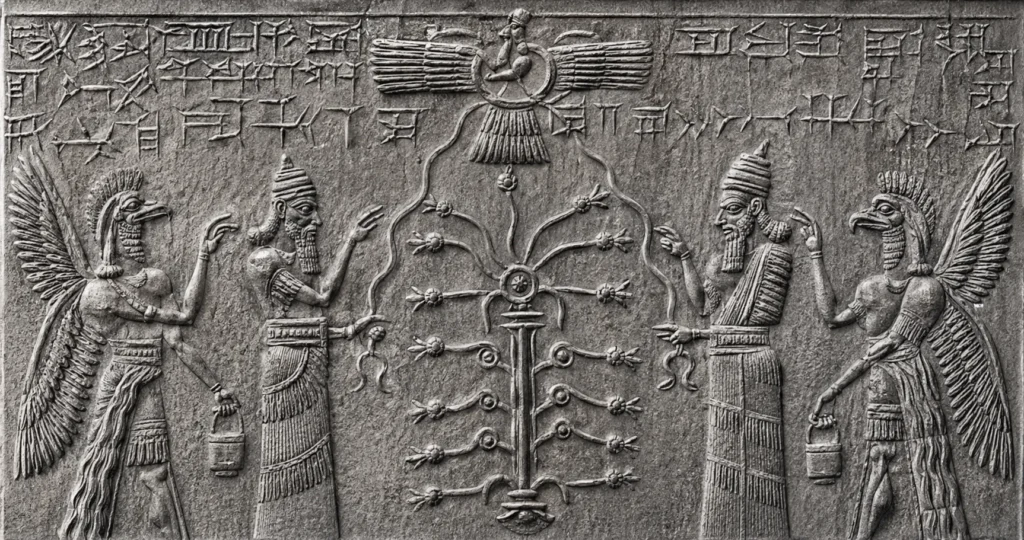
The Alû first appeared in the Early Dynastic III period (about 2600–2350 BCE) in Mesopotamia, showing up in some of the oldest Sumerian incantations. Word lists from Fara and Abu Salabikh show that people already knew about this spirit before the Babylonian gods were organized.
In these early times, the Alû was usually grouped with the Udug (called Utukkū in Akkadian), a general term for spirits from the Abzu or the Underworld. Unlike the main gods, this spirit had no temple or official priests. Instead, it was part of home protection and folk exorcism.
In the Old Babylonian period (about 1894–1595 BCE), the demon’s role became more focused in medical and magical texts. It transitioned from a general spirit of the desert to a specific cause of mysterious illnesses.
Studies of the Utukkū Lemnūtu (“Evil Utukkū”) series, a set of sixteen tablets from the Neo-Assyrian and Neo-Babylonian periods, show that people thought the Alû was created in the dark parts of the Underworld, Irkalla, as a result of flaws in the cosmic order.
Tablet V says the demon is one of seven evil siblings. Even though they had no divine parents, they were sometimes called the “progeny of Anu” to show their great power and wild nature.
The main places where people tried to drive away this demon were the cities of Nippur, Uruk, and later Nineveh. As Akkadian replaced Sumerian, the name shifted from Gallû, which originally meant “police” spirits, to the specific Alû.
This evolution shows a shift in Mesopotamian thinking. The Alû went from being a “demon of the law” that punished the wicked, to a random predator attacking innocent people in their sleep. By the time of the Library of Ashurbanipal (7th century BCE), it was known as a “demon of the ruins,” closely tied to the decay of empty towns.
Genealogy
The Alû’s origins are purposely unclear, which fits its chaotic nature. Most myths say it was “begotten of the underworld” instead of being born from a specific god. It is often called a brother or companion to other evil beings, such as the Lilitu, Udug, or Sebittu.
The Sebittu, called “The Seven Evil Spirits” in the Utukkū Lemnūtu series, are a group of powerful, shapeless demons born from the sky god Anu and the earth. Unlike the Alû, who acts alone, these seven work together as a storm of chaos.
In Mesopotamian stories, especially Tablet XVI of the Utukkū Lemnūtu, the Sebittu are called “messengers of Anu.” They are sent from the heavens to cause chaos on earth and even trouble the gods, including a story where they block out the Moon-god, Sîn.
What Does Alû Look Like?
The Alû is best known for lacking limbs or features. Ancient texts call it “formless,” like a dark, shifting mass or a “bag of bones.”
Sometimes, according to lore, to has no ears, mouth, or eyes, showing that people cannot sense or reason with it. When it does take shape, it looks like a dark shadow stretching across a room, shaped like a person but with no real detail.
The “Bag O’ Bones” idea probably comes from the skeletons found in ruins where the demon was believed to live. For ancient people, a faceless being was especially scary because it was outside the normal order.
Unlike other demons that mix animal parts, the Alû is about taking away features. It strips away the human form, just as it was thought to drain the life from its victims until they were empty.
Connections to Other Ancient Demons
| Name | Genealogy | Type | Appearance |
| Pazuzu | Babylonian | Wind Demon | Lion head, bird wings, scorpion tail |
| Lamashtu | Akkadian | Child-thief | Lion head, donkey teeth, hairy body |
| Apep | Egyptian | Chaos Serpent | Massive, coils of a giant snake |
| Ammit | Egyptian | Soul Devourer | Crocodile, lion, and hippo hybrid |
| Girtablilu | Sumerian | Scorpion-man | Human torso with a scorpion tail |
| Asag | Sumerian | Disease Demon | Hideous, many-armed stone creature |
| Humbaba | Babylonian | Giant Guardian | Face made of coiled intestines |
| Keres | Greek | Death Spirits | Dark-winged female figures with claws |
| Empusa | Greek | Shapeshifter | One leg of bronze, one of a donkey |
| Ghouls | Arabian | Graveyard Spirit | Hairy, anthropomorphic shape-shifters |
Alû Powers and Abilities
This demon’s power comes from its invisible weight and its ability to get past physical barriers. It is seen as a mid-to-high-level threat among Mesopotamian demons because it attacks people when they are most vulnerable—while they sleep. Its strength is not in fighting, but in suppressing its victims more spiritually.
- Nocturnal Suffocation: The ability to press down on a victim’s chest, preventing breath and movement.
- Speech Suppression: The demon “steals” the victim’s voice, leaving them unable to call for help or recite prayers.
- Formlessness: Its lack of a fixed body makes it immune to physical weapons like swords or spears.
- Vitality Draining: Over long periods, its presence causes the “wasting disease,” where a victim grows thin and pale.
- Mental Intrusion: It can induce terrifying hallucinations or “visions of the night” that lead to madness.
You may also enjoy:
What Is a Qareen and Why Does It Follow Every Human Being?
October 8, 2025
Who Is Ariton (Egyn), the Infernal King of the Eastern Gate?
February 17, 2026
Abura-akago: The Bizarre Oil-Licking Yōkai
October 22, 2025
Who Were the Hinn, the First Spirits of Creation?
November 12, 2025
The “Blanket of Irkalla”
The Alû is in a special category in the Utukkū Lemnūtu series, which focuses on “evil spirits” that get around the city’s social and divine protections. While Lamashtu and Pazuzu have clear animal features, what is remarkable about the Alû is its complete invisibility.
The Alû is often said to “envelop” or “cover” a person like a garment. In Mesopotamian medicine, especially in the Bīt Mēseri series, this was a real description of sleep paralysis, not just a metaphor.
I believe the ancient Mesopotamians saw the loss of speech and the feeling of weight on the chest as the Underworld invading the body. The demon was not a physical intruder, but a bit of “non-existence” that slipped from the world of the dead into the world of the living.
The most important insight here is the link between the Alû and the word for leprosy (saharsubbû). In several medical texts, the symptoms of being “seized by the Alû”—like numbness in the face, loss of voice, and wasting away—are almost the same as ancient descriptions of leprosy. This means the demon was seen as the religious explanation for social isolation.
Since the demon had “no mouth and no ears,” it symbolized people who could no longer speak or listen in their community. For ancient Babylonians, this demon did more than cause illness—it erased a person’s identity, turning them into a “formless” ghost before death.
My research also shows that the Alû represents a real environmental danger: the still, lifeless air ruins. While Pazuzu was the sharp wind of the mountains, the Alû was the stale air of empty buildings and dry wells. In the Diagnostic Handbook (SA.GIG), doctors often diagnosed the “Hand of the Alû” when someone was found collapsed in a ruin or dark place.
This shows a cultural fear of decay. People worried that if they did not maintain their cities and homes, the empty void of the desert and the Underworld would quickly take over. The Alû became a symbol of this breakdown, thriving wherever civilization weakened.
Rituals, Amulets, and Protective Practices
To protect against this shadow, people used both physical barriers and spiritual rituals. Since the demon had no shape and could slip through cracks, rituals aimed to strengthen the home’s and body’s boundaries.These practices tried to drive the demon away by naming it and ordering it back to the wastelands or Underworld.
Incantations and Ceremonies
The main ritual to get rid of this demon was a ceremony that involved naming and transferring its power. An Āšipu, or exorcist, would come to the sick person’s home. They would make a small statuette out of clay or wax, and the demon’s influence would be symbolically moved from the person into the figurine.
One of the central incantations from the Utukkū Lemnūtu series reads:
“The evil Alû who covers the man like a garment, / Who has no hands, who has no feet, / Who has no body, / Who wanders through the streets at night, / By Heaven be thou exorcised! By Earth be thou exorcised!”
The ritual often used sacred water and burned bitumen or sulfur, whose strong smell was thought to drive away spirits used to clean air. The exorcist would walk around the patient’s bed, making a circle of flour to keep the demon from coming back.
Amulets and Talismans
People used amulets made of unbaked clay or hematite to keep this shadow away. Hematite, a heavy dark stone, was chosen because its weight was believed to balance out the demon’s own weight. These amulets often featured protection spells or images of stronger protective gods or demons, such as Pazuzu.
The idea was often to use a “greater terror” to frighten the Alû away. Amulets were not only worn but also placed at key spots, such as windows, doors, and the corners of the bed. This was because people believed that demons entered through gaps in a building’s structure or through its spirit.
Professional Practitioners
The Āšipu was the special priest-exorcist who handled these cases. Unlike the Asû, or physician, who used herbs and bandages, the Āšipu focused on the spiritual causes of illness. They were well-educated and worked in the temple system.
When dealing with the demon, the Āšipu did not use his own power but acted as a channel for Enki (Ea), the god of wisdom and magic. By wearing special robes and saying the “true” names of the Underworld, he could order the formless demon to disappear.
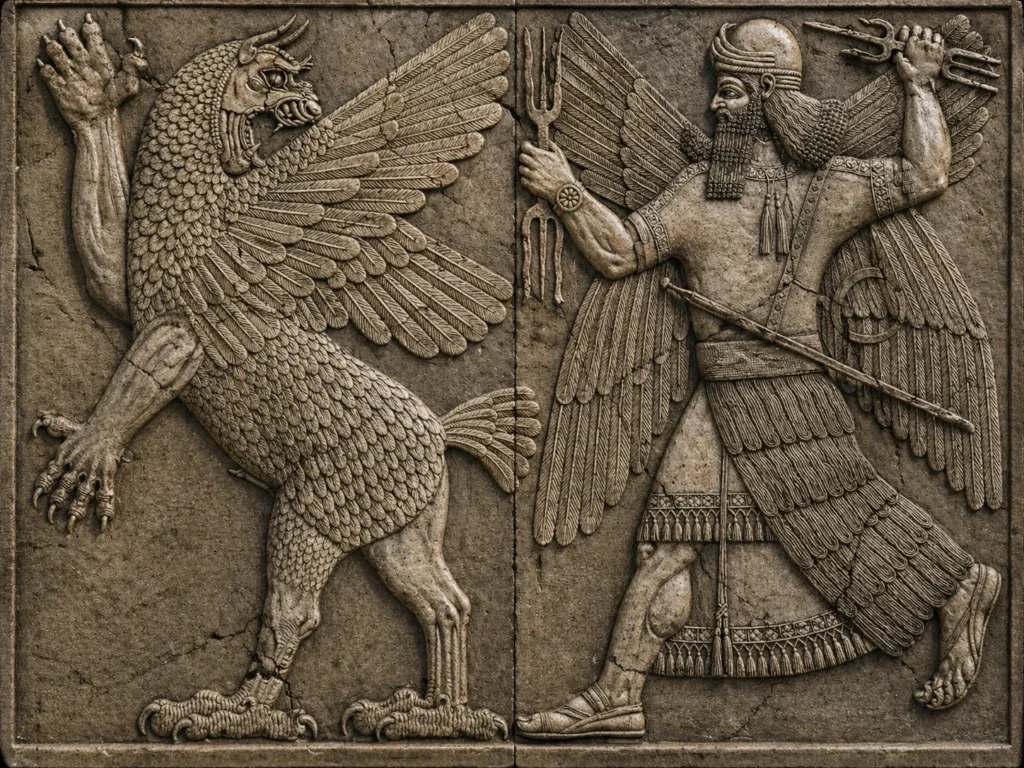
- Pazuzu Figurines/Amulets: The most famous apotropaic device was the Pazuzu amulet or statuette. Although a demon himself, Pazuzu was considered the natural enemy of other malevolent spirits.4 Placing a Pazuzu head on a wall or wearing a small Pazuzu amulet was believed to repel the Alû and other demons of the night and disease.
- Protective Wall Markings: Ritual markings, such as bit mēseri (house siege) rituals, involved placing specific magical bricks or clay figurines (often of benevolent or powerful demons, such as Lamassu or Ušumgallu) into the walls or under the floor of a house. These served as a magical military garrison to prevent the stealthy entry of spirits like the Alû.
- Neck Amulets: Small cylinder seals or plaques inscribed with specific protective incantations mentioning the Alû and its banishment were worn by vulnerable individuals, serving as a personal, portable boundary against the demon’s seizing power.
You may also enjoy:
Mahakala: The Dark Guardian Who Consumes Evil
October 16, 2025
Abadir: The Demon Servant of Chaos and Dispersion
September 30, 2025
What Is a Bhuta? The Backward-Footed Ghosts of Hindu Horror
February 5, 2026
What Is Baku? The Bizarre Yōkai That Eats Nightmares
January 28, 2026
Bibliography
Author’s Note: The Utukkū Lemnūtu texts helped explain why the Alû was seen as formless. The medical records in the SA.GIG showed its link to physical wasting. By comparing these ritual texts with older Sumerian word lists, I saw how the Alû transformed from an official underworld enforcer to a wild, nighttime predator. This mix of temple literature and folk medicine lets us see the Alû not just as a myth, but as a real psychological fear for ancient Mesopotamians.
- Konstantopoulos, Gina. (2020). Demons and exorcism in ancient Mesopotamia. Religion Compass. 14. 10.1111/rec3.12370.
- Geller, Markham J. Healing Magic and Evil Demons: Canonical Udug-hul Incantations. De Gruyter, 2015. Internet Archive.
- Schwemer, Daniel. The Chicago Maqlû Fragment (A 7876). Iraq, vol. 71, 2009, pp. 53–87.
- Katz, Dina.Sumerian Funerary Rituals in Context. Academia.edu.
- Heidel, Alexander. The Gilgamesh Epic and Old Testament Parallels. University of Chicago Press, 1946 (repr. 1963).
- Schwemer, Daniel. (2022). Bīt mēseri at Aššur. Zeitschrift für Assyriologie und vorderasiatische Archäologie. 113. 10.1515/za-2022-0013. ResearchGate.
- George, Andrew. (2013). The Poem of Erra and Ishum: A Babylonian Poet’s View of War. 10.5040/9780755607969.ch-002. ResearchGate.
- Cox, Ann M. Sleep paralysis and folklore. JRSM open vol. 6,7 2054270415598091. 28 Jul. 2015, doi:10.1177/2054270415598091.