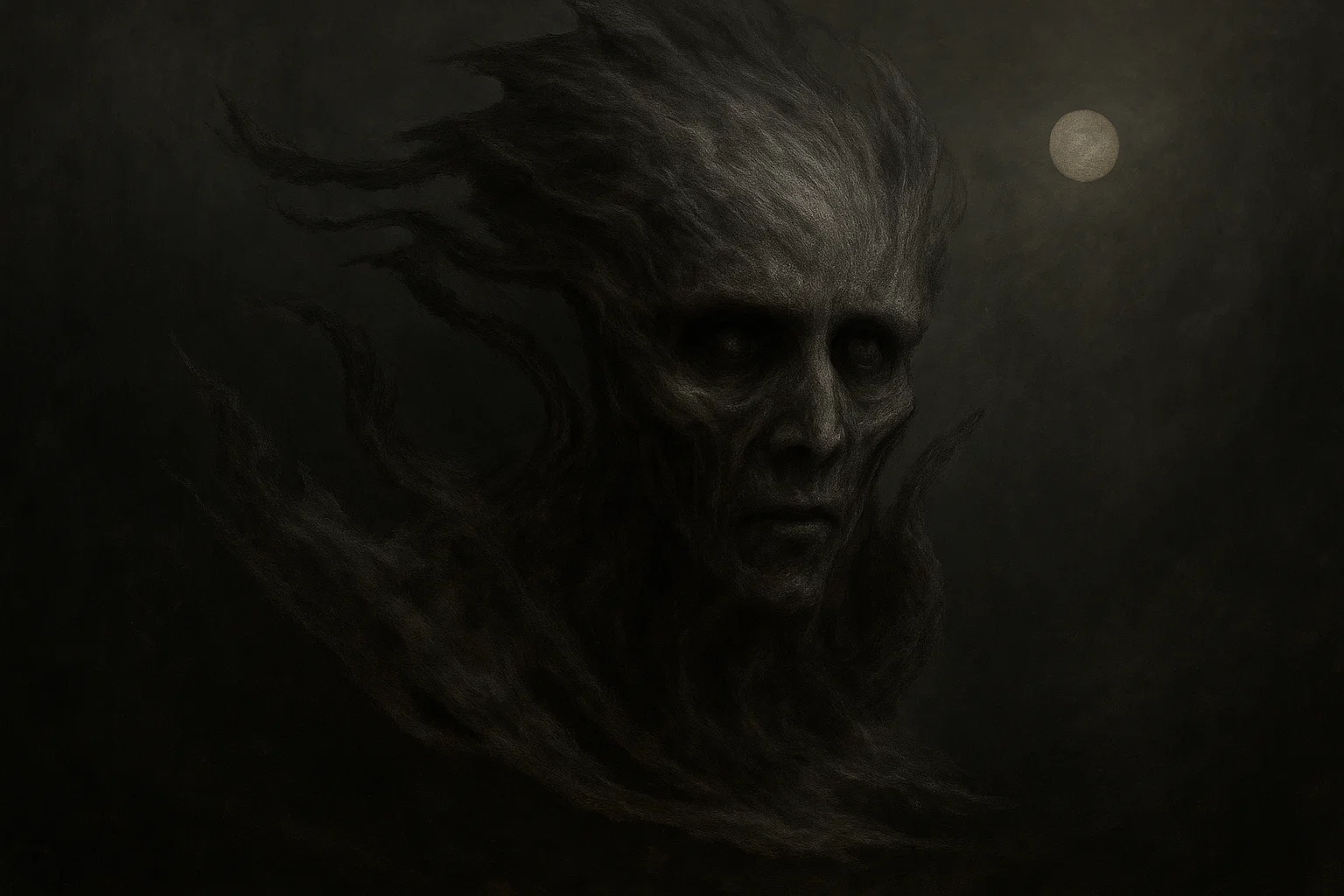

The Hinn are a class of supernatural entities in Pre-Islamic Arabian mythology and subsequent Islamic folklore. They are often categorized as a type of Jinn.
According to legends, they are among the earliest inhabitants of the Earth, predating both humanity and the more widely known categories of Jinn (such as the Ifrit or Marid).
Sources often describe these entities as weak, suggesting a lower level of power than later, more materialized Jinn types. Historically, they are sometimes considered the predecessors or ancestors of the Jinn proper, forming part of a successive chain of created beings who populated the world before Adam.
While they can be depicted as neutral forces of the wilderness, accounts also mention their potential for malevolence, tying them into the broader Arabian understanding of unseen desert spirits.
Summary
Key Takeaways
| Attribute | Details |
| Names | Hinn, Hainn |
| Type | Predecessor Jinn, Weak/Ethereal Jinn |
| Title | None specified; sometimes referred to collectively as the First Race or First Generation |
| Gender | Male or Female; typically unspecified in general descriptions |
| Servitors | None specified |
| Superior Jinn | None specified, but traditionally predates Iblis and the Shayatin |
| Powers | Minor influence on air/wind; basic mischief; possessing a fragile or temporary existence |
| Appearance | Often described as wind-like, misty, or ephemeral; generally weak or frail in form |
| Etymology | Root potentially relates to weakness, decline, or minor movement |
| Associated Figures | Binn (another rumored pre-Adamic race), Nassnās (a weaker hybrid human/jinn creature) |
| Weaknesses | Presumably susceptible to powerful spiritual/divine authority and strong wind resistance |
| Opposing Holy Figure | Prophet Sulayman (Solomon) by extension of his authority over all Jinn; no specific opposing figure |
| Social Structure or Tribe | A distinct, ancient race or category of Jinn, preceding the later Jinn hierarchy |
| Followers/Tribe Size | Vast in the distant past; greatly reduced or extinct in later folklore |
| Primary Sources | Pre-Islamic Arabian oral tradition, Medieval Islamic historical works (e.g., Al-Jāḥiẓ, Al-Damīrī) |
Who or What is a Hinn?
These enigmatic entities come from Pre-Islamic Arabian belief, preserved and discussed within later Islamic cosmography and folklore.
They are identified as a distinct, yet weak, form of Jinn. Their significance lies primarily in their chronological placement: they are said to be among the original sentient races to inhabit Earth, residing here for a long time before the creation of the current race of Jinn and before the time of Adam.
Sources depict them as having a tenuous existence, often associated with the air, wind, or faint impressions, which aligns with their perceived weakness.
Unlike the powerful, organized Ifrit or the shapeshifting Ghul, these beings are often presented as more ephemeral and less impactful on human affairs in the current age.
“Hinn” Meaning
The name Hinn (or Hainn) has roots that point toward its descriptive nature in relation to its perceived qualities. Their etymological basis is often linked to Arabic words suggesting weakness, minor action, or a gentle descent/decline.
One possible linguistic root is the Arabic verb Hanna, which can refer to groaning, sighing, or a faint, plaintive sound, suggesting the Hinn’s ethereal, almost melancholic, or fragile existence.
Another interpretation links the term to a sense of decline or weakness, reinforcing the notion of these entities as a feeble or waning race that existed before the current, more powerful Jinn species. This etymological understanding is consistent with their description in folklore as predecessors who were largely supplanted or decimated.
Medieval Islamic researchers often debated the exact relationship between Hinn and Jinn, with some treating the Hinn as a specific, minor genus of Jinn and others as an entirely separate, older species.
How to Pronounce “Hinn” in English
The name is typically pronounced in English as ‘Hin’ (rhymes with “pin”). The vowel sound is short, and the initial H is aspirated.
What Does Hinn Look Like?
Descriptions of these entities are characteristically vague, reflecting their status as an ancient, ephemeral, or nearly forgotten race. Unlike the Ifrit (associated with fire and smoke) or the Ghul (often depicted with monstrous, animalistic features), they are most commonly defined by a lack of substantial physicality, underscoring their weakness.
Core accounts, particularly in Sufi and Hadith traditions, portray them as shapeshifters who take the form of dogs—often wild or black dogs—known as “the dogs of the Jinn.” Some variants describe them as misty, ethereal forms or as mere shadows or impressions that resemble faint outlines of beings but lack the solidity of later Jinn.
Other accounts suggest a fragile or sickly appearance, evoking a form in decay or one constantly buffeted by the elements, aligning with the idea of a predecessor race whose time on Earth is past.
Their form is sometimes compared to the desert wind or dust devils, suggesting they are fluid, non-corporeal, or semi-transparent. Their lack of a consistent, terrifying, or powerful physical description sets them apart from the more prominent, malevolent Jinn.
You may also enjoy:
Barbas: The Lion Demon Who Spreads Disease
March 3, 2026
Who Was Hiranyakashipu, the Demon King of Hindu Mythology?
October 6, 2025
Demon Amy, the 58th Goetic Spirit: Origin, Powers, and Rank
January 12, 2026
Agubanba: The Ash-Born Demon of Japanese Folklore
October 23, 2025
Ambri: The Imperial Duchess of Caspiel’s Empire
December 1, 2025
Apophis: The Great Serpent of Egyptian Chaos
November 11, 2025
Origins
These entities originate in the ancient cosmologies of Pre-Islamic Arabia. Their earliest mention is rooted in the oral traditions and poetry of the desert tribes, where they formed part of a vast pantheon of unseen spirits inhabiting the wilderness. These early beliefs proposed that the Earth was successively inhabited by different races before humans.
In the Medieval Islamic historical tradition, particularly in the works of researchers—like Al-Jāḥiẓ (died 869 CE)—the Hinn are codified as the first race of inhabitants on Earth.
According to some narratives, God created the Hinn, who subsequently lived on Earth for a vast period. They were followed by the race of the Binn (another ephemeral species) and eventually by the Jinn (the ancestors of the current Jinn species, who were created from smokeless fire).
It is recounted in some lore that the Jinn rose against and exterminated the Hinn and Binn before their own corruption and subsequent subjugation by the angels and eventually by Prophet Sulayman (Solomon).
The integration of the Hinn into Islamic lore provided a comprehensive history of creation, presenting them as an extinct or severely diminished species whose historical role was to precede and set the stage for the current Jinn and human races.
Was Hinn Ever Mentioned in the Quran or Hadith?
The Hinn are not explicitly mentioned by name in the Quran or the canonical collections of Hadith. References in the Quran and Hadith focus on the general term Jinn or specific, powerful types such as Shayatin (devils) and Ifrit.
The concept of the Hinn as a distinct, pre-Adamic race primarily derives from the commentaries (Tafsir) and historical works (Tarikh) of early Islamic researchers who sought to elaborate on the vast chronology of creation and the nature of the Jinn based on earlier Arabian traditions.
Powers and Abilities
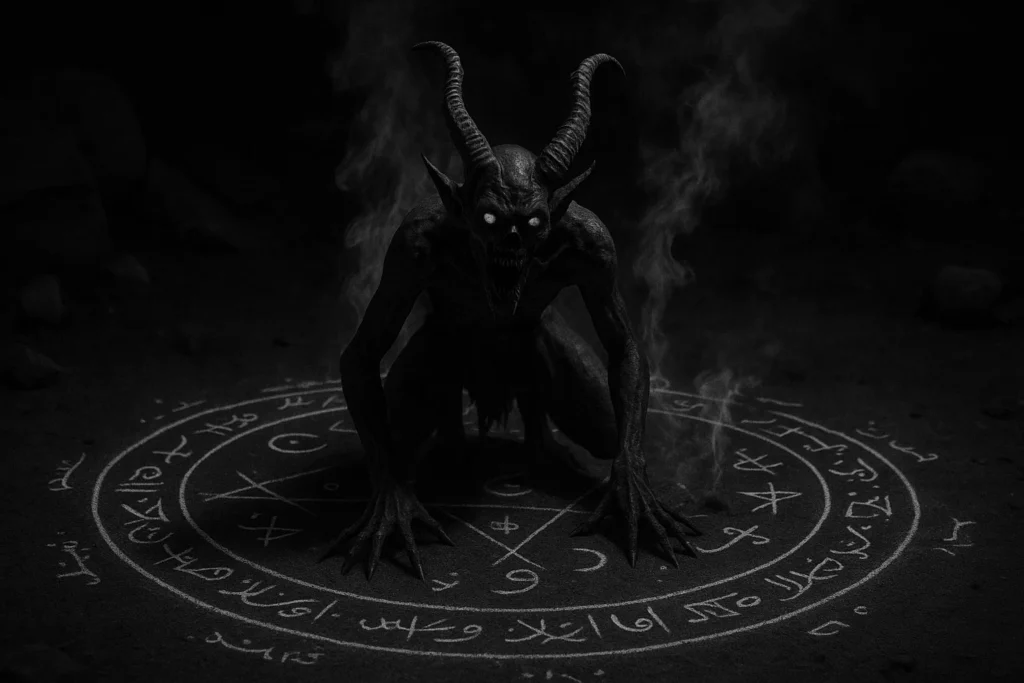
These entities are generally considered to have a lower power level than other recognized Jinn types. They are certainly far weaker than the mighty Marid (sea monsters) or the fiery Ifrit (strongmen), and they lack the specific, terrifying influence of the Ghul (grave-haunters).
Their power is often characterized by its ephemeral quality. It is rooted in minor acts of mischief rather than grand magical feats, such as indirect harm through their dog-like forms or subtle disturbances in the wilderness.
Influence on Humans and Possession
The influence of these entities on humans is generally minor and indirect, reflecting their weakness and decline. They are not usually associated with the grand acts of temptation or profound spiritual corruption attributed to the Shayatin (devils).
Manifestations of their influence are often subtle, presenting as minor sensory disturbances or fleeting psychological confusion. In historical accounts, possession by such a demonic entity is considered a less severe affliction than possession by other Jinn, potentially linked to encounters with wild dogs carrying “evil souls.”
Signs and manifestations include:
- Sudden, transient confusion or difficulty concentrating.
- Faint, whispering sounds perceived just at the edge of hearing.
- Feeling an inexplicable, cold breeze in an enclosed space.
- Minor physical clumsiness leading to slight accidents or unease around stray animals.
Unlike the powerful, personality-altering possessions, an encounter with these beings is more akin to a brief, vexatious haunting, often attributed to a low-ranking or desperate spirit.
You may also enjoy:
Tarakasura: The Dark Demon Who Ruled Hell on Earth
December 4, 2025
Palden Lhamo: The Black Goddess of Blood and Protection
October 20, 2025
What Is Qarin and Why Does It Follow Every Human Being?
October 8, 2025
Mahakala: The Dark Guardian Who Consumes Evil
October 16, 2025
Abadir: The Demon Servant of Chaos and Dispersion
September 30, 2025
Demon Alastor: The Grand Executioner of Hell
November 17, 2025
Protection and Exorcism Methods
Given their general weakness, protection against them and methods of exorcism historically focused on fundamental spiritual practices.
These are described as historical remedies rooted in Islamic spiritual prophylaxis:
- Recitation of the Adhān (Call to Prayer): The call to prayer is traditionally cited as a remedy that repels the Shayatin and other malignant Jinn, which would include the weaker Hinn.
- The Ayat al-Kursi (The Throne Verse, Quran 2:255): This verse is universally considered a powerful spiritual shield against all forms of evil and unseen malice, with its sheer spiritual weight sufficient to repel even a weak entity such as the Hinn.
- Bismillah: The simple recitation of Bismillah ar-Rahman ar-Raheem (In the Name of God, the Most Gracious, the Most Merciful) before actions or entering a house is an everyday protective measure against the lesser Jinn.
- General Piety: Maintaining ritual purity (wudu) and regular prayer (salat) creates a spiritual barrier that low-level, malevolent entities would find difficult to penetrate.
Hinn Myths, Legends, and Stories
The Predecessor Race Narrative in Historical Texts
Medieval Islamic historical accounts, particularly those aimed at establishing a full chronology of creation, consistently place the Hinn at the very beginning of Earth’s sentient inhabitants. According to these stories, a series of races inhabited the world before humanity.
After God created the Earth, the Hinn were the first race established to populate it. They lived for an indeterminate, vast period, often described as an era of peace and primordial existence. However, these initial races were prone to corruption and disobedience over time.
The Hinn eventually succumbed to infighting or strayed from divine law. Following their decline, the Binn, a succeeding race, was created and, in turn, became corrupt. Finally, the third and most significant race—the Jinn (who were created from smokeless fire, mārij min nār)—were placed on Earth.
The Jinn then received the divine command to purge the corruption left by their predecessors. This led to a great war where the Jinn, with or without the aid of angels, annihilated or severely reduced the Hinn and Binn populations, leading to their status in later lore as a nearly extinct or forgotten entity.
Hinn vs Other Jinn
The Hinn are distinct from other major Jinn types because they are classified as a low-power predecessor race.
| Jinn Name | Associated Traits/Influence | Rank/Origin | Key Traits/Powers |
| Ifrit | Mischief, Manipulation, Strength | Strong Jinn (fire-based), Quranic Lore | Great strength, control of fire/smoke, rapid travel, known for building tasks. |
| Marid | Pride, Rebellion, Ocean Power | King/Noble Jinn (sea-based), Arabian Folklore | Immense power, mastery over water and weather, highly resistant to binding magic. |
| Ghul | Gluttony, Grave Desecration | Necromantic Jinn (earth/graveyard), Arabian Folklore | Shape-shifts into animals (especially Hyenas), feeds on human flesh and corpses, haunts desolate places. |
| Shaytan | Disobedience, Temptation, Lying | Devil/Demon (offspring of Iblis), Quranic Lore | Whisper evil suggestions (waswasa), cause mental distress, lead humans to sin. |
| Si’lah | Deception, Trickery | Transient Female Jinn (forest/wilderness), Arabian Folklore | Shape-shifts (usually into a woman), but cannot perfectly conceal the form of a donkey’s foot. |
| ‘Ammār | Protection, Co-habitation | Domestic Jinn (house-dwellers), Islamic Folklore | Inhabit homes and live in peaceful co-existence with humans; can cause minor domestic accidents if disturbed. |
| Qarīn | Whispering, Personal Daemon | Companion Jinn (personal), Quranic/Hadith Lore | Assigned to every human, constantly whispers evil or bad advice, acts as a personalized tempter. |
| Jann | Neutrality, Transformation | Ancient/Lesser Jinn (Desert), Arabian Folklore | Often benign, capable of transformation, associated with whirlwinds, sometimes the first ancestor of Jinn. |
| Nasnās | Weakness, Monstrosity | Hybrid/Lesser Entity (Human/Jinn), Arabian Folklore | Often described as half-a-human (half-head, half-body, one arm, one leg), very weak, often cannibalistic. |
| Hatif | Warning, Guidance | Voice-only Jinn (Unseen Caller), Arabian Folklore | A Jinn whose presence is only known by an unseen voice, often delivering warnings or pronouncements. |
Position Among Jinn
The Hinn occupy a chronologically primal but functionally weak position within the overall structure of Jinn categorization. They are not part of the later, recognized hierarchy that includes the noble Marid, the powerful Ifrit, or the wicked Shayatin (devils).
Their placement is historical: they are the predecessors, the first generation of sentient beings created from a form of matter that was ultimately supplanted. This chronological seniority does not equate to power. Rather, it indicates their extinct or severely diminished status in the current cosmic order.
The relationship between the Hinn and the succeeding Jinn race is one of ancient enmity, as the Jinn are said to have exterminated the Hinn under divine command due to their corruption.
The Hinn, therefore, hold no formal rank in the active Jinn societies (such as those that serve Iblis or the tribes associated with the Prophet Sulayman).
Their existence is a historical footnote in Jinn theology, serving as an early example of a created race that failed to maintain righteousness and was consequently removed from prominence before the current human epoch began.
Hinn’s Sigil
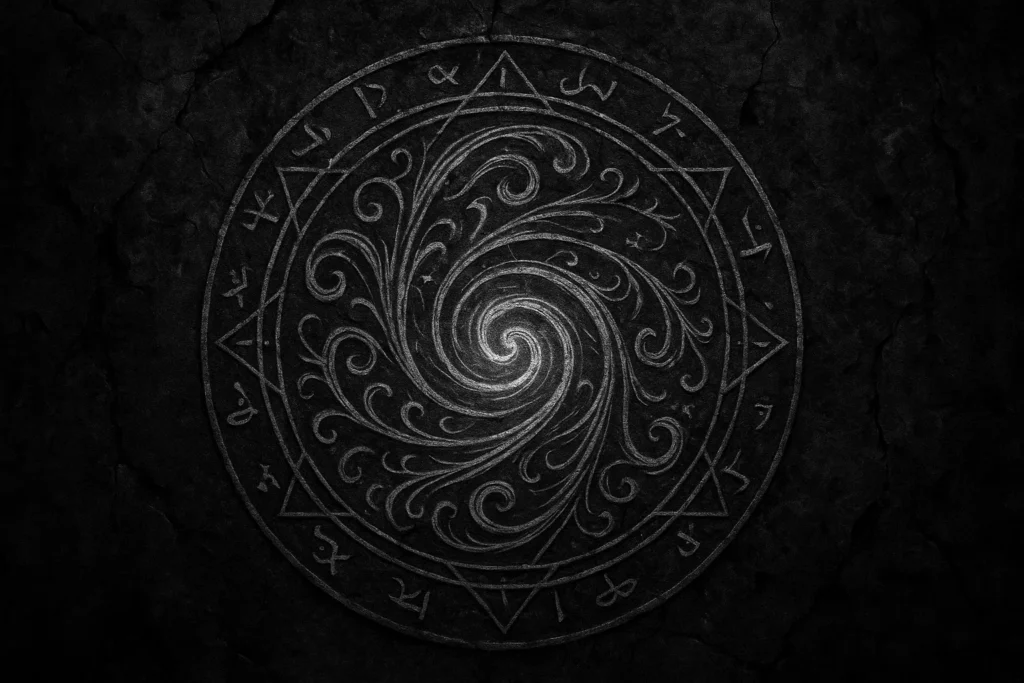
Due to the Hinn’s status as a pre-Islamic, predecessor race that largely faded from active folklore and was not a primary target for binding rituals, a unique, documented sigil or seal in the manner of those found in the Ars Goetia or Shams al-Ma’arif does not exist in known grimoires.
The entities that were given formal seals were typically those whose power was sought or whose malevolence required formal binding (e.g., Ifrit or specific powerful Shayatin).
The Hinn, being characterized by weakness, rarely required a dedicated magical seal for control or summoning within later occult practices. Any symbolic representation would be a modern construction based on their wind-like or shadowy descriptions rather than a historical seal of authority.
Summoning and Rituals
As a weak and ancient predecessor to Jinn, the Hinn are rarely mentioned in historical grimoires detailing specific summoning or binding rituals. The majority of historical Islamic occult practice focused on compelling or warding off the more powerful and active Jinn (such as the Ifrit or those bound by the authority of the Prophet Sulayman).
Historically, the most probable method of encountering a Hinn, rather than formal summoning, would have been through accidental trespass in ancient, desolate parts of the desert or forgotten ruins—places traditionally associated with ancient spirits.
Rituals for compelling even the weakest Jinn typically required:
- A Clean Circle: To protect the operator from the entity.
- Recitation of ‘Azā’im (Oaths/Incantations): Formulas often invoking the power of God or the authority of Sulayman to bind the entity.
- Fumigation: The use of specific bukhūr (incense) associated with the entity’s element (like air or earth).
However, due to the Hinn’s low power level, any general protective Ayat (Quranic verses) or Dua’ (supplications) would have been historically considered sufficient to repel or even passively banish them, rendering complex summoning and binding rituals unnecessary for this particular class of Jinn.
You may also enjoy:
Chort: The Sinister Slavic Demon of Chaos and Bad Luck
March 10, 2026
The Kumbhanda: Grotesque Demons of Buddhist Hell
November 13, 2025
What Is a Dīv? The Terrifying Giant Demon of Persian Myth
January 22, 2026
What Is a Yūrei? The True Meaning of Japanese Ghosts
January 30, 2026
Si’la: The Seductive Jinn Who Lures Travelers to Their Doom
October 9, 2025
Andhaka: The Blind Demon Born From Cosmic Darkness
February 6, 2026
Frequently Asked Questions
Are Hinn mentioned in Pre-Islamic Arabian poetry?
Yes, the Hinn are mentioned in pre-Islamic Arabian poetry. Along with the Jinn, the Hinn were mentioned in verses acknowledging their presence as unseen supernatural entities, often inhabiting desolate places in the wilderness. This demonstrates that belief in the Hinn as a distinct class of desert spirit existed long before the systematization of Islamic cosmology.
What is the distinction between Hinn and Binn?
The Binn are another race, similar to the Hinn, that is described in medieval Islamic historical and cosmological texts as a pre-Adamic race that inhabited the Earth before the Jinn. Some accounts, particularly those associated with sectarian traditions like the Alawi, link the Hinn to the element of Air and the Binn to the element of Water. Like the Hinn, the Binn are said to have been virtually exterminated by the succeeding race of Jinn due to their corruption and bloodshed.
Are the Hinn considered universally evil, or are they sometimes benevolent?
The Hinn are often characterized by their moral ambiguity, though they are generally portrayed as capable of malevolence. In pre-Islamic tradition, they were neutral spirits of the desert. In later Islamic lore, they are linked to the corruption and bloodshed of the pre-Adamic races, which led to their destruction. Some isolated folklore, however, describes them as guarding natural places and capable of rewarding respectful behavior, indicating they are not universally classified as wholly evil like the Shayatin.
Do any accounts link the Hinn directly to Iblis (Satan)?
Yes, some accounts link the Hinn to Iblis, though this is a minority view. The standard Islamic view is that Iblis is a Jinn. However, some early historical narratives, such as those narrated by Ibn Abbas in Tafsir al-Tabari, state that Iblis was from a race of angels named Al-Hin, or that Iblis led the angels in a battle against the corrupt Jinn, and the Hinn were part of Iblis’s group. Furthermore, some sources relate that the Hinn were created from smoldering or poisonous fire (sāmūm), which is distinguished from the mārij min nār (smokeless fire) used to create the regular Jinn, thereby placing them in a separate class associated with the devil’s element.
