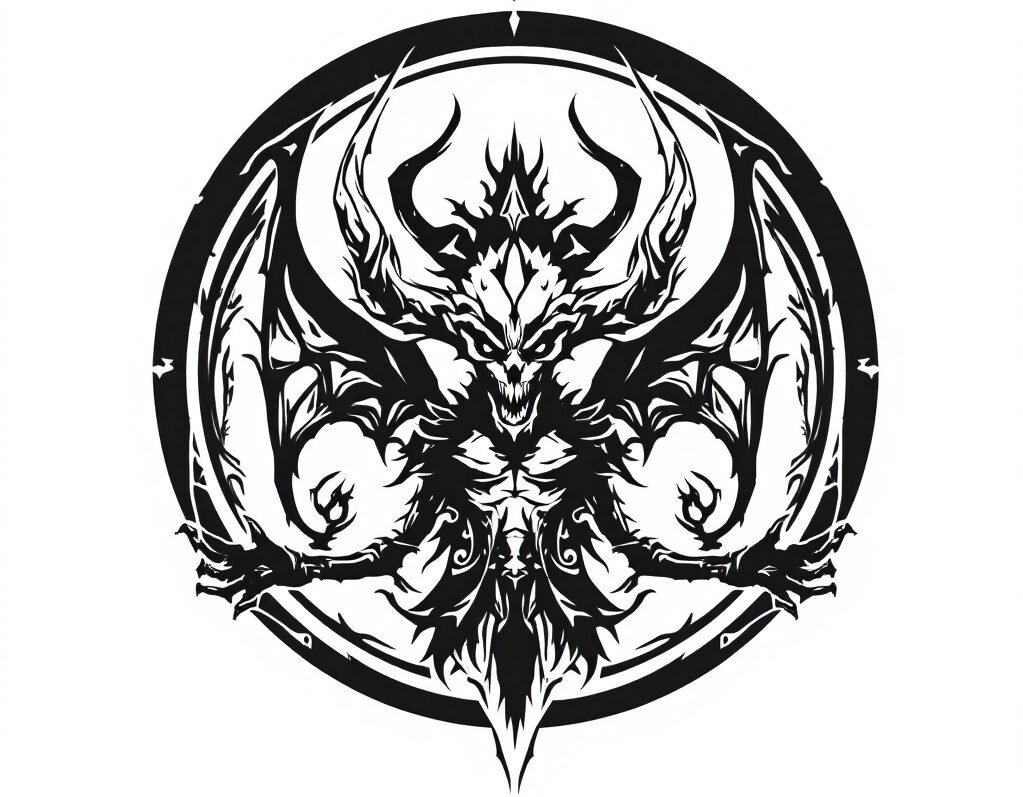
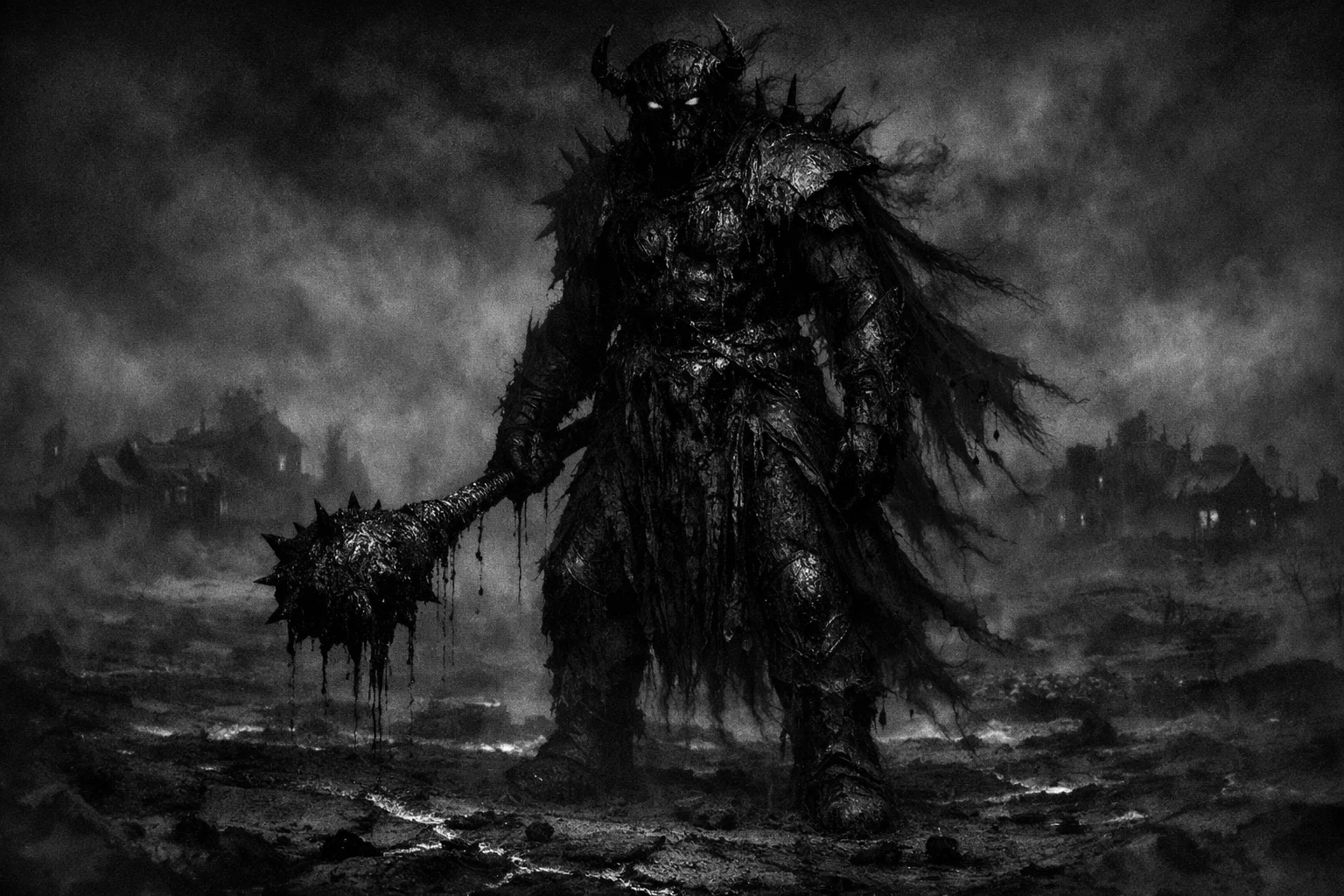

Aeshma is a major demon in Zoroastrianism who represents Wrath, Fury, and Violence. As one of the Daevas, he stands against the divine order of Asha, which means truth and righteousness. He leads the destructive forces under Angra Mainyu, also known as Ahriman.
Aeshma is known for causing bloodshed, conflict, and emotional turmoil among people and animals. In Avestan texts, he is linked to a bloody mace and is seen as someone who disrupts the world’s peace. He is the main enemy of Sraosha, the divine figure of obedience and protection.
Summary
Key Takeaways
| Attribute | Details |
| Names | Aeshma, Aēšma, Eshm, Asmodeus (later derivative) |
| Title | Demon of the Bloody Mace, The Wrathful One |
| Origin | Zoroastrian (Persian) |
| Gender | Male |
| Genealogy | Created by Angra Mainyu (Ahriman) |
| Role | Personification of wrath and disturber of moral order |
| Associated Deity/Figure | Sraosha (Arch-rival), Angra Mainyu (Master) |
| Brings | Violence, anger, discord, and slaughter of cattle |
| Weaknesses | The prayer of Sraosha, religious discipline, and Asha (Truth) |
| Realm/Domain | The Realm of Darkness (Hell) |
| Weapon/Item | The Bloody Mace (Xrvidru) |
| Symbolism | Uncontrolled fury and the disruption of social/cosmic harmony |
| Sources | Avesta (Yasna, Vendidad, Yashts), Bundahishn, Denkard |
Who or What is Aeshma?
Aeshma is an archdemon within the Zoroastrian cosmological framework. He is categorized as a Daeva, a class of supernatural entities that chose to follow the path of Druj (falsehood) rather than Asha.
Unlike other demons who represent specific physical ailments, Aeshma represents a moral and psychological corruption. He is the driving force behind unjustified violence and the chaotic impulses that lead individuals to commit acts of cruelty.
Aeshma has a high rank in the hierarchy of Hell, just below the main archdemons who oppose the Amesha Spentas. His power is believed to extend to both the physical and spiritual worlds. He tries to ruin the lives of good people by starting wars and encouraging the mistreatment of animals.
DEMONS ARE REAL — AND THE BIBLE PROVES IT Limited-Time: Up to 20% OFF!
No myths. No exaggeration. Just Scripture. Clinton Arnold’s landmark biblical theology of the powers of darkness. What the Old & New Testaments actually teach about Satan, demons, and spiritual warfare. Essential reading for every pastor, counselor, and believer facing the unseen battle. The book seminaries and deliverance ministries swear by.
Demons are real • Scripture is clear • Victory is yours • Clinton Arnold’s definitive biblical study.
“Aeshma” Meaning
The name Aeshma comes from the Avestan root ish-, which means ‘to move quickly,’ ‘to desire,’ or ‘to be energized.’ Over time, it came to mean violent movement or fury. The word itself translates to ‘wrath,’ ‘fury,’ or ‘passion,’ describing a state where destructive emotion takes over reason.
The name Aeshma is often connected to Asmodeus, a demon found in the Book of Tobit and later Judeo-Christian stories. Many scholars think ‘Asmodeus’ comes from ‘Aeshma-daeva,’ meaning Aeshma the demon. In Middle Persian, his name became Eshm. In the Avesta, he is called xrvidru-, or ‘of the bloody mace,’ highlighting his link to violence and death.
How to Pronounce “Aeshma” in English
In English, Aeshma is usually pronounced ‘AY-sh-muh’ or ‘ASH-muh.’ The ‘ae’ is pronounced like a long ‘a,’ as in ‘pay,’ following Old Iranian language patterns. Some researchers use a more Avestan style and say ‘Ah-esh-ma.’
You may also enjoy:
Amdusias in the Ars Goetia: The Demon of Dark Music
December 2, 2025
What Is Akaname, The Filth-Licking Yōkai?
October 28, 2025
Who Is Taṇhā, the Seductive Demon of Craving in Buddhist Mythology?
October 15, 2025
What Is a Rakshasa? Meaning, Origins, and Dark Powers
January 23, 2026
Who Is Agares, the Demon of Earthquakes and Deception?
October 13, 2025
Andhaka: The Blind Demon Born From Cosmic Darkness
February 6, 2026
Origins
Aeshma’s origins go back to the Old Iranian religious changes led by the prophet Zarathustra (Zoroaster). In the Gathas, the oldest part of the Avesta, Aeshma is described as a force of violence that troubles the world and the ‘Soul of the Cow.’ He stands for the nomadic raids and lawless violence that early Zoroastrians tried to stop by settling down and following religious laws.
As Zoroastrian beliefs became more organized, Aeshma was seen as a Daeva created by Angra Mainyu to oppose the peace and stability brought by Vohu Manah (Good Mind) and Sraosha (Obedience). He is part of the first choice when spirits were picked between good and evil at the start of time.
Genealogy
Aeshma does not have a human-like family tree because he is a spirit created from darkness.
| Relationship | Details |
| Parents | Created/Produced by Angra Mainyu (Ahriman) |
| Siblings | Other Daevas (e.g., Aka Manah, Indra, Sauru, Naonhaithya, Taurvi, Zairich) |
| Spouse | None (In some later traditions, associated with Jahi, the demoness of lewdness) |
| Children | None |
UNLOCK THE FORBIDDEN KNOWLEDGE OF DEMONS. Limited-Time: Up to 29% OFF!
The Encyclopedia of Demons & Demonology 400+ entries • Real history • Exorcisms & Ancient Evils • Possession • Terrifying photos. This is Rosemary Ellen Guiley’s masterpiece of the occult.
Sources
Most information about Aeshma comes from the Avesta, the holy texts of Zoroastrianism, and from Pahlavi writings such as the Bundahishn.
| Source | Quote |
| Yasna 30.6 | ayå nōit eresh vīšyātā daēvācinā hyat īš ā debomā paitī-jasat hyat verenātā acištm manō; at āēšmem hāndvārentē yā bānayen ahūm maretānō. (Between these two, the Daevas also did not choose rightly, for delusion came upon them as they took counsel together, so that they chose the Worst Mind. Then they rushed together to Wrath, through which they afflict the life of man.) |
| Yasht 11.15 | āēšmō xrvidruš paiti-pāyå… (Aeshma of the bloody mace is the watcher…) |
| Bundahishn 28.15 | Eshm kirrenīd hend pat rēshēnītan ī dāmān… (Eshm was created for the purpose of wounding the creatures…) |
What Does Aeshma Look Like?
Ancient texts rarely show the demon with a clear human form because he is mainly a spirit. When he is described, he has a frightening look and carries weapons. He is best known for his bloody mace (xrvidru), which he uses against his victims.
In Middle Persian stories, Aeshma is said to have seven powers used to destroy creation. He is often pictured as a dark, shadowy entity or a blood-covered warrior-demon. His presence is marked by a red glow or a feeling of intense heat, showing the ‘burning’ side of rage.
Unlike divine beings, he has no ‘glory’ (Khvarenah) and is covered in darkness and filth.
Enemies, Rivals, and Allies
Aeshma’s main enemy is Sraosha, who stands for obedience and listening. The demon encourages lawlessness and breaking promises, while Sraosha keeps religious discipline to protect souls. At the end of time, Sraosha is said to be the one who will finally defeat Aeshma.
The demon also opposes Vohu Manah, the Good Mind, because wrath is the opposite of calm thinking. His allies are Aka Manah (Evil Mind) and Jahi, who help him corrupt people’s thoughts.
Connections to Other Ancient Demons
| Name | Genealogy | Type | Appearance |
| Aka Manah | Zoroastrian | Demon of Evil Intent | Shadowy, formless spirit |
| Lamashtu | Mesopotamian | Child-snatching demoness | Lion head, donkey teeth, hairy body |
| Pazuzu | Mesopotamian | King of Wind Demons | Canine face, bulging eyes, four wings |
| Apep | Egyptian | Chaos Serpent | Massive, coiled snake |
| Surtr | Norse | Fire Giant | Giant wielding a flaming sword |
| Fenrir | Norse | Monstrous Wolf | Enormous, predatory wolf |
| Namtar | Sumerian | Death Messenger/Plague | Humanoid, bringer of 60 diseases |
| Resheph | Canaanite | God of Plague and War | Warrior with a gazelle head-dress |
| Tiamat | Babylonian | Primordial Chaos | Multi-headed dragon/sea monster |
| Mara | Buddhist | The Tempter | Multiple forms, often a seductive or fierce warrior |
Aeshma Myths, Legends, and Stories
The Complaint of the Soul of the Cow
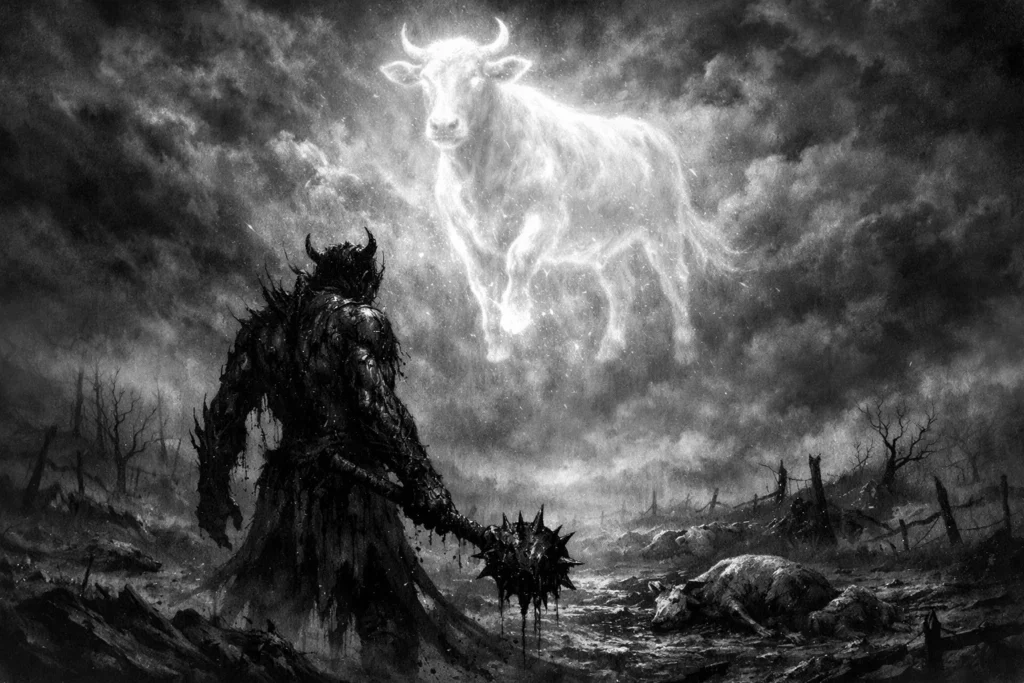
In the Gathas (specifically Yasna 29), the Soul of the Cow (Geush Urvan) stands before the Creator of the World and the Amesha Spentas to lodge a formal grievance regarding its treatment on earth. The Soul of the Cow describes being besieged by Aeshma and the forces of Remo (Cruelty). The text details that the cow suffers from the “fury of the bloody mace” and the “unregulated violence” of those who do not follow the laws of agriculture and peace.
The Soul of the Cow asks, “For whom did you fashion me? Who created me? Fury and violence, cruelty and might, oppress me. I have no other pastor than you; therefore, reveal to me the good pastures.” In this mythic dialogue, Aeshma is identified as the primary cosmic force preventing the animal creation from living in harmony.
The resolution of this story involves the appointment of Zarathustra as the spiritual leader who will teach the humans to forsake the “wrath” of Aeshma in favor of caring for the livestock, thereby subduing the demon’s influence through proper conduct.
You may also enjoy:
Who Was Ravana in Hindu Mythology and Why Was He Feared?
October 3, 2025
What Is the Akashita, the Red-Tongued Demon of Japanese Folklore?
November 5, 2025
Who Is Aka Manto, Japan’s Terrifying Red-Cloaked Yōkai?
October 24, 2025
Who Were the Hinn, the First Spirits of Creation?
November 12, 2025
Barbas: The Lion Demon Who Spreads Disease
March 3, 2026
Who Is Jann in Islamic Mythology and Why Is He Feared?
October 2, 2025
The Conflict with Sraosha
According to the Srosh Yasht, a perpetual struggle occurs during the hours of darkness. Aeshma is described as the demon who “never sleeps” and is constantly seeking to find an opening in the spiritual defenses of humanity. He roams the material world with his bloody mace, attempting to incite night-terrors, sudden acts of violence, and the breaking of religious vows.
To counter this, the divinity Sraosha is depicted as the ever-vigilant guardian. The legends state that Sraosha descends to Earth three times each night to strike Aeshma and his followers.
The myth highlights that Aeshma’s power is so vast that no other divinity can fully restrain his fury except for Sraosha, who uses the Ahuna Vairya prayer as a weapon.
NAME THEM. BIND THEM. CAST THEM OUT! Limited-Time: Up to 40% OFF!
The ultimate deliverance thesaurus by Apostle John Eckhardt. Hundreds of demonic names & attributes exposed alphabetically – from Jezebel to Python, infirmity to poverty. Hundreds of demons named & defeated Identify → Bind → Cast Out!
The essential weapon for every prayer warrior, intercessor, and deliverance minister. Victory starts with identification.

The Corruption of the Demon-Worshippers
In the Vendidad and parts of the Yashts, Aeshma is featured in stories regarding the corruption of human societies. Aeshma is said to have entered the councils of the Daeva-worshippers (those who chose the path of Falsehood) to incite them to war. He does not merely cause anger; he “pours the intoxication of wrath” into the hearts of warriors.
The myths recount how Aeshma led these groups to abandon the settled life of the righteous. Under his influence, they engaged in the “slaughter of the cattle with a roar of joy.”
This story depicts Aeshma’s role as the destroyer of the social contract. He is credited with the invention of unjust war, where the objective is not defense but the sheer pleasure of destruction and the spilling of blood.
The Siege of the Chinvat Bridge
Zoroastrian eschatological texts, such as the Bundahishn and the Dadestan-i Denig, describe Aeshma’s role at the end of an individual’s life. When a person dies, their soul must travel to the Chinvat Bridge (the Bridge of the Requiter).
For three nights, the soul hovers near the body. During this time, Aeshma, along with the demon Vizaresh, attempts to terrorize the soul and drag it into the abyss before it can be judged.
The story tells of the soul’s terror as Aeshma holds his weapon, representing all the unrepentant anger the person harbored during their life. If the soul was righteous, the divinity Sraosha appears and drives Aeshma away with a blow of his own celestial weapon.
For the wicked, however, Aeshma is permitted to take hold of them. He becomes their primary tormentor in the House of Lies (Hell), where he continues to inflict the pain of “wrath without end.”
The Final Defeat at the Frashokereti
The most significant myth regarding Aeshma concerns his role in the Frashokereti (the final renovation of the world). According to the Zamyad Yasht and Pahlavi commentaries, as the end of time approaches, the power of the Daevas will diminish as the Saoshyant (Savior) begins his work.
Aeshma will be the last of the great demons to remain standing due to his immense strength. The legends state that in the final battle between the forces of Light and Darkness, Aeshma will face his eternal rival, Sraosha.
While other archdemons are defeated by their respective counterparts among the Amesha Spentas, Aeshma is singled out for a final physical and spiritual confrontation.
Sraosha will strike Aeshma with such force that the demon of wrath will be depicted “powerless” and will eventually be consumed or expelled from the creation as the world is purified by fire and molten metal.
Aeshma Powers and Abilities
Aeshma is one of the strongest Daevas because he works from within, not just from the outside. He does more than cause physical harm; he changes his victims’ will. His real power is spreading anger, turning small arguments into violent fights.
- Incitation of Fury: He can bypass human reason to instill a blind, murderous rage.
- Discordance: The ability to break friendships, marriages, and treaties.
- Corruption of Sacrifice: He misguides religious rituals, turning them into scenes of cruelty or animal mutilation.
- Seven-fold Destruction: In Pahlavi texts, he has seven ways to destroy the soul, each focusing on different levels of social and personal ruin.
- Invisibility: As a spiritual entity, he can influence thoughts without being physically detected.
Rituals, Amulets, and Protective Practices
Since Aeshma is a demon of the mind and spirit, ancient ways to protect against him focused on rituals and good behavior. People kept themselves pure and tried to stay calm. The main defense was reciting sacred prayers, believed to create vibrations that kept Daevas at bay.
Incantations and Ceremonies
The primary “incantation” against Aeshma is the Srosh Yasht (Hadhokht or Yasna 57). By invoking Sraosha, the believer creates a spiritual shield:
Excerpt from the Prayer to Sraosha:
“We worship Sraosha, the holy, the beautiful, the victorious, who furthers the world, the righteous lord of ritual purity. Who is the strongest of the youths, the most solid, the most active, the most swift, and the most terrifying. Who returns from all his battles victorious over the Daevas. We worship Sraosha… who strikes Aeshma with the heavy blow, who strikes the demon of the bloody mace.”
Amulets and Talismans
While Zoroastrianism used fewer physical amulets than Mesopotamian religions, it still practiced protective measures. Believers wore white garments (the Sudreh) and the Kusti (sacred thread) as a permanent ‘talisman’ against the influence of Aeshma and other demons.
Tying the Kusti while reciting the Kemna Mazda prayer was meant to ‘bind’ Aeshma’s power and keep him out of the believer’s heart. Pictures of Sraosha’s bird, the rooster, were also seen as protective, since its crowing at dawn meant Aeshma and darkness were leaving.
You may also enjoy:
Pazuzu: The Demon Who Fought Evil with Evil
November 4, 2025
Who Is Ambolin, the Demon of Nighttime Dread
December 1, 2025
What Is Qarin and Why Does It Follow Every Human Being?
October 8, 2025
Who Is Al-Abyad? The White King Jinn Who Rules Love and Chaos
January 26, 2026
Amenadiel: Origins, Hierarchy, and Demonic Attributes
January 5, 2026
Empusa: The Blood-Drinking Wraith of Greek Mythology
November 20, 2025
Frequently Asked Questions
What is the relationship between Aeshma and Asmodeus?
Aeshma is widely considered the linguistic and theological precursor to the demon Asmodeus found in the Book of Tobit. The name Asmodeus is derived from the Avestan compound Aeshma-daeva (Aeshma the demon). While Aeshma represents the abstract concept of wrath and fury in Zoroastrianism, Asmodeus evolved into a more distinct character in Judeo-Christian lore, often associated with lust and the disruption of marriages.
Is Aeshma one of the Amesha Spentas?
No, Aeshma is the direct antithesis of the Amesha Spentas (Divine Heptads). While the Amesha Spentas are the “Bounteous Immortals” who represent the highest virtues of Ahura Mazda, Aeshma is a Daeva (demon) who serves Angra Mainyu. He specifically acts as the cosmic rival to Vohu Manah (Good Mind) and Sraosha (Obedience).
What is the number associated with Aeshma in numerology?
In later Persian occult traditions and Pahlavi texts, Aeshma is often linked to the number seven. This association comes from his seven ways of striking, or the seven distinct powers he uses to corrupt humanity. These seven aspects are designed to counter the seven Amesha Spentas, illustrating the Zoroastrian belief in a perfectly symmetrical battle between light and darkness.
How does Aeshma influence the animals in the Zoroastrian myth?
Aeshma is specifically identified as the enemy of domesticated cattle. He incites nomadic raiders and “evil-doers” to perform blood sacrifices and treat animals with cruelty. In Zoroastrian theology, caring for animals is a religious duty; that’s why Aeshma’s role is to provoke wanton slaughter and the physical mistreatment of the “Soul of the Cow.”
Does Aeshma appear in the Shahnameh?
In the Shahnameh (The Book of Kings), the Persian national epic, Aeshma appears in the evolved form of Eshm. He is depicted as a demonic counselor who whispers into the ears of tyrannical kings, such as Zahhak, to incite them to acts of extreme violence and injustice. He functions more as a personified psychological vice than a physical monster in this literary context.
