
Setcheh is an obscure demonic entity mentioned in Ancient Egyptian religious texts, primarily in funerary contexts such as the Book of the Dead.
The entity is typically depicted as a malignant creature associated with the Underworld (Duat) and the deceased’s transition into the afterlife. Its role appears to be that of an adversary or obstacle faced by the soul (Ba or Akh) on its journey, particularly targeting the spiritual integrity and powers of the newly departed.
Setcheh is often depicted as part of the group of hostile forces that the deceased must overcome or pacify through knowledge of specific spells and correct ritual practice, thereby successfully passing through the perilous regions of the Duat and attaining resurrection.
Summary
Key Takeaways
| Attribute | Details |
| Names | Setcheh, Se-Tjeh, Set-Tjēh |
| Title | Eater of the Deceased’s Magical Powers, Soul Snatcher |
| Origin | Ancient Egyptian |
| Gender | Male |
| Genealogy | No clear lineage |
| Role | Adversary of the deceased in the Duat, attempting to capture the soul and diminish its magical efficacy |
| Associated Deity/Figure | Osiris (as ruler of the Duat), Ra (as solar ferryman), The Deceased (as primary target) |
| Brings | Incapacitation of the spiritual body (Akh), capture of the soul (Ba), loss of magical power (Heka) |
| Weaknesses | Specific funerary spells (e.g., Book of the Dead Coffin Texts), knowledge of its name and function |
| Realm/Domain | The Duat (Underworld), specifically dangerous waterways or gates |
| Weapon/Item | None explicitly stated, relies on inherent power of capture/diminution |
| Symbolism | The perils of the afterlife transition, the temporary vulnerability of the deceased’s spirit |
| Sources | The Book of the Dead (specifically Spell 17), Coffin Texts |
Who or What is Setcheh?
Setcheh is an ancient demonic entity within the complex cosmology of Ancient Egyptian religion. The demon operates within the Duat (or the Underworld).
Unlike major deities, this ancient entity is a localized threat. One of many hostile spirits and monsters designed to test and obstruct the deceased’s successful journey to the afterlife, known as Aaru. In fact, the demon’s primary function is to prey upon the vulnerable souls (Ba and Akh) of the dead, attempting to capture them or, critically, diminish their magical powers (Heka).
Its existence necessitates the inclusion of specific funerary spells and incantations in tombs and on papyri—such as the Book of the Dead. These spells were intended to arm the deceased with the knowledge and verbal defenses necessary to identify, repel, and neutralize the demon’s threat.
According to the ancient belief, the spells allowed the deceased to proceed unimpeded and achieve resurrection and eternal life.
“Setcheh” Meaning
The name Setcheh (or Se-Tjeh) is derived from Ancient Egyptian and refers to concepts of seizing, robbing, or capturing. The root element tjeh or tjehy can be associated with actions of snatching, tearing, or stealing.
In the context of the Book of the Dead and its protective spells, the name is thus highly descriptive of the entity’s function: it is the “Snatcher” or “Seizer”.
This meaning directly correlates with its mythological role as the demon who attempts to seize the Ba (soul) or rob the Akh (spiritualized deceased) of its efficacy and power, particularly the Heka (magic) that allows the deceased to transform and navigate the Duat.
Understanding the name’s meaning was vital for the deceased, as knowing the name of a demon was often the key to exerting power over it and successfully repelling its attack.
You may also enjoy:
Iblis, the Jinn King of Darkness and Deception
September 29, 2025
Alû: The Mesopotamian Demon of Malevolence and Pestilence
November 10, 2025
Who Is the Demon Andras, The Great Marquis of Discord?
January 15, 2026
Amdusias in the Ars Goetia: The Demon of Dark Music
December 2, 2025
Who Is Ambolin, the Demon of Nighttime Dread
December 1, 2025
Hitotsume kozō: One-Eyed Yōkai of Japanese Folklore
February 4, 2026
How to Pronounce “Setcheh” in English
The name Setcheh is typically reconstructed based on the hieroglyphic spelling.
A common approximate pronunciation in English is SET-cheh. The stress falls on the first syllable (SET), and the “cheh” sound is similar to the “ch” in “change” but pronounced with a shorter, more clipped sound. The final “h” is often a soft, almost silent aspiration, if pronounced at all.
Origins
The primary origins of this ancient demon are found within the funerary literature of the New Kingdom of Ancient Egypt, particularly the Theban recension of the Book of the Dead.
However, similar threats appear in earlier texts. Setcheh is not a primordial deity or a major cosmological figure, but rather one of a host of minor demonic forces that inhabit the perilous landscape of the Duat (Underworld).
The development of such entities reflects the evolving Ancient Egyptian belief in the post-mortem journey as a challenging, dangerous process that requires precise magical protection.
As the Coffin Texts evolved into the Book of the Dead, a need arose to name and categorize the various specific threats a soul would face. Setcheh belongs to this catalog of named adversaries—monsters or spirits that represent particular forms of spiritual danger, such as the loss of memory, the inability to breathe, or the cessation of magical function.
The entity’s creation is directly linked to the need for a specific apotropaic spell, namely Spell 17 (The Spell for Coming Forth by Day), which details how to defeat or circumvent this particular hazard to the deceased’s successful rebirth.
Genealogy
Setcheh’s lineage is not explicitly detailed in the texts where it appears. It is generally understood to be one of the numerous demonic entities or ‘netherworld creatures’ that populate the Duat, often under the purview of greater chthonic deities like Osiris or associated with the chaos and primordial darkness that is continuously opposed by Ra.
Sources
Setcheh is a lesser-known entity whose existence is confirmed by its inclusion in crucial funerary documents, which served as navigational and protective guides for the deceased in the afterlife.
The mentions of Setcheh are strictly functional, embedded within the spells intended to neutralize its specific threat.
| Source | Quote |
| Book of the Dead, Spell 17 (Chapter 17, Theban Recension) | The Osirian is protected against the Setcheh who seizes the Ba and robs the Heka of the dead. His name is Setcheh, who takes away the souls. |
| Coffin Texts, Spell 453 | I know the Set-Tjēh when he comes. He shall not seize me, he shall not take away my power. I am the Ba who goes to Heliopolis. |
| Book of the Dead, Spell 168 | Back, Setcheh! You shall not advance against the power that is mine. My magical protection is provided by Thoth and Heka. |
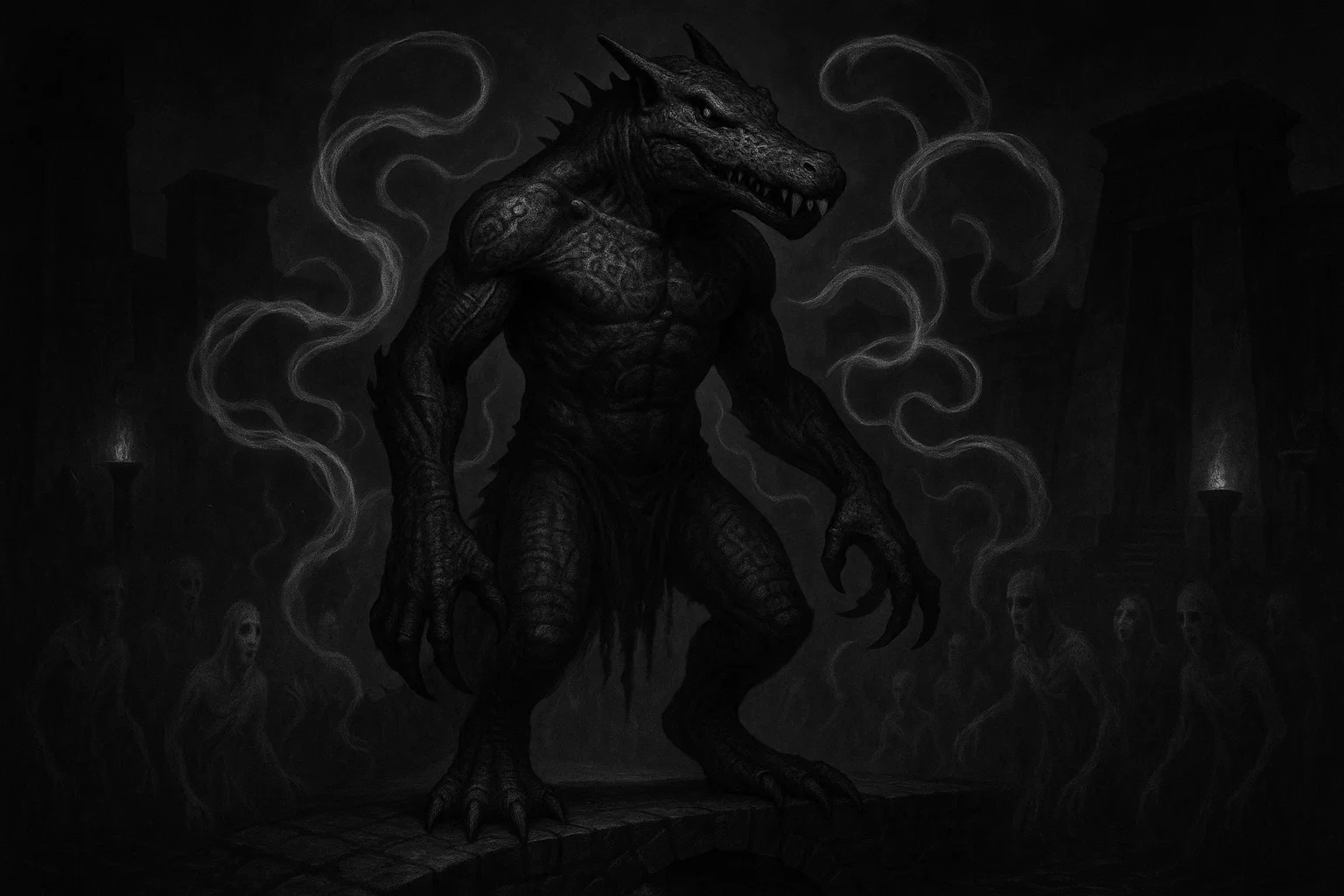
What Does Setcheh Look Like?
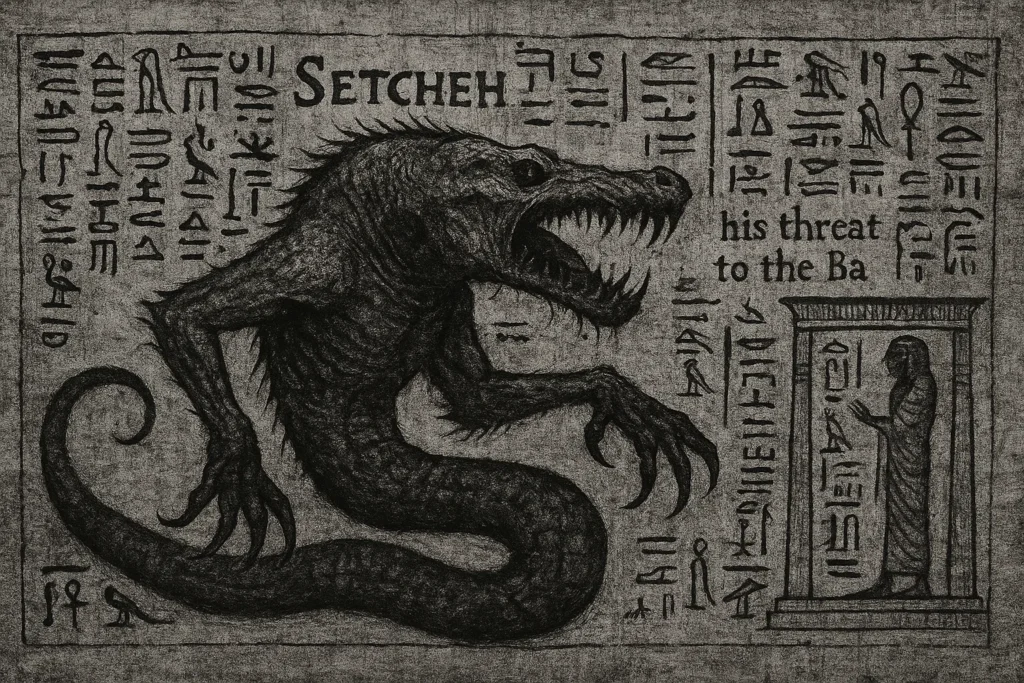
Direct, unambiguous physical descriptions of Setcheh are scarce and inconsistent across all known Egyptian texts. Typically, the visual representations of these lesser demons in the Duat are more symbolic than realistic.
In some contexts, the various demonic entities encountered in the afterlife are depicted as hybrid monsters, combining human, animal, and snake-like elements, often with a fierce or threatening posture.
Setcheh’s function as a “seizer” and “robber of Heka” suggests an appearance that would symbolize rapaciousness or cunning. Given that many Egyptian demons are depicted with crocodilian, lion, or snake features, Setcheh may have been visualized as one of these chthonic composite beasts.
Specifically, in texts detailing the gates of the Duat, the guardians or adversaries are often shown with sharp teeth or claws, ready to attack the soul.
While not definitively confirmed for Setcheh, this general style of representation for an entity whose primary action is seizing is highly probable.
You may also enjoy:
Who Is Azazel, the Demon Blamed for Human Corruption?
February 24, 2026
Aeshma: The Zoroastrian Demon of Wrath and Fury
January 13, 2026
Vritra: The Dragon Who Swallowed the Sky in Hindu Mythology
October 7, 2025
Setcheh: Egypt’s Soul-Stealing Ancient Demon
November 11, 2025
Ambri: The Imperial Duchess of Caspiel’s Empire
December 1, 2025
What Is the Abumi-guchi Yōkai and Why Does It Wait Forever?
October 22, 2025
Enemies, Rivals, and Allies
Setcheh, as a localized threat in the Duat, does not appear to have complex inter-demonic relationships.
Its primary relationship is adversarial with the deceased human soul (Osirian N.) and the major deities who protect the dead (such as Osiris and Thoth).
Thoth, the god of knowledge and magic, is frequently invoked in the spells against creatures like Setcheh, as his knowledge of the correct words (spells) is the very thing that defeats the demon. Heka (personified magic) is also an indirect rival, as Setcheh’s goal is to rob the deceased of their heka.
Setcheh can be considered an ally or one of the many agents of the primordial chaos that the divine order, led by Osiris and Ra, constantly works to contain. It is part of the collection of hostile entities that collectively challenge the order (Ma’at) and the successful transition of the dead into eternal life.
Connections to Other Ancient Demons
Setcheh shares the characteristic of being a malevolent entity that obstructs the dead, as do numerous other figures across various mythologies.
| Name | Genealogy | Type | Appearance |
| Ammit | Egyptian | Soul-Eater/Underworld Spirit | Body parts of a lion, hippopotamus, and crocodile |
| Apep (Apophis) | Egyptian | Chaos Monster/Cosmic Adversary | A giant serpent or snake |
| Lamashtu | Mesopotamian (Sumerian/Akkadian) | Disease Spirit/Child-Killing Demon | Hairy body, lioness head, donkey teeth and ears, talons, standing on a pig |
| Pazuzu | Mesopotamian (Assyrian/Babylonian) | Wind Demon/Lord of Fever | Hybrid with a human body, lion head, eagle claws, two pairs of wings |
| Tiamat | Babylonian | Primordial Sea/Chaos Monster | A massive dragon or serpent |
| Asakku | Mesopotamian | Disease Demon/Spirit | Not clearly described, often associated with a destructive wind |
| Gugalanna | Sumerian | Bull of Heaven/Underworld Adversary | A celestial bull |
| Khafra | Egyptian | Gate Guardian/Fire-Breather | A creature with the head of a crocodile or serpent, breathing fire |
| Jörmungandr | Norse | Chaos Serpent/World Serpent | An immense serpent encircling the world |
| Rakshasa | Hindu | Flesh-Eating Demon/Changer | Variable; often appearing as large, fierce humanoids with fangs and claws |
| Vetala | Hindu | Re-Animated Corpse/Undead Spirit | A spirit inhabiting a corpse |
| Succubus/Incubus | Jewish/Medieval Folklore | Night Demon/Seductive Spirit | Variable; often appearing as a beautiful woman or attractive man |
Setcheh Myths, Legends, and Stories
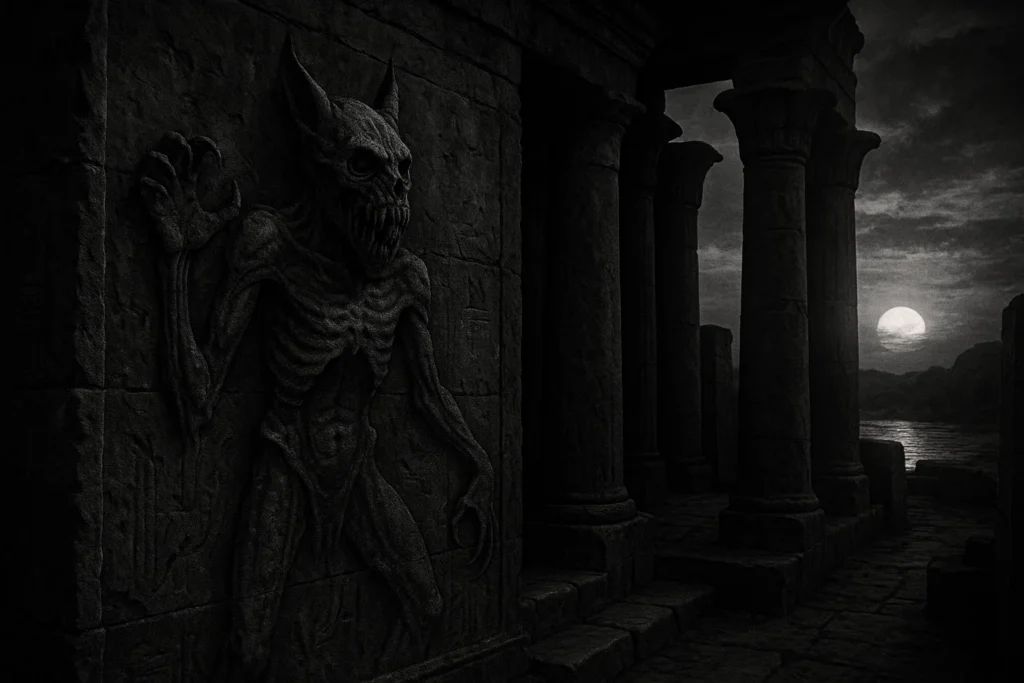
This ancient demon lacks a singular, developed narrative or mythos comparable to those of major gods or demons. Rather than being the subject of a story, he is an event or obstacle within the grand narrative of the deceased’s journey through the Duat, as documented in funerary texts.
The “story” of Setcheh is found solely in the apotropaic spells designed to protect the deceased from it. The existence of the spell is the primary evidence of the entity’s threat.
The Encounter in Spell 17
The most prominent “story” of Setcheh is the ritualistic confrontation detailed in Spell 17 of the Book of the Dead (The Spell for Coming Forth by Day). This text is less a narrative and more a compilation of defensive incantations and affirmations for the deceased (Osirian N.) to declare their divinity and purity, thereby repelling all potential threats, including Setcheh.
The text affirms the deceased’s identity with various gods and their knowledge of esoteric secrets, which are the only defense against the demons of the Duat.
The deceased must verbally assert their power: “I am Ra in his rising, I am the great god, self-created.” The encounter with Setcheh is framed as a potential spiritual attack, in which Setcheh attempts to seize the Ba (soul’s mobility) and rob the Heka (magical power) that is essential to the soul’s navigation of the afterlife.
The Threat in the Coffin Texts
A similar function is implied in the earlier Coffin Texts, specifically Spell 453. These texts, inscribed on coffins during the Middle Kingdom, are precursors to the Book of the Dead.
While the exact name Setcheh may be slightly different in earlier iterations (Set-Tjēh), the role of the entity remains the same: a named predator in the afterlife.
The “story” here is the deceased’s pre-emptive declaration that they are aware of the threat and impervious to it.
The narrative is one of recognition and defiance, in which the dead individual uses the power of the written word to bypass the demon, asserting their spiritual autonomy and destiny.
This confirms Setcheh’s role as a guardian or adversary of the deceased’s spiritual independence and the integrity of their magical efficacy.
Setcheh Powers and Abilities
Setcheh’s primary power is its ability to seize the souls of the deceased and rob them of their magical power, thereby preventing them from achieving eternal life in Aaru.
This is a highly specific and devastating ability within the context of Egyptian afterlife beliefs. The loss of the Ba (the soul’s personality and mobility) means the deceased can no longer travel. The loss of Heka (magic) means they lose the ability to perform the necessary transformations and use the spells that open the Duat’s gates. Setcheh is therefore a direct threat to the resurrection process.
Although Setcheh is a minor demon compared to entities like Apep, its power over the individual deceased is absolute if they are unprotected. The demon’s strength lies not in physical combat but in its supernatural function as an agent of spiritual capture and incapacitation, targeting the most vulnerable aspect of the departed—their newly realized spiritual form.
Setcheh’s powers and abilities:
- Soul Seizing (Tjehy-Ba): The primary power to capture the Ba, or soul, of the deceased, immobilizing the spiritual personality and mobility necessary for the journey through the Duat.
- Magic Robbery (Heka-Snatching): The ability to diminish or steal the Heka (magical power) from the deceased, rendering their protective spells and transformation abilities ineffective.
- Obstruction: The function of blocking the path of the deceased to the Fields of Aaru, acting as a mandatory obstacle that must be overcome via specific knowledge.
- Spiritual Menace: The capacity to inflict spiritual fear and confusion upon the newly departed, making them vulnerable to capture.
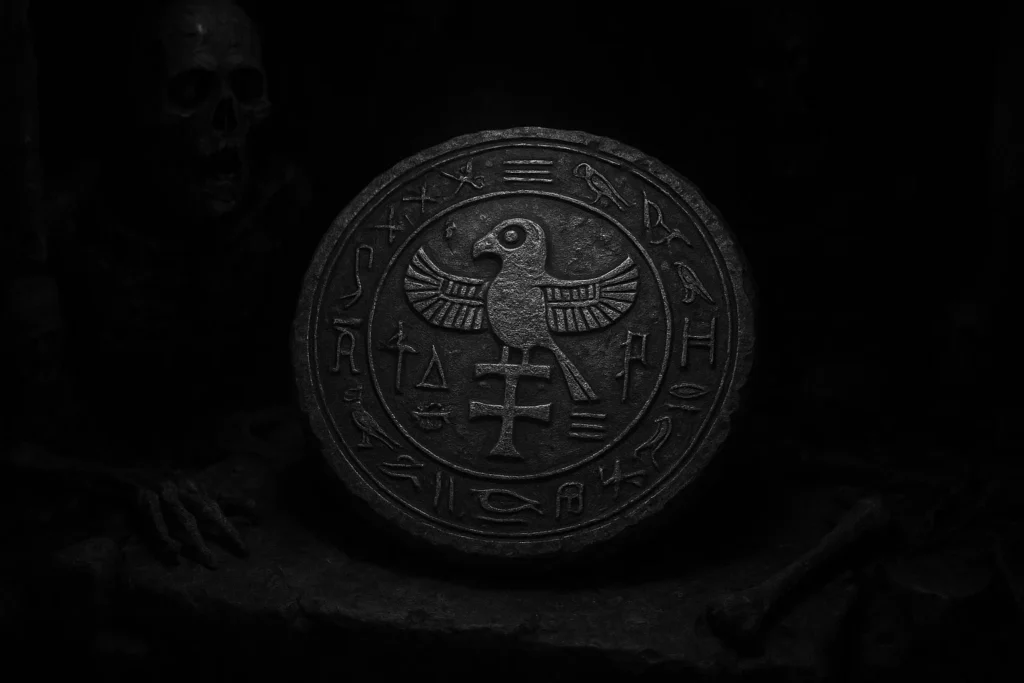
Rituals, Amulets, and Protective Practices
The ancient practices associated with Setcheh were entirely apotropaic, meaning they were rituals of defense and protection intended to repel and neutralize the demon’s threat to the deceased.
These practices were integrated into the funerary rites of the New Kingdom and later periods, ensuring the soul had the necessary tools to navigate the dangerous Duat.
Incantations and Ceremonies
The central ceremony related to Setcheh was the recitation and inclusion of specific spells from the Book of the Dead (most notably Spell 17). The deceased was prepared for the afterlife with these texts, either inscribed on the coffin, tomb walls, or written on papyrus scrolls placed with the mummy.
The ceremony of “Opening of the Mouth” and the final placement of the scroll in the tomb ensured that the deceased had access to these words of power.
The incantation’s power relies on naming the demon and declaring the deceased’s divine or protected status, thereby rendering Setcheh powerless. The incantations were not prayers for rescue but verbal commands or statements of fact spoken by the deceased’s spirit, often identifying with a major god like Ra or Thoth to leverage that god’s power.
The essential incantation against Setcheh, drawn from Spell 17, focuses on both identification and nullification (translation from Egyptian):
I am protected against the Setcheh, who seizes the Ba and robs the Heka of the dead. His name is Setcheh, who takes away the souls. I am the Lord of Fire, I am the Wielder of Heka. The gods shall not take my soul, nor shall they steal my power. Setcheh shall not come forth against me.
The ritual context required the priest to read and inscribe this text, ensuring the protective magic was perpetually active on behalf of the deceased.
Amulets and Talismans
While there are no known amulets or talismans explicitly named as “Setcheh-Repellers,” the entire funerary assemblage served as a protective mechanism against all underworld threats, including this demon.
The most potent “amulet” against Setcheh was the papyrus scroll of the Book of the Dead itself, placed either in the coffin or wrapped in the mummy’s bandages. The text was the material representation of the knowledge and magic (Heka) needed to ward off the demon.
Furthermore, general apotropaic amulets found on mummies, such as the Djed pillar (representing stability and Osiris) and the Scarab (representing rebirth and the sun), would have functioned as a universal defense against the host of demons in the Duat, including Setcheh, by reaffirming the deceased’s cosmic order and successful transformation.
You may also enjoy:
Bali: The Benevolent Asura King of Hindu Mythology
October 10, 2025
Abura-akago: The Oil-Licking Demon Baby
October 22, 2025
Who Is Ariton, the Infernal King of the Eastern Gate?
February 17, 2026
Andhaka: The Blind Demon Born From Cosmic Darkness
February 6, 2026
Who Was Ravana in Hindu Mythology and Why Was He Feared?
October 3, 2025
Arati: The Beautiful Demon of Aversion in Buddhist Mythology
October 15, 2025
Frequently Asked Questions
Is Setcheh a major Egyptian deity or a minor demon?
Setcheh is classified as a minor demonic entity within Ancient Egyptian mythology. Unlike major deities such as Osiris or Ra, who govern vast cosmic functions, Setcheh is a highly localized threat operating in the Duat. Its role is specific and limited: to obstruct or rob the newly deceased soul of its power, making it a functional obstacle rather than a central figure in creation or cosmic maintenance myths.
How does Setcheh differ from the demon Ammit?
While both operate in the Duat, Setcheh’s function is to rob the soul of its power (Heka) and mobility (Ba), whereas Ammit (the “Devourer”) serves a judicial function as an executioner. Ammit waits in the Hall of Two Truths to devour the heart of the deceased if it is judged heavier than the feather of Ma’at (Truth), resulting in the “second death” and annihilation of the soul. Setcheh’s threat is before or during the journey, not the final judgment.
Why is Setcheh’s name so important in the funerary spells?
In Ancient Egyptian thought, knowing the true name of an entity granted power or control over it. The incantations against Setcheh, such as those in Book of the Dead Spell 17, instruct the deceased to declare the demon’s name and purpose (“His name is Setcheh, who takes away the souls”). This act of verbal identification was a magical defense, confirming the deceased’s knowledge of the Duat’s dangers and neutralizing the demon’s ability to seize the soul.
Does the Setcheh appear in Egyptian tomb art or vignettes?
Direct, explicit depictions of Setcheh are not consistently identified in Egyptian tomb art or Book of the Dead vignettes. Setcheh belongs to the category of numerous adversarial netherworld beings, which are often depicted generically as hybrid monsters (snakes, crocodiles, lion-headed figures) that guard the perilous gates or waterways of the Duat. Its representation would likely conform to these general monstrous forms that symbolize the chaos (Isfet), which the deceased must overcome to achieve order (Ma’at).
