
The Akkorokamui is an important yōkai in the folklore of the Ainu people (particularly those inhabiting the islands of Hokkaidō in northern Japan and the Kuril Islands). The creature is described as a colossal octopus or cephalopod that lives in the deep sea, primarily around the Volcano Bay (Uchiura Bay) area.
While not originating in the mainland Japanese (Wajin) tradition, the Akkorokamui has been integrated into the broader Japanese yōkai classification.
Depending on the source, this monster can be either an agent of disaster or a divine being (Kamuy).
Summary
Key Takeaways
| Attribute | Details |
| Names | Akkorokamui, Attorokamuy, Akukorokamuy, Oodako (“giant octopus”) |
| Translation | Kamuy of Akkor (“Akkor God” or “Akkor Divine Being”); sometimes interpreted as octopus deity |
| Title | Giant Red Octopus, Ocean Kami, Kamuy of Volcano Bay |
| Type | Kamuy (Ainu Divine Being), Yōkai (Japanese classification), Obake (Giant Shapeshifting Monster) |
| Origin | A figure from Ainu oral tradition and mythology, primarily associated with the ocean and sea life around Hokkaidō. It is considered a Kamuy, or a divine spirit. |
| Gender | Male or Ambiguous; often referred to as a Kamuy |
| Appearance | A colossal octopus or squid, described as being over 120 meters (400 feet) in length with a distinctive red coloration. Its eyes are often depicted as being large and menacing. |
| Powers/Abilities | Generating immense whirlpools, capsizing large ships, fast regeneration, size manipulation, causing storms and sea disasters |
| Weaknesses | Avoids loud noises, repelled by certain Ainu chants, vulnerable to the sun if beached |
| Habitat | The deep waters of Volcano Bay (Uchiura Bay) in Hokkaidō, the surrounding seas, and, in some accounts, the Kuril Islands. |
| Diet/Prey | Fish, whales, large marine animals, and sometimes large sailing vessels |
| Symbolic Item | None |
| Symbolism | The overwhelming power and fear of the deep ocean, natural disasters at sea, the divine forces of nature |
| Sources | Ainu oral traditions (Yukars), writings of Matsuura Takeshirō, accounts from British missionary John Batchelor |
Who or What is Akkorokamui?
The Akkorokamui is a creature central to the folklore of the Ainu people (the indigenous inhabitants of Hokkaidō, northern Honshū, and the Kuril Islands). Within their belief system, the monster is classified as a Kamuy. A Kamuy is a divine spiritual being akin to the concept of kami in Shintō, referring to a powerful aspect of nature or the spiritual world.
In most legends, the monster is described as a gigantic cephalopod (most often a red octopus), whose size is so immense that it can engulf a large fishing boat or an entire whale. Legends primarily place its “home” in the Volcano Bay (Uchiura Bay) in Hokkaidō.
Ainu sailors and fishermen regard it with a mix of fear and reverence, understanding that its sudden appearance or movement can result in violent storms, whirlpools, and the capsizing of ships.
Unlike many mainland Japanese yōkai, the Akkorokamui is not inherently evil. It is rather a powerful, amoral natural force that must be acknowledged and respected through prayer and ritual.
“Akkorokamui” Meaning
The name Akkorokamui originates directly from the Ainu language, where it is a compound term. The suffix Kamuy is the Ainu word for god, spirit, or divine being. The prefix Akkoro or Attoro is less certain in its precise translation. Still, it is widely understood to refer to the specific entity itself, making the overall translation effectively “The Akkor God” or “Akkor Divine Being”.
Some interpretations suggest attoro might derive from a word related to the color red (which is characteristic of the creature) or a descriptive term for its large size and power. The variant name Oodako is a mainland Japanese term, where Ō (大) means great or large and Tako (蛸) means octopus, translating simply as “Giant Octopus”.
This Japanese name is a direct, descriptive classification used when incorporating the Ainu myth into the wider Japanese yōkai classification. The name’s lack of a direct narrative etymology (like “ash monk” for Agubanba) reflects its origin as a sacred, pre-existing concept—a Kamuy—rather than a descriptive name assigned to a new spirit.
You may also enjoy:
Edimmu: The Mesopotamian Wind Demon That Steals Life
November 6, 2025
What Is Baku? The Japanese Yōkai That Eats Nightmares
January 28, 2026
Amdusias in the Ars Goetia: The Demon of Dark Music
December 2, 2025
Who Is Abaddon, the Demon of the Abyss, in the Bible?
September 29, 2025
Tarakasura: The Dark Demon Who Ruled Hell on Earth
December 4, 2025
Who Is Andromalius and Why Is He the Last Demon of the Goetia?
January 20, 2026
How to Pronounce “Akkorokamui” in English
The proper pronunciation of Akkorokamui follows the Ainu structure, which is generally phonetic. In English, it is pronounced as Ahk-koh-roh-kah-moo-ee. The first u is silent or nearly silent, and the emphasis is placed on the third syllable (roh) and the final syllable (moo-ee), which reflects the Ainu reverence for the Kamuy suffix.
What Does Akkorokamui Look Like?
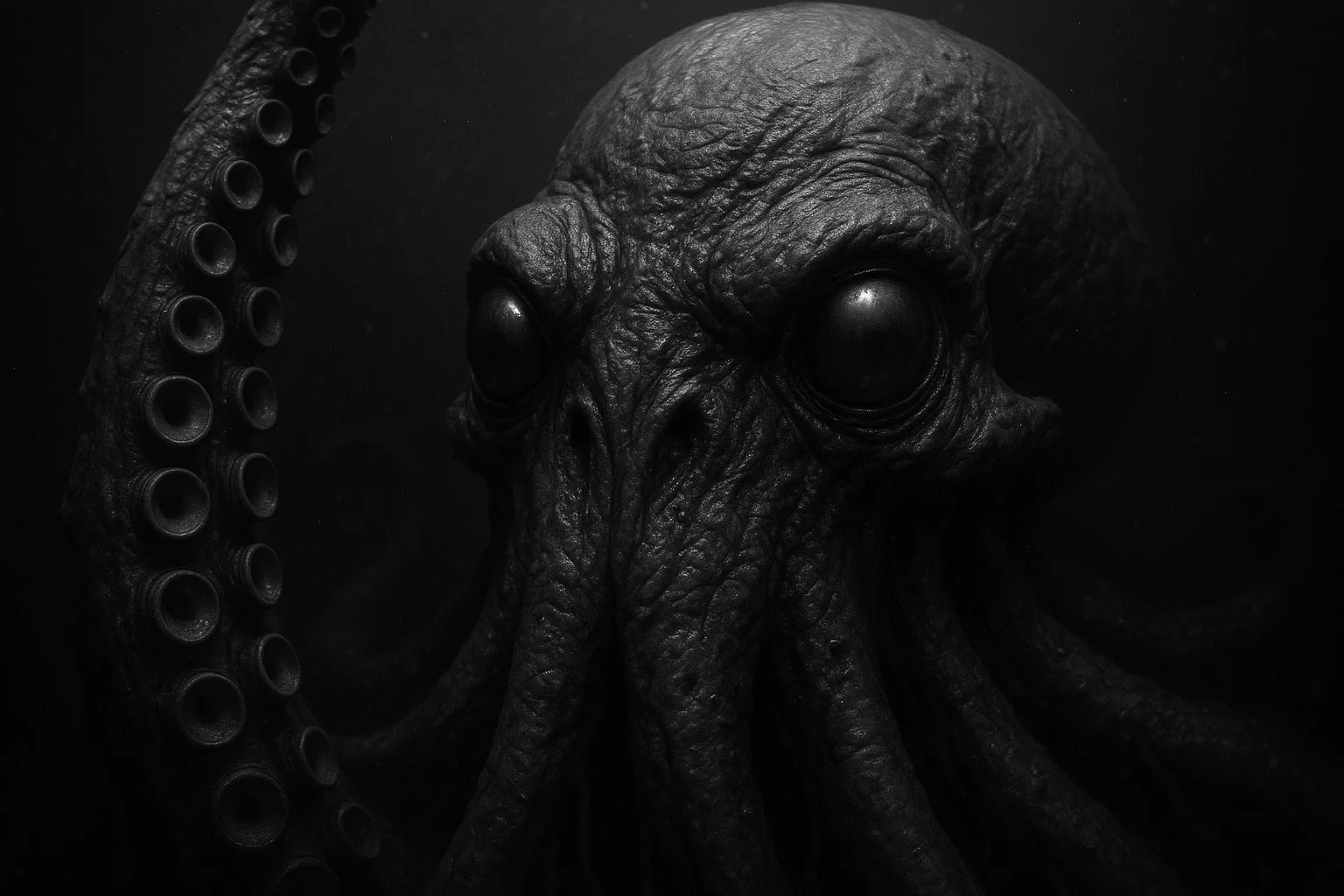
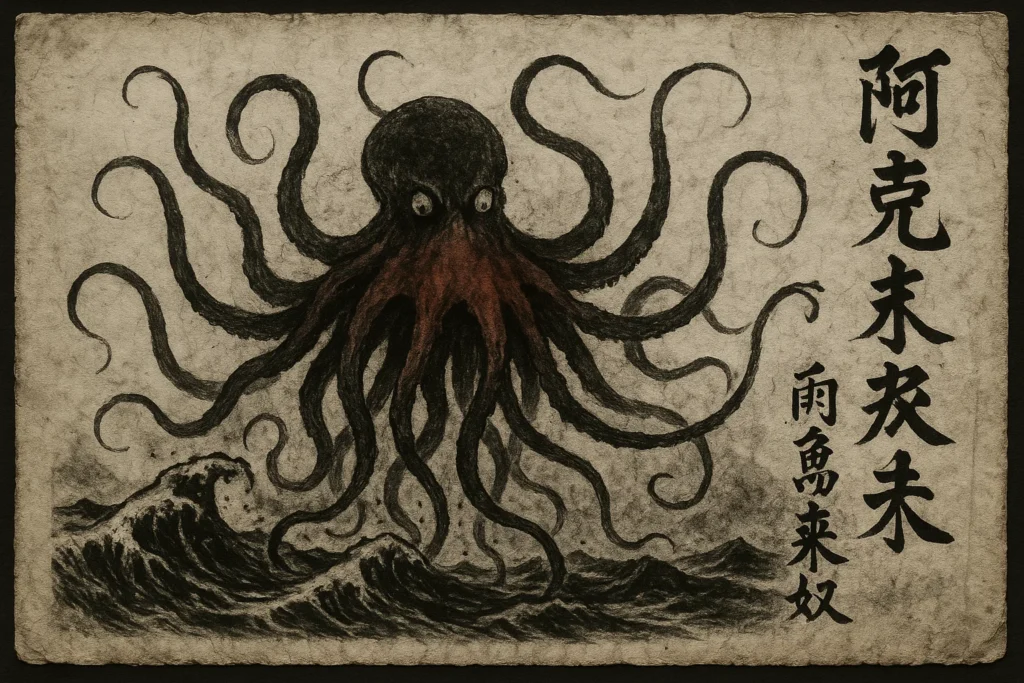
The Akkorokamui is primarily visualized as a massive octopus or a type of cuttlefish. Its most defining characteristic is its prodigious size, which is consistently emphasized across nearly all accounts. Early Ainu descriptions, as well as later Japanese retellings, describe it as being easily over 120 meters (400 feet) long, with a body and tentacles that could cover a large ship entirely.
The second most crucial feature is its deep, vibrant red coloration. This characteristic is so prominent that the Akkorokamui is sometimes known as the “Great Red Octopus”. This coloration often links it symbolically to fire and blood in some regional myths, signifying its dangerous nature. Its body is muscular, capable of generating powerful suction and grip.
In some myths (particularly those influenced by mainland Japanese folklore), the creature has multiple large, bulging eyes that stare from the dark depths, capable of inducing terror in those who spot it. The Akkorokamui is also noted for its rapid regenerative abilities. For instance, it can lose a tentacle, only for the limb to grow back quickly.
In other stories, the monster can also shift its size, growing or shrinking to manage its encounters with humans or other marine life.
Habitat
The Akkorokamui’s habitat is highly localized and critical to its mythos: the deep ocean waters of Volcano Bay (Uchiura Bay), which is situated in the southwestern area of Hokkaidō.
This bay is famous for its volcanic activity and deep, cold waters, making it a symbolically fitting home for a gargantuan, heat-associated cephalopod. The Akkorokamui is believed to live in the deepest trenches of the bay, only ascending to the upper waters during violent storms or when it is disturbed by passing ships.
The creature’s preference for this specific environment is intrinsically linked to the Ainu concept of Kamuy as embodied natural forces. Volcano Bay is an area of unpredictable seismic activity and turbulent weather patterns, making it inherently dangerous.
By inhabiting this space, the Akkorokamui embodies the unseen dangers and the untamable power of the ocean, especially where the water meets the volatile earth. The constant risk of a sudden squall or a powerful whirlpool in this area serves as perpetual evidence of the Akkorokamui’s presence.
Furthermore, its habitat extends to the seas surrounding the Kuril Islands, reinforcing its identity as a monster of the northern Pacific’s cold, deep, and dangerous maritime environment.
Origins and History
The Akkorokamui originates from the oral traditions (Yukars) of the Ainu people, predating the significant Japanese (Wajin) settlement of Hokkaidō.
In the Ainu worldview, the Akkorokamui is not merely a monster, but a powerful Kamuy (divine spirit) that governs the sea and marine life. Early Ainu stories present a complex view of the creature, recognizing its destructive potential but also its role in maintaining the balance of the ocean ecosystem.
The Akkorokamui’s earliest documented appearances in Japanese literature come from the journals and accounts of the late Edo and early Meiji periods as Japanese explorers and settlers began interacting with the Ainu in Hokkaidō.
A notable early mention is found in the work of Matsuura Takeshirō (1818–1888), an explorer of Hokkaidō (then called Ezo) who documented Ainu culture and geography. His records helped popularize the creature among mainland Japanese scholars.
The myth’s evolution has been influenced by an encounter story preserved by the British missionary John Batchelor (1855–1944), who lived among the Ainu.
In his account, the Akkorokamui is described as having once been a giant octopus (Tako). Over time, the creature grew to an immense size. Interestingly, the story also includes a moral element in which it is defeated by the god Okikurumi or a similar divine hero, transforming it from an untouchable Kamuy into a battled, though still formidable, sea monster.
This slight shift reflects the integration of the Ainu deity into a narrative framework more familiar to Japanese yōkai lore, where monsters are often defeated by heroes or spirits.
Throughout the Meiji period (1868–1912) and beyond, as Hokkaidō was formally integrated into Japan, the Akkorokamui transitioned from a regional Ainu Kamuy to a distinct entity within the broader Japanese yōkai pantheon, often classified as an Ō-tako (Giant Octopus).
Sources
As an Ainu Kamuy, the monster is primarily documented in Ainu oral epics (Yukars).
| Source | Quote |
| Notes on the Ainu, by Rev. John Batchelor (1892) | “The Akkoro Kamui is an immense octopus or cuttlefish, which is said to live in the Volcano Bay. Its body is red, and it is capable of reaching a size where its eight legs are each 120 meters long. When it is disturbed, it can cause the sea to rise in a furious tempest.” |
| Ezo Nikki (Hokkaidō Diary) by Matsuura Takeshirō (Mid-19th Century) | “The natives speak of a great red-bodied fish in the deep waters of Uchiura [Volcano Bay], which they name the Attorokamuy. It is said to be a powerful and dangerous being, which must be respected by all who sail the bay.” |
| Ainu Oral Tradition (Yukars) | “When the Akkorokamui stirs from its slumber, the sea turns red and the canoes of men are pulled down into the depths. Its anger is the storm, and its breath is the wave that breaks the shore.” |
Famous Akkorokamui Legends and Stories
Most tales concerning this creature come from Ainu oral accounts, typically focusing on encounters by fishermen or its historical battle with an Ainu culture hero.
The Battle with Okikurumi
One of the most foundational legends, often recounted by the Ainu elders, details the confrontation between the Akkorokamui and the Ainu culture hero, Okikurumi (sometimes identified with the Japanese Minamoto no Yoshitsune in hybrid legends).
In this narrative, the Akkorokamui was described as an unrelenting, malevolent force that constantly hunted and devoured the people of the coastal villages, causing perpetual hardship and fear among the fishing communities.
Seeking to end the terror, Okikurumi, a figure of great wisdom and power, prepared a trap for the colossal creature. He is said to have sailed into Volcano Bay, carrying a large, enchanted hook or spear. When the Akkorokamui appeared from the depths, its skin the color of dried blood, Okikurumi engaged in a fierce maritime battle.
The Kamuy used its immense tentacles to create powerful whirlpools, threatening to pull Okikurumi’s small boat to the bottom. However, Okikurumi’s magical weapon was able to pierce the monster’s incredibly tough hide. Mortally wounded, the Akkorokamui did not simply die but was transformed.
In some versions, it was cut into ten pieces, which scattered across the sea, becoming the smaller, less powerful octopus species found today. At the same time, its main spirit was banished to the deepest trench to serve as a Kamuy of the sea, no longer an indiscriminate destroyer of men but a power that must be respected.
In other versions, the wound left a deep scar, which drove the Akkorokamui to flee and hide, becoming fearful of human presence and emerging only in its full power when provoked by large, noisy ships.
You may also enjoy:
Who Is Jann in Islamic Mythology and Why Is He Feared?
October 2, 2025
Mara: The Buddhist Demon King of Desire and Death
October 13, 2025
Bali: The Benevolent Asura King of Hindu Mythology
October 10, 2025
What Is Jorōgumo? The Deadly Spider Woman of Japanese Myth
February 2, 2026
Nasnas: The Monstrous Demon Hybrid That Haunted Pre-Human Earth
November 12, 2025
Arati: The Beautiful Demon of Aversion in Buddhist Mythology
October 15, 2025
The Arrival in the Village of Abuta
A recurring type of story involves the Akkorokamui’s brief, terrifying appearances near coastal settlements.
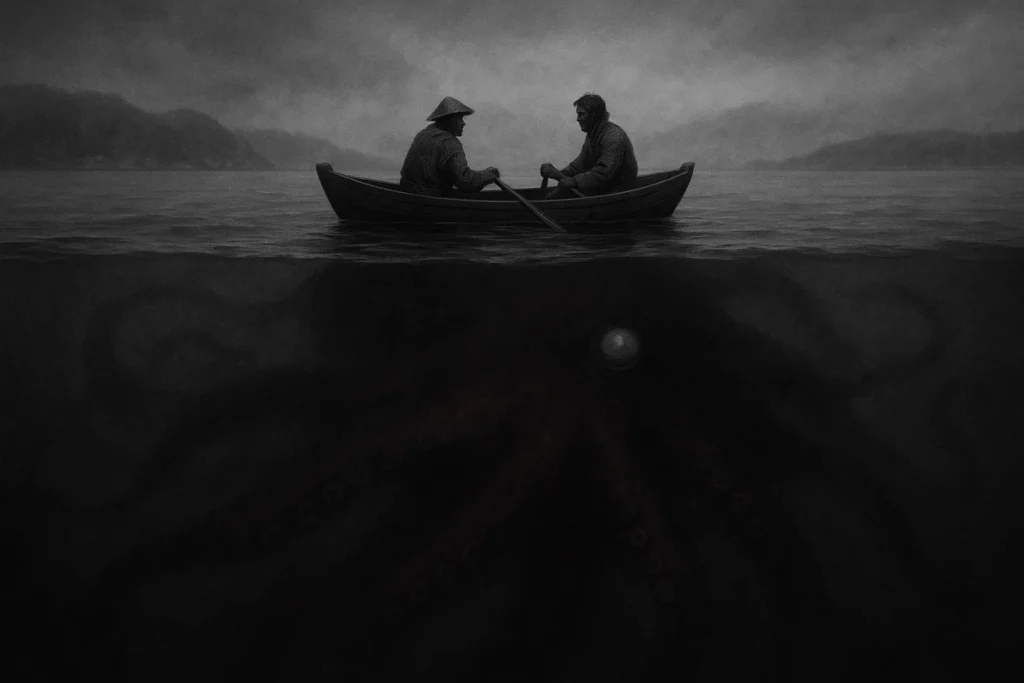
One such tale is set in the area near Abuta on Volcano Bay. Local fishermen, observing a period of unusual quiet and stillness in the deep water, decided to venture further out than usual. As they cast their nets, the sky reportedly darkened not from clouds, but from a vast, dark red shadow rising beneath their boat.
The fishermen immediately recognized the signs: the deep, murky red of the water and the sudden drop in temperature indicated the proximity of the Akkorokamui. Before they could retreat, the water around them erupted, and a single, gigantic, crimson tentacle surfaced.
The tentacle was said to be as thick as the trunk of an ancient cedar tree. It did not directly attack but circled their boat, creating a powerful, hypnotic swirl in the water.
One fisherman, paralyzed by the sight, began to chant an ancient Ainu prayer to the Sea Kamuy. As the chanting grew louder, the vast shadow beneath the boat slowly withdrew, and the water returned to its natural color, leaving the men shaken but unharmed.
Akkorokamui Powers and Abilities
The Akkorokamui is a Kamuy (divine being) that grants it immense power over the physical forces of its environment, specifically the ocean. Its strength is comparable to that of powerful sea Kami like Ryūjin (the Dragon God of the Sea). It places it far above common obake or yūrei.
Its primary power is derived from its colossal size and its ability to directly influence marine conditions, making it a force of nature that can be appeased but not easily battled or contained by conventional means.
Its regenerative ability, which allows it to instantly regrow lost limbs, is a key element that establishes its immortality or status as a divine being. The most destructive aspect of its power is its ability to trigger catastrophic events with minimal effort, underscoring its control over the maritime environment.
Akkorokamui’s powers and abilities include:
- Size Manipulation: Akkorokamui can alter its size, growing to a colossal scale of 120 meters (400 feet) or more to engage a large ship or shrinking to a manageable size to hide or hunt.
- Whirlpool Generation: By rapidly rotating its body and tentacles, the creature can generate powerful, localized whirlpools capable of rapidly sinking large wooden vessels and pulling marine life into the deep.
- Storm Summoning: Its emotional state or powerful movement is believed to directly influence the weather, capable of calling forth sudden, violent tempests and squalls in the Volcano Bay area.
- Rapid Regeneration: The creature possesses the ability to immediately regrow severed limbs or heal significant wounds, making it nearly impossible to defeat through conventional physical force.
- Blood and Coloration Influence: Its presence in the water causes the surrounding sea to take on a distinct red or crimson hue—a frightening phenomenon that serves as a warning to sailors.
How to Defend Against Akkorokamui
As a divine being (Kamuy), the Akkorokamui cannot be defeated through simple physical means, and its weaknesses are often spiritual or based on respectful deterrence rather than combat. The most effective ways to defend against it are found in Ainu ritual and behavior.
One of its key weaknesses is its alleged aversion to loud, repeated percussive noises (such as banging on a drum or the hull of a ship) or to sudden, frantic activity. While this might only be a temporary deterrent, it can sometimes be enough to cause the Akkorokamui to retreat back into the depths.
The primary method of defense, as established in Ainu tradition, is the use of spiritual reverence and ritual offerings. Before entering Volcano Bay or venturing into deep waters, Ainu fishermen would historically offer sacrifices (such as fish, wood carvings, or inau—shaved wooden sticks used in Ainu prayer) to the sea and the Akkorokamui.
This act of respect is believed to appease the Kamuy, preventing it from actively targeting the vessel. Furthermore, chanting specific Yukar verses or prayers of respect directed at the sea is said to deter its attacks, as demonstrated in the Abuta story, confirming that spiritual purity and respect are the true defenses against this powerful entity.
Akkorokamui vs Other Yōkai
| Name | Category of Yōkai | Origin | Threat Level | Escape Difficulty |
| Ryūjin | Kami (Shintō God) | Shintō mythology, ruler of the sea | Divine/Catastrophic | Extremely Difficult; Requires appeasement or divine intervention due to control over all sea elements. |
| Isonade | Obake (Giant Sea Monster) | Folklore of Western Japan coastlines | High | Difficult; Its invisible fin makes detection impossible; escape relies on swiftness once attacked. |
| Umibōzu | Obake (Sea Spirit) | Spirit of drowned monks or ships | High | Very Difficult; It demands a barrel to drown you or will simply capsize the ship; retreat is the only option. |
| Kawauso | Obake (Animal Spirit) | Otter that gained spiritual powers | Low | Easy; It is mainly a prankster/trickster; escape is simple but its trickery can lead to loss. |
| Nure-Onna | Yōkai (Reptile/Humanoid) | Folklore of coastlines and rivers | Medium/High | Difficult; Its hypnotic gaze and baby trick victims into paralysis for the fatal attack. |
| Funa-yūrei | Yūrei (Ghost) | Ghosts of drowned sailors | Medium | Moderate; It can be repelled by throwing holes or ashes, or rice balls without holes, into the water. |
| Jorōgumo | Obake (Spider Yōkai) | Spider that transforms into a beautiful woman | High | Difficult; Its main danger is deception; physical escape is possible once the disguise is broken. |
| Kappa | Yōkai (Amphibious/Water Imp) | Spirits of rivers and ponds | Medium | Moderate; Requires outsmarting it (bowing to spill its water) or simple strength on land. |
| Yamauba | Obake (Mountain Witch) | Woman exiled to the wilderness who gained power | High | Difficult; It is highly cunning and strong, often trapping victims in a remote, inescapable location. |
| Gashadokuro | Yōkai (Skeletal Monster) | Accumulated spirits of unburied dead | High | Difficult; It is nearly unstoppable due to its size and invulnerability to physical attack; escape relies on hiding. |
| Raijū | Kamuy/Yōkai (Lightning Beast) | Spirit of lightning and storm | High | Difficult; It is fast and unpredictable, linked to natural, sudden events that are hard to avoid. |
Symbolism
| Attribute | Details |
| Element | Water/Ocean (Its primary habitat and domain), and Fire/Earth (Its connection to the volcanic activity of Volcano Bay). |
| Animal | Octopus (The physical form), Squid, Whale (Due to its size and diet). |
| Cardinal Direction | North/North-East (Its geographical location in Hokkaidō and the Kuril Islands). |
| Color | Red (The color of its body, symbolizing danger, blood, and volcanic heat). |
| Plant | None (Offerings are usually non-living or ritually prepared objects like inau). |
| Season | Autumn/Winter (The seasons of most violent storms and dangerous sea conditions in the north). |
| Symbolic Item | None (The creature itself is the key symbol of the untamable deep). |
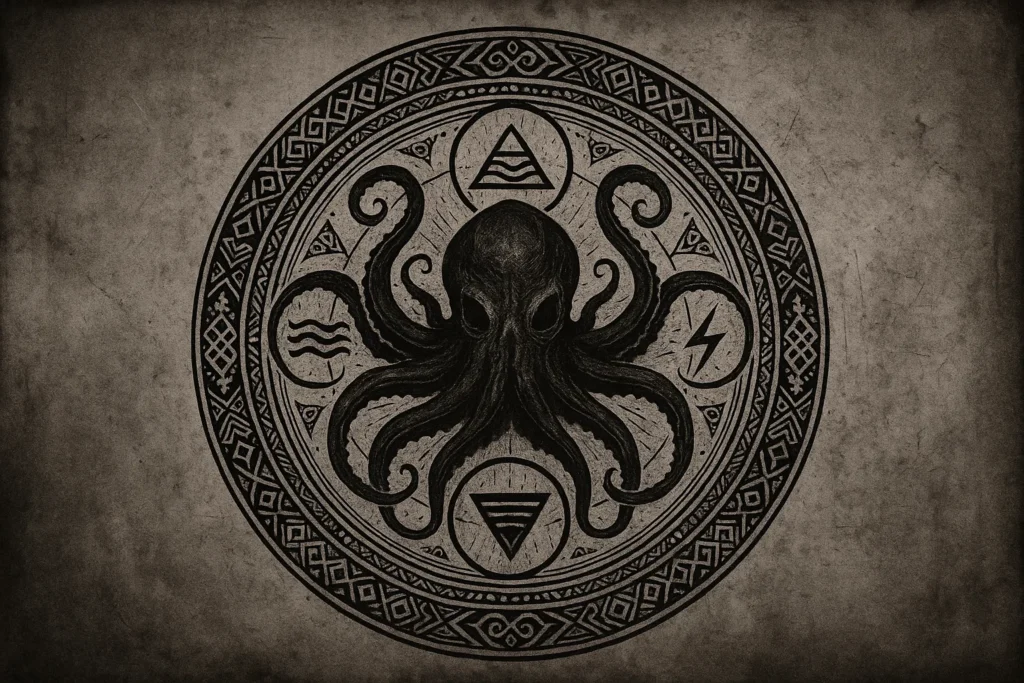
The Akkorokamui embodies the overwhelming power and inherent danger of the deep ocean.
Unlike many mainland yōkai that represent societal fears or moral failings, the Akkorokamui, as a Kamuy, describes nature as a divine force that is neither good nor evil, but simply powerful and capable of instant destruction. Its presence in the volatile Volcano Bay links it symbolically to the untamed aspects of the natural world—the sea’s depths, volcanic heat, and sudden, destructive storms.
In the Ainu culture, the Akkorokamui’s role is complex. It serves as a powerful cautionary tale for sailors, encouraging them to maintain a posture of humility and deep respect toward the sea.
Its immense size and rapid regeneration symbolize the vastness and resilience of nature, a force that can be briefly challenged but never permanently defeated or controlled.
Its integration into the broader Japanese yōkai lore solidifies its status as a quintessential sea monster of the northern Japanese waters, representing a geographical and cultural boundary where the Japanese maritime world meets the powerful, spiritual domain of the Ainu people.
You may also enjoy:
Who Is Adrammelech in Demonology and the Bible?
October 1, 2025
Mara: The Buddhist Demon King of Desire and Death
October 13, 2025
Akateko: The Bloody Hand Ghost That Guards a Cursed Temple Tree
November 14, 2025
Yuki Onna: The Terrifying Demon Bride Who Feeds on Travelers
December 9, 2025
Abura-sumashi: The Potato-Headed Yōkai That Punishes Greed
October 23, 2025
Who Was Hiranyaksha, the Golden-Eyed Asura?
October 7, 2025
Frequently Asked Questions
What does Akkorokamui mean?
Akkorokamui (also Attorokamuy) translates from the Ainu language as the “Akkor God” or “Akkor Divine Being”. The suffix Kamuy signifies a divine spirit or god, akin to the Japanese kami. The preceding component, Akkoro, is believed to refer specifically to this entity, emphasizing its role as a powerful, ancient sea deity in the Ainu pantheon, distinct from the Japanese Ō-tako (Giant Octopus) classification.
Is Akkorokamui related to the Kraken or Cthulhu?
While Akkorokamui shares the common mythological motif of a giant cephalopod monster residing in the deep sea with the Scandinavian Kraken and Lovecraft’s cosmic entity Cthulhu, there is no direct historical or cultural link between them. Akkorokamui is rooted in Ainu indigenous mythology of northern Japan and represents a specific, localized natural force (Volcano Bay). In contrast, the Kraken originates in Norse/Icelandic folklore, and Cthulhu is a modern fictional creation.
What is the primary difference between a Yōkai and a Kamuy?
The primary difference lies in their spiritual status: Kamuy are divine, revered spirits or gods central to the Ainu Shintō faith, embodying nature’s power and demanding respect and ritual worship. Yōkai (in Japanese culture) are typically supernatural monsters, ghosts, or tricksters (obake, yūrei), often feared or avoided but generally not worshipped as true deities. Akkorokamui is a Kamuy that has been categorized as a yōkai by Japanese ethnographers.
Where is Volcano Bay (Uchiura Bay), the habitat of Akkorokamui?
Volcano Bay (Uchiura Bay or Funka Wan) is a large bay located on the southern coast of Hokkaidō, Japan. It is bordered by the Oshima Peninsula and the Iburi Subprefecture. The bay is named for the active volcano Mount Usu, which contributes to the deep, cold, and seismically active waters.
How does Akkorokamui fit into the Ainu creation myth?
In Ainu cosmology, the Akkorokamui is generally not a primary creator figure like Pase Kamuy (the original creator). Instead, it is regarded as a powerful Kamuy of the Sea (Rebun Kamuy), a manifestation of the ocean’s untamed power and the natural volatility of the Hokkaidō coastal environment. Its existence, often in conflict with the hero Okikurumi, illustrates the Ainu belief in the need to maintain balance and respectful coexistence with powerful, dangerous natural forces.
