Many Goetic entities are linked to philosophy or hidden knowledge, but Andromalius stands out as a symbol of forensic justice. Instead of tempting souls, he acts like a determined celestial bounty hunter, focused on recovering stolen goods and exposing wrongdoing. By placing this Great Earl as the last spirit in the Lemegeton, the grimoire ends its list not with a chaotic creature, but with a spirit dedicated to strict justice and restitution.
To create this demon profile, I used both the Ars Goetia and the Pseudomonarchia Daemonum. This helped me make sure the ranks and seals match the original 16th-century manuscripts. [View Full Bibliography ↓]
Summary
Key Takeaways
| Attribute | Details |
| Names | Andromalius |
| Title | Great Earl of Hell |
| Gender | Masculine |
| Role | Punisher of thieves, recoverer of stolen goods, and discoverer of wickedness and underhanded dealing. |
| Rank | Earl |
| Hierarchy | Subordinate to the higher kings of the Goetic hierarchy; no specific named subordinates are listed in primary texts. |
| Legions | 36 Legions of Spirits |
| Powers | Forces the return of stolen items, identifies thieves and criminals, uncovers secret wickedness, and punishes the guilty. |
| Associated Figures | King Solomon (traditionally associated with the binder of the 72 spirits). |
| Weaknesses | Submission to the seal of Solomon, specific divine names used in Goetic conjuration. |
| Opposing Angel/Saint | Mumiah (the 72nd angel of the Shem HaMephorash). |
| Pantheon | Christian (Occult/Grimoire tradition). |
| Primary Sources | Ars Goetia (Lesser Key of Solomon), Pseudomonarchia Daemonum (Johann Weyer), Dictionnaire Infernal (Collin de Plancy). |
Who or What is Andromalius?
Andromalius is a spirit ranked as an Earl in the demonic order of Hell. He is the final spirit named in the Ars Goetia. Unlike many demons who encourage sins such as lust or pride, Andromalius focuses on justice and on revealing hidden wrongdoing. He acts like an executioner or bounty hunter, going after those who steal or deceive.
In Solomonic tradition, Andromalius is said to be one of the spirits King Solomon trapped in a brass vessel. He is useful to conjurors for legal matters and recovering lost items. Although his role seems corrective, he is still a demon, so his idea of justice is harsh and often cruel. He commands thirty-six legions of lesser spirits who help find hidden things and punish wrongdoers.
“Andromalius” Meaning
The exact origin of the name Andromalius is unclear in the main grimoires. Still, some theories are based on Greek and Latin. The prefix “Andro-“ comes from the Greek word for “man,” and “-malius” is linked to the Latin word for “evil” or “wicked.”
So, the name can be interpreted as “Evil of Man” or “Wickedness of Men.” This fits his main role in the Ars Goetia, which is to find and punish the “wickedness and underhand dealing” of people.
There are a few historical variants of the name Andromalius because he does not appear in the earliest demon lists, such as the 15th-century Le Livre d’Abramelin.
He is also missing from some versions of Johann Weyer’s Pseudomonarchia Daemonum, showing up only in later editions or in the 17th-century Lesser Key of Solomon. Since he appeared in literature later than demons like Beelzebub or Asmodeus, his name has stayed mostly the same in major English and French grimoires.
How to Pronounce “Andromalius” in English
In English, the name is typically pronounced as An-dro-mal-ee-us. The emphasis is placed on the third syllable: /æn.dɹoʊˈmeɪ.li.əs/. The “An” sounds like apple, “dro” sounds like row, “mal” rhymes with pal or mail, depending on regional accent, and “ius” is a soft ee-us sound.
What Does Andromalius Look Like?
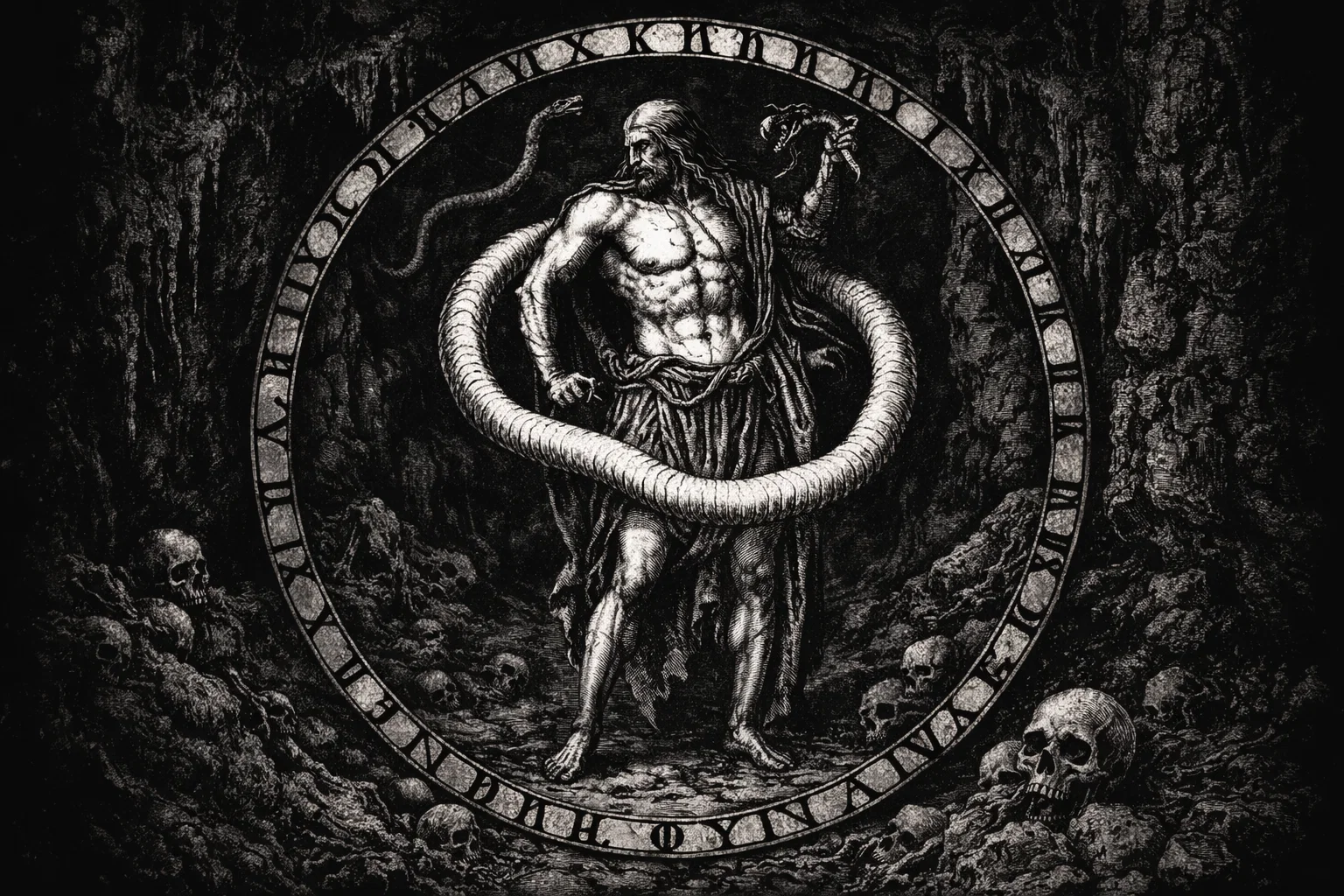
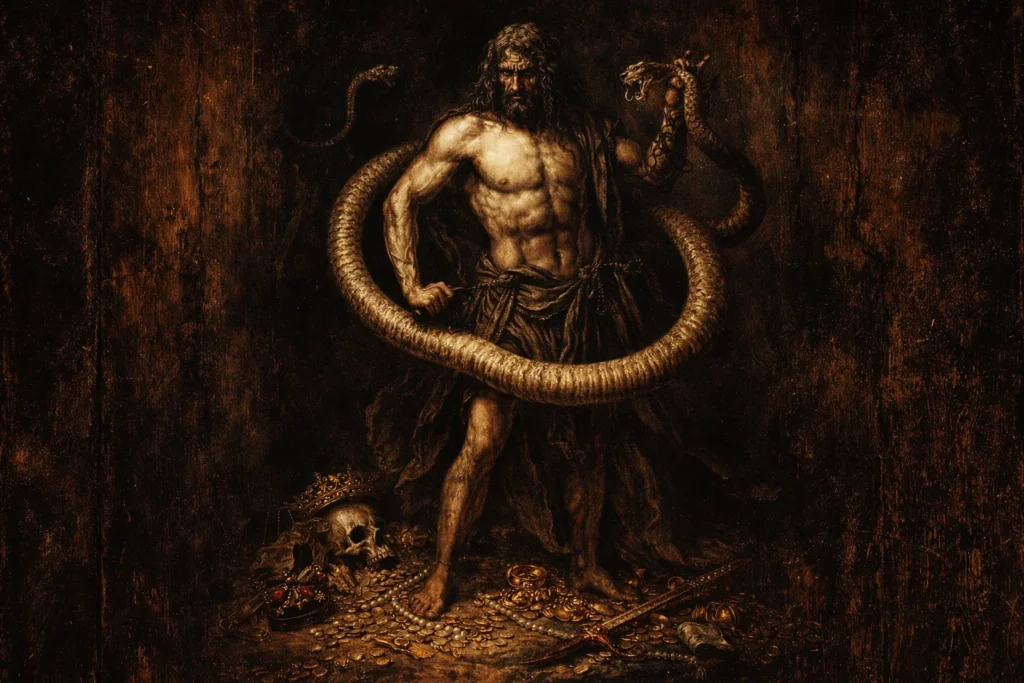
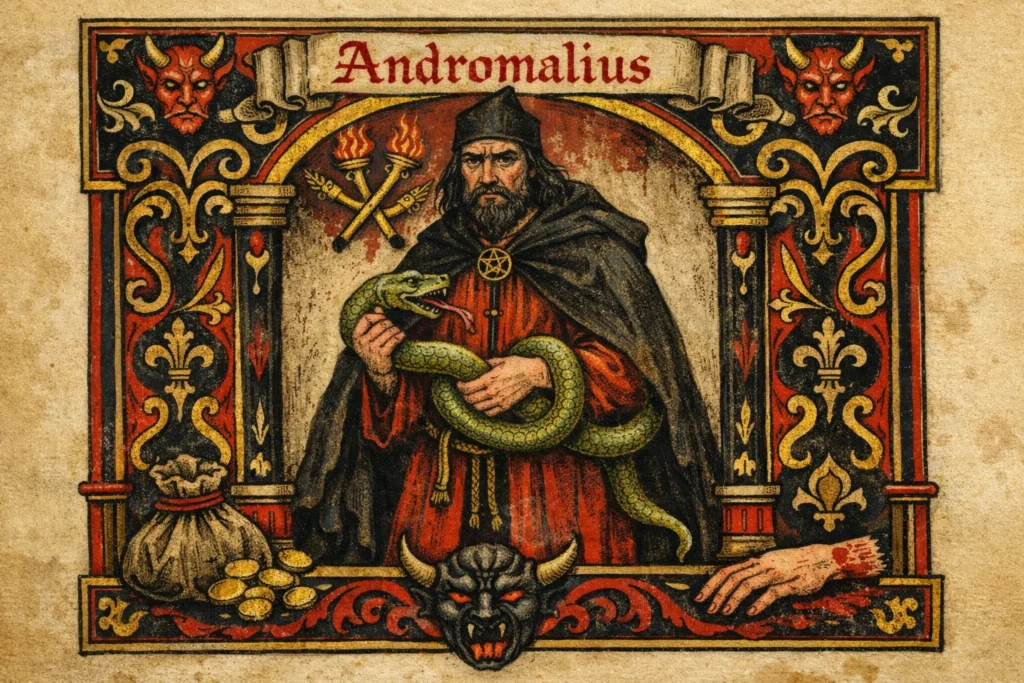
The Ars Goetia and the Dictionnaire Infernal both describe Andromalius clearly and consistently. He appears as a man holding a large serpent. Unlike other Goetic spirits like Buer or Marchosias, who appear as chimeras, Andromalius mostly maintains a human form.
The serpent is the most important part of how Andromalius is shown. It is not just an accessory, but a symbol of his ability to find deceit and punish those who commit crimes. He is often drawn with a harsh or threatening expression, fitting his role as a punisher.
Old woodcut illustrations, such as those in the Dictionnaire Infernal, show Andromalius as a man standing and holding a large, thick snake in one hand. He is sometimes dressed in simple robes or shown unclothed. The main sources do not mention him having wings, horns, or hooves.
What Does Andromalius Look Like?
According to the Ars Goetia and the Dictionnaire Infernal, Andromalius has a consistent and specific physical manifestation. He is described as appearing as a man holding a great serpent in his hand. Unlike other Goetic spirits that take the form of chimeras—such as Buer or Marchosias—Andromalius maintains a largely human physical structure.
The presence of the serpent is the most defining characteristic of his visual representation. The serpent is not merely an accessory but is often interpreted as a symbol of his power to detect deceit and “poison” the lives of those who have committed crimes. He is frequently depicted with a rough or menacing facial expression, consistent with his role as a punisher.
In old woodcut illustrations, like those in the Dictionnaire Infernal, Andromalius is shown as a standing man, sometimes wearing simple robes or shown unclothed, holding a large, thick snake in one hand. The main sources do not mention wings, horns, or hooves.
You may also enjoy:
Who Is Astaroth in Demonology and the Ars Goetia?
February 20, 2026
Aži Dahāka: The Three-Headed Dragon of Zoroastrian Mythology
January 14, 2026
Edimmu: The Mesopotamian Wind Demon That Steals Life
November 6, 2025
What Is the Akkorokamui, Japan’s Colossal Sea Monster?
November 14, 2025
Who Is Futakuchi-onna, the Two-Mouthed Woman?
March 9, 2026
Aim (Aym): The Great Duke of Hell in the Ars Goetia
November 11, 2025
The Most Notable Historical & Grimoire Mentions
While Andromalius does not appear in the Hebrew Bible or the New Testament, his historical record dates to the late 16th century in the Pseudomonarchia Daemonum.
Original:
Andromalius comes est magnus & potens: apparere facit hominem tenentem serpentem magnum in manu: Reducit furem & ablatum, omnemque malitiam & fraudem detegit: Omnia furta exquirit, furem punit, & thesaurum absconditum eruere facit. [Pseudomonarchia Daemonum (Johann Weyer), 1577]
Reginald Scot translation, 1584:
Andromalius is a great and mighty earl: he maketh one to appeare in the forme of a man, holding a great serpent in his hand: he bringeth backe the theefe and the things stolne, and discovereth all malice and fraud: he searcheth out all thefts, punisheth the theefe, and causeth hidden treasure to be digged up.
Johann Weyer’s 16th-century Latin entry marks the first clear mention of Andromalius in written records.
Unlike many other Goetic spirits with roots in older pagan or Semitic traditions, Andromalius seems to have been added during the late Renaissance. The description sets his main image as a man holding a large serpent, which is different from the more animal-like forms seen in earlier entries.
This source presents Andromalius as a specialist demon focused on practical and legal matters, such as recovering stolen goods and punishing thieves.
In 1577, people were very concerned about crimes that were hard to see or prove. Before police forces existed, the Great Earl acted as a supernatural stand-in for the justice system. His main job was to enforce property rights, making him a spirit of order in the infernal world.
The Seventy-second Spirit in Order is named Andromalius. He is an Earl, Great and Mighty, appearing in the Form of a Man holding a Great Serpent in his Hand. His Office is to bring back both a Thief, and the Goods which be stolen; and to discover all Wickedness, and Underhand-dealing; and to punish all Thieves and other Wicked People and also to discover Treasures that be Hid. [The Goetia (S.L. MacGregor Mathers & Aleister Crowley Edition), 1904]
The 1904 Mathers/Crowley edition helped bring Andromalius into modern Western occultism by standardizing his English description. While it keeps Weyer’s 16th-century details, it adds the term “Underhand-dealing.” This new wording broadens Andromalius’s role from just dealing with theft to also exposing professional and social betrayal. It presents him as the detective of the Goetia, able to see through human deceit.
In this version, Andromalius is the 72nd and final spirit, which is an important detail. In Hermetic Qabalah, he matches the last part of the zodiac, which symbolically closes the list.
By ending the Lemegeton with a spirit focused on discovery and punishment instead of destruction, the text shows a cycle of occult power. The grimoire starts with the invisible King Bael. It ends with the revealing power of Earl Andromalius, acting as the final stop in the infernal hierarchy.
Original:
Andromalius, grand-comte de l’empire infernal. Il se présente sous la forme d’un homme tenant un énorme serpent. Il ramène les voleurs et les effets dérobés, punit les malfaiteurs, découvre les trésors cachés. [Dictionnaire Infernal (Jacques Auguste Simon Collin de Plancy), 1863]
Translation:
Andromalius, Grand Count of the infernal empire. He shows himself in the figure of a man holding an enormous serpent. He brings back thieves and stolen goods, punishes evildoers, and discovers hidden treasures.
De Plancy’s Dictionnaire Infernal marks a time when demonology became more encyclopedic, treating demons like members of a dark bureaucracy. Weyer called Andromalius a “Great and Mighty Earl,” but de Plancy raised his rank to “Grand Count” of the Infernal Empire. This change shows the 19th-century French interest in titles and ranks, even when describing the underworld.
Although Andromalius’s powers stay the same, the way people saw him changed over time. During the era of Gothic literature and early criminology, he became less a tool of magic and more a warning entity in popular culture.
Through illustrations by Louis Le Breton, de Plancy helped make the image of Andromalius more real and lasting. In these depictions, the serpent is seen not just as a tool, but as the demon’s way of sensing or tracking thieves, connecting medieval rituals with the detective stories of the Victorian era.
Powers and Abilities
Andromalius’s powers are focused on theft, detection, and punishment. Unlike spirits who offer wisdom or strength, he acts more like a supernatural detective and enforcer.
His main power is recovering stolen property. When summoned, he exerts spiritual pressure on the thief, compelling them to return what they stole. This is not a choice by the thief, but a result of Andromalius’s authority.
Secondly, Andromalius has the power to expose “underhand dealing.” This refers to conspiracies, secret plots, and dishonest business arrangements. He reveals these by stripping away the secrecy protecting the perpetrators, bringing their actions into the light.
This power extends to punishing the guilty. Once a thief or a deceiver is identified, Andromalius is said to inflict various forms of suffering or misfortune on them as a penalty for their crimes.
He is also known for finding hidden treasures, a trait common among earth-related Goetic spirits. This shows his control over things that are buried or kept secret.
You may also enjoy:
Akateko: The Bloody Hand Yōkai That Guards a Cursed Temple Tree
November 14, 2025
Who Are the Yaksha, and Why Did Buddhists Fear Their Wrath?
October 20, 2025
Gandharva: God, Spirit, or Demon?
November 13, 2025
Who Is Azazel, the Demon Blamed for Human Corruption?
February 24, 2026
Who Is Ambolin, the Demon of Nighttime Dread
December 1, 2025
Andhaka: The Blind Demon Born From Cosmic Darkness
February 6, 2026
Andromalius vs Other Christian Demons
| Demon Name | Associated Sin/Temptation | Rank/Origin | Key Traits/Powers |
| Lucifer | Pride | Emperor/Prince | Bringer of light; fallen archangel. |
| Beelzebub | Gluttony | Prince/Lord of Flies | Rules the Order of the Fly; causes plagues. |
| Asmodeus | Lust | King/Ars Goetia | Destroys marriages; breathes fire. |
| Belphegor | Sloth | Prince/Moabite | Suggests ingenious inventions for wealth. |
| Mammon | Greed | Prince/New Testament | Personification of wealth and avarice. |
| Leviathan | Envy | Grand Admiral/Biblical | Monstrous sea serpent of the abyss. |
| Amon | Wrath | Marquis/Ars Goetia | Reconciles feuds; breathes flames. |
| Belial | Lawlessness | King/Dead Sea Scrolls | Grants senatorships; creates disorder. |
| Paimon | Disobedience | King/Ars Goetia | Teaches all arts and sciences. |
| Bael | Deception | King/Ars Goetia | Grants the power of invisibility. |
| Astaroth | Laziness | Grand Duke/Ars Goetia | Gives true answers about the past and future. |
| Foras | Theft (Abetting) | President/Ars Goetia | Teaches the virtues of herbs and stones. |
| Valac | Hidden Treasures | President/Ars Goetia | Rules over serpents and finds treasures. |
| Malphas | Betrayal | President/Ars Goetia | Builds high towers and houses. |
| Glasya-Labolas | Murder | Earl/Ars Goetia | Incite homicides; makes men invisible. |
Rank in the Hierarchy of Hell
Andromalius is ranked as an Earl (or Count). In the feudal system of Hell described in the Lemegeton, an Earl is a mid- to high-level leader who commands many spirits—and Andromalius leads 36 legions. As the 72nd spirit, he is often seen as the final link or the “seal” of the Goetic spirits.
Andromalius acts as a specialized officer. He does not have a direct superior except for the Great Kings of the cardinal directions, like Amaymon or Corson. His main job is to support the rules of the infernal order.
He can be seen as a rival to spirits like Foras or Valac, who hide treasures or help with stealth, since Andromalius’s job is to undo their work. He enforces the rules of the hierarchy, making sure that even in the chaos of Hell, some rules about property and secrets are kept through fear.
Mystical Correspondences
| Attribute | Details |
| Planet | Saturn |
| Zodiac Sign | Pisces (or late Aquarius) |
| Element | Earth (or Water, depending on source) |
| Direction | South |
| Color | Black or Indigo |
| Number | 72 |
| Crystal/Mineral | Jet or Hematite |
| Metal | Copper and Silver (Mixed/Iron) |
| Herb/Plant | Wormwood |
| Animal | Serpent |
Andromalius is linked to the planet Saturn, which stands for discipline and punishment. Saturn’s strict energy is said to give him the power to find stolen items and punish wrongdoers. Occult texts say that rituals for Andromalius often reflect Saturn’s cold and strict nature.
He is also associated with the zodiac sign Pisces, especially the end of the cycle. This matches his role as the last spirit in the Goetia, symbolizing the end of the infernal list and the revealing of hidden things.
Andromalius is also connected to the Earth element, which fits his focus on material theft and hidden treasures. In the Ars Goetia, his image holding a serpent links him to the ground and things buried beneath it. The number 72 is important for him, as it ties him to the full Goetic system and marks him as the last spirit in the list.
Andromalius as the Grimoire’s Judicial Equilibrium
The demon, being the seventy-second and last spirit in the Goetia, is not just a random detail. It acts as a kind of theological reset. The hierarchy starts with Bael, a spirit of invisibility and change. It ends with Andromalius, who is focused on revealing and recovering hidden things. This creates a balanced structure in the Lemegeton.
If the earlier spirits show the chaotic side of human nature, like causing lust, war, and lies, Andromalius stands for the return of order and law. He acts as the infernal version of a judge, showing that medieval occultists saw the demonic hierarchy as a system with strict rules, not just chaos.
The serpent Andromalius holds is important both in its language and in its symbolism. In most Goetic traditions, the serpent stands for deception, but for Andromalius, it is a tool for finding the truth. This is similar to the “Brazen Serpent” of Moses, which was used for healing, not harm.
By using a serpent to catch a thief, Andromalius shows the idea that like cures like. He is seen as a necessary enforcer in the underworld, keeping order among the wicked. Unlike more rebellious demons like Lucifuge or Mephistopheles, Andromalius stands for maintaining the status quo, making sure that property and truth are protected even in magical practices.
Looking at social history, Andromalius became more important in the 16th and 17th centuries, a time when people were deeply concerned about hidden crimes such as theft, embezzlement, and complex business fraud.
At that time, city walls could not protect merchants from dishonest partners. Andromalius filled the gap left by the weak legal system, acting as a kind of subconscious judge. He symbolized the idea that no matter how clever a thief was or how well a treasure was hidden, there would always be a force to bring justice.
He represents the law’s constant watchfulness, even in darkness. This transforms the Goetia from a mere spellbook into a guide to social and moral rules.
Summoning and Rituals
In the past, people summoned the demon mainly to solve crimes. Magicians practicing Solomonic magic would call on him if they were robbed or thought someone was plotting against them. These rituals were usually done in a special, protected space, often using a magic circle to keep the practitioner safe from the demon’s harsh nature.
These rituals were primarily found in grimoires such as the Lesser Key of Solomon. The process involved reciting lengthy conjurations in Latin or English, invoking divine names to compel the Earl to manifest. Witches and warlocks of the early modern period were often accused of using such spirits to exact revenge on neighbors.
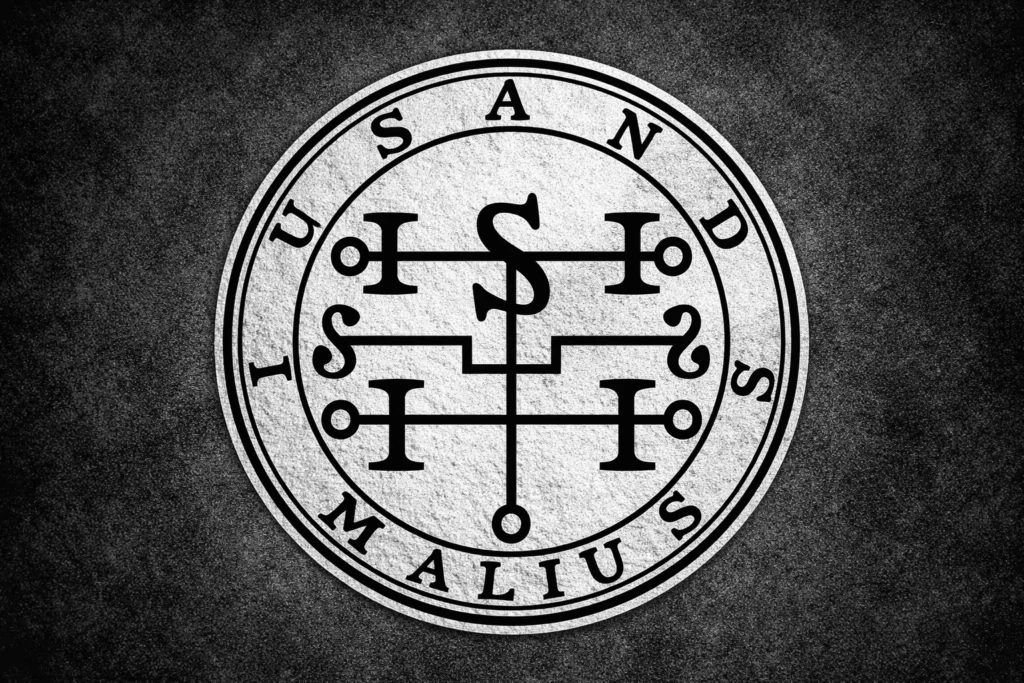
The ritual focus was always on the Seal of the Spirit; the practitioner would focus their intent on the sigil while demanding that Andromalius bring the thief to justice. The purpose was not worship, but a transactional command: the magician offered a license to appear in exchange for the recovery of material wealth or the exposure of an enemy.
You may also enjoy:
Vaisravana: The Golden Guardian King Who Rules the North
October 16, 2025
What Is Jorōgumo? The Deadly Spider Woman of Japanese Myth
February 2, 2026
Aeshma: The Zoroastrian Demon of Wrath and Fury
January 13, 2026
Mara: The Buddhist Demon King of Desire and Death
October 13, 2025
Amdusias in the Ars Goetia: The Demon of Dark Music
December 2, 2025
Bibliography
Author’s Note: While researching this demon, I noticed an interesting (and unusual) contrast between the straightforward legal details in Weyer’s Pseudomonarchia Daemonum and the more colorful descriptions in de Plancy’s Dictionnaire Infernal. The early manuscripts give the basic legal role of Andromalius. Still, it was only by comparing these with the 19th-century Crowley-Mathers versions that his deeper meaning as the “final seal” became clear. What stood out to me is that, over 500 years, the image of Andromalius holding a serpent has barely changed. This shows a rare agreement on his symbol among different occult traditions. My goal in this study is to connect the careful research in the manuscript with the later interpretations that shape how we see this entity today.
- Solomon, King of Israel (attributed). The Key of Solomon the King (Clavicula Salomonis). Translated and edited by S. Liddell MacGregor Mathers, George Redway, 1889. Internet Archive.
- Summers, Montague. The history of witchcraft and demonology. Project Gutenberg, 28 Oct. 2025. Originally published by Alfred A. Knopf, 1926.
- Ruys, Juanita Feros. Demons in the Middle Ages. Arc Humanities Press, 2017. JSTOR.
- De Laurence, L. W. The Lesser Key of Solomon, Goetia. Project Gutenberg, 7 Nov. 2023. Originally published by De Laurence, Scott & Co., 1916.
- Weyer, Johann. Pseudomonarchia Daemonum. Edited and translated by Joseph H. Peterson, digital edition, 2000. Twilit Grotto: Esoteric Archives.
- Collin de Plancy, Jacques. Dictionnaire infernal: répertoire universel des êtres, des personnages, des livres, des faits et des choses qui tiennent aux esprits. 6th ed., Henri Plon, 1863. Internet Archive.
- Henson, Mitch, and Jeff Wellman, editors. Lemegeton: The Complete Lesser Key of Solomon. Metatron Books, 1999. Internet Archive.
- Abraham ben Simeon, of Worms. The Book of the Sacred Magic of Abra-Melin, the Mage. Translated by S. L. MacGregor-Mathers, The de Laurence Co., 1939. Internet Archive.
- Gasdia, Russell. Frightful Demons and Faithful Prayer: Possession, Exorcism, and Religious Sentiments in Johann Weyer’s De Praestigiis Daemonum and Reginald Scot’s The Discoverie of Witchcraft. Academia.edu.
- Nottingham, Gary St. M. Ars Theurgia-Goetia: Being an Account of the Arte and Praxis of the Conjuration of Some of the Spirits of Solomon. Avalonia, 2012. Internet Archive.
- Trithemius, Johannes. Steganographia (Secret Writing). Translated by Fiona Tait and Christopher Upton, edited by Adam McLean, 1997. Internet Archive.