
The Edimmu (sometimes transcribed as ekimmu) is a class of malevolent supernatural entity originating in ancient Mesopotamian religion, prominent in the traditions of Sumer, Akkad, Assyria, and Babylonia. They belong to a broader category of spirits known as utukku, which could be either benevolent or evil.
The Edimmu are specifically the evil ghosts of those who were denied proper burial rites or who died a violent, untimely, or otherwise unsavory death, leaving them unable to find rest in the Underworld.
These restless spirits were feared by the living as vengeful, incorporeal entities often described as “wind” spirits. They were believed to roam the Earth for eternity, causing misfortune, disease, and criminal impulses in humans.
The danger posed by an Edimmu could sometimes be mitigated through appeasement rituals, such as funeral repasts and libations, or countered with the ritual knowledge wielded by exorcist priests (ašipū).
Summary
Key Takeaways
| Attribute | Details |
| Names | Edimmu, ekimmu |
| Title | Vengeful Ghost, Evil Wind Spirit |
| Origin | Sumerian, Akkadian, Assyrian, Babylonian (Ancient Mesopotamia) |
| Gender | Ambiguous, generally referred to as a spirit |
| Genealogy | No clear lineage, results from a specific manner of death |
| Role | Haunter of the living, bringer of misfortune, cause of disease and possession |
| Associated Deity/Figure | No specific association; Ea (Enki) as god of wisdom and patron of exorcists could oppose them |
| Brings | Disease, misfortune, criminal behavior, death, life-sucking, possession |
| Weaknesses | Proper burial of mortal remains, funeral repasts, libations, exorcism and ritual knowledge of the exorcist-priest (ašipū) |
| Realm/Domain | Earth (roaming the land due to exclusion from the Underworld) |
| Weapon/Item | None, described as incorporeal wind spirits |
| Symbolism | The consequence of disrespecting funerary rites, restless death |
| Sources | Sumerian, Akkadian, and Babylonian incantation texts and magical literature |
Who or What is an Edimmu?
The Edimmu is a spectral entity in Ancient Mesopotamian mythology, typically understood as the ghost of a deceased person whose soul is barred from entering the Underworld.
This exclusion was typically the result of the body not receiving a proper funeral or burial, or the individual having died a violent, unnatural death, such as murder or drowning. Because they cannot find peace in the afterlife—often described as the “House of Darkness”—Edimmu are condemned to wander the Earth eternally, becoming malevolent and vengeful toward the living.
They are classified as a type of utukku, a generic term for a spirit or demon that could be good or bad, with Edimmu representing the distinctly evil variation.
Their primary activity was to cause harm, whether by infecting the living with disease, inspiring criminal conduct, or simply sucking the life force, especially from those who were vulnerable or sleeping, most commonly the young.
“Edimmu” Meaning
The term Edimmu is derived from the Akkadian word ekēmu, which translates to “to seize,” “to take away,” or “to carry off.” Therefore, Edimmu can be literally interpreted as “The Seizer” or “The one who takes away,” directly referencing their primary malevolent action of sucking or seizing the life force from humans.
How to Pronounce “Edimmu” in English
The name Edimmu is typically pronounced with the stress on the first syllable. A common approximate pronunciation in English is “eh-DIM-moo.”
The “e” at the beginning is pronounced like the “e” in “bed,” the “di” is like the “dim” in “diminish,” and the final “mu” is pronounced like the “moo” in “moon.”
You may also enjoy:
The Kumbhanda: Grotesque Demons of Buddhist Hell
November 13, 2025
Who Was Hiranyakashipu, the Demon King of Hindu Mythology?
October 6, 2025
Who Was Mahishasura, the Buffalo Demon Slain by Goddess Durga?
October 3, 2025
Andrealphus: The Peacock Demon Who Twists Minds and Bodies
January 19, 2026
Who Was Hiranyaksha, the Golden-Eyed Asura?
October 7, 2025
Aim (Aym): The Great Duke of Hell in the Ars Goetia
November 11, 2025
Origins
The concept of the Edimmu is firmly embedded in the Mesopotamian belief system, which recognized a distinct and often frightening afterlife.
The Mesopotamian Underworld (Irkalla or Kurnugia) was universally imagined as a dreary, dark place from which return was impossible. Those who died were expected to reside there. However, a crucial element for their peaceful rest was the observance of proper funerary rites.
The Edimmu originated from the souls of the dead who, for various reasons, failed to gain admittance to this Underworld or were otherwise unable to find peace:
- Lack of Burial/Proper Rites: The most common origin was an individual whose body was left unburied, mutilated, or who did not receive the necessary funerary rituals, libations, and care from surviving family.
- Violent or Unnatural Death: Dying through murder, drowning, or other non-natural, untimely means could result in the soul becoming a restless Edimmu.
- Neglect: If there was no surviving family to care for the soul or if those who vowed to care for the grave failed to do so, the soul could turn into an Edimmu.
In effect, the Edimmu are a manifestation of the societal and religious consequences of failing to uphold one’s duty to the dead, reflecting the crucial importance of funerary practices and ancestor veneration in Mesopotamian culture.
They were thought to have existed in Mesopotamian belief as far back as 4000 BC, initially feared by the Assyrians and later by the Babylonians and Sumerians.
Genealogy
The Edimmu is not a genealogical entity in the same way as many other mythical demons or deities. It does not possess a divine or demonic parentage. Its existence is a consequence of a specific socio-religious and ritual failure concerning a human death, making its “lineage” tied to the circumstances of its transformation from a human soul into a spirit.
Sources
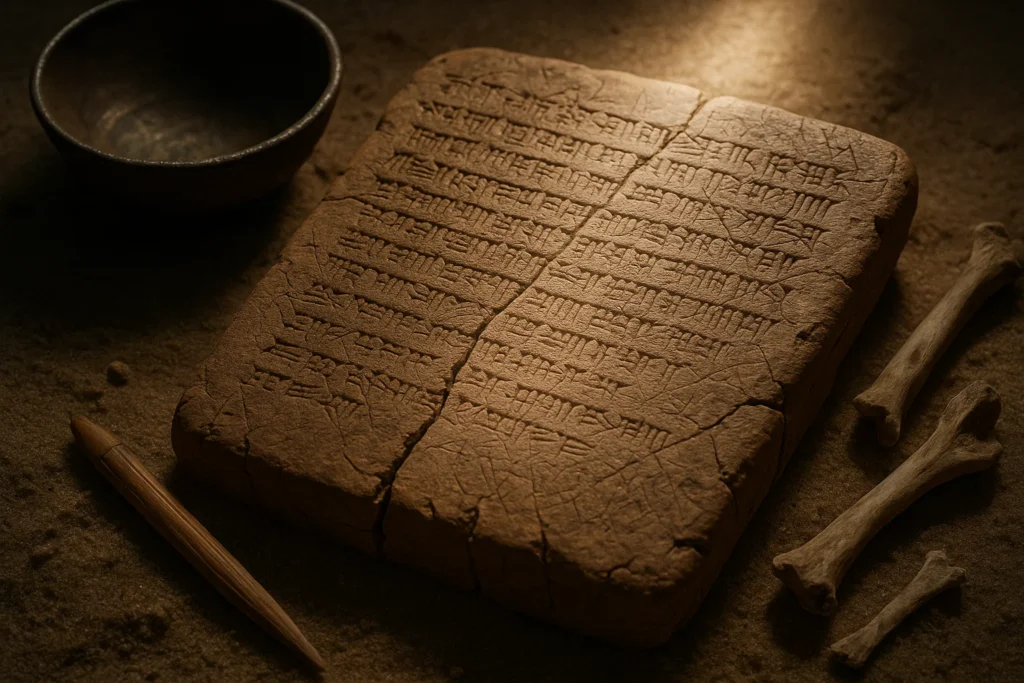
The primary information concerning the Edimmu is derived from a vast body of Sumerian, Akkadian, and Babylonian magical and religious texts, including incantations and ritual procedures recorded on clay tablets. These sources detail the behaviors of the evil spirit and prescribe the methods for its exorcism or appeasement.
What Does Edimmu Look Like?
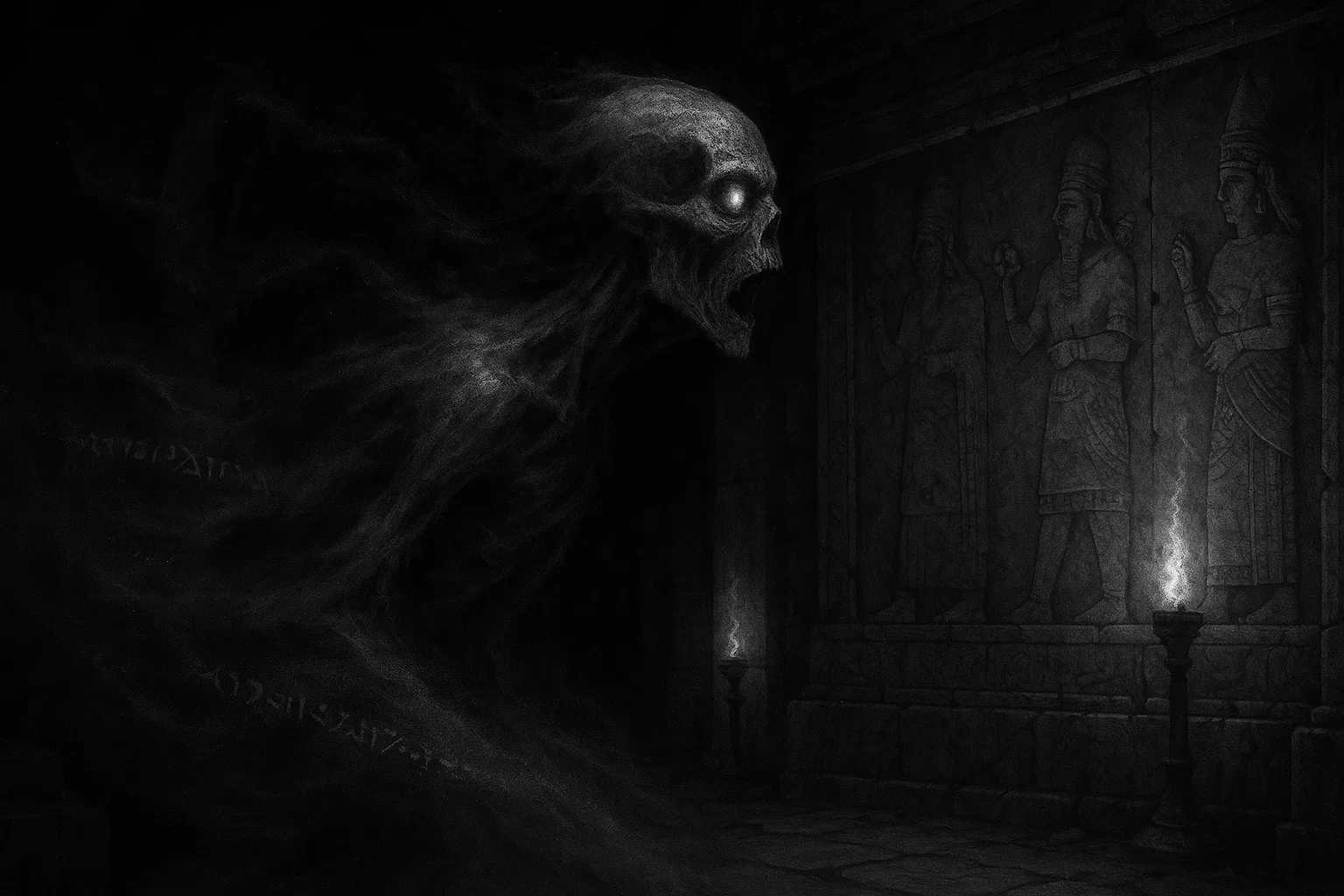
The physical description of the Edimmu in ancient Mesopotamian texts emphasizes its incorporeal nature. The Edimmu is typically not depicted with a fixed, monstrous form like other demons. Instead, it is consistently described as a “wind spirit”—a nearly or completely bodiless entity.
This makes it difficult to ascertain a consistent physical appearance beyond its classification as an invisible, intangible force. Its body is likened to wind or a gust of air, allowing it to move freely through the air and to pass through walls, locked doors, and other solid objects.
When it attacks, it is the spirit’s unseen presence that is felt, often described as able to suck the life force from its victims, particularly children and those sleeping or otherwise vulnerable.
Unlike many ancient Mesopotamian demons—often depicted with composite animal and human parts—the Edimmu‘s terror lies in its unseen, intangible, and pervasive nature as the restless soul of a wronged or neglected dead person.
Enemies, Rivals, and Allies
As a solitary, restless spirit tied to the circumstances of its human life and death, the Edimmu does not have a formal network of mythical allies or rivals in the same sense as the powerful, named cosmic demons or gods.
The primary relationship of these demons is one of enmity toward the living. Its very existence is predicated on its inability to find rest, which fuels its desire for vengeance and its general malevolence against the human world.
Based on this, their chief adversaries are the exorcist priests (ašipū), whose ritual knowledge and incantations—often invoking the wisdom and authority of gods like Ea (Enki)—are the only known means of controlling, appeasing, or expelling the spirit.
While not a direct ally, the Edimmu belongs to the class of evil spirits known as utukkū lemnūtu (or “evil demons”), often listed alongside others such as the Lilû (a male night demon), the Lilītu (a female night demon, later inspiration for Lilith), and the demoness Lamashtu.
These spirits collectively represent the hostile, chaotic forces that prey on humanity.
Edimmu Myths, Legends, and Stories
The Edimmu are not central figures in large, cohesive narratives such as epic poems (such as Gilgameš or Enūma Eliš). Instead, they feature prominently in Mesopotamian magical and ritual texts.
These texts are not narrative myths but rather exorcism literature and diagnostic reports that describe these demons’ activities and the rituals required to counter them.
You may also enjoy:
Who Is Astaroth in Demonology and the Ars Goetia?
February 20, 2026
Si’la: The Seductive Jinn Who Lures Travelers to Their Doom
October 9, 2025
Who Is Arioch, the Demon of War and Vengeance?
January 21, 2026
Who Is Agaliarept, the General of Hell Under Lucifer?
October 8, 2025
Arati: The Beautiful Demon of Aversion in Buddhist Mythology
October 15, 2025
Yuki Onna: The Terrifying Demon Bride Who Feeds on Travelers
December 9, 2025
The Attack of the Unburied Soul
In ancient texts, there’s a spirit called the Edimmu that starts its attack by sneaking into the homes of the living. This spirit has a ghostly, wind-like form, which allows it to slip through closed doors and solid walls without being noticed.
The Edimmu is restless and troubled because it hasn’t received a proper burial, which keeps it wandering forever. It seeks to share its pain with the living, especially preying on the vulnerable, like children or those who are asleep. When it strikes, it drains the life force from its victims, causing them to feel ill with symptoms such as fever and fatigue, which can lead to a gradual decline in health.
Additionally, the Edimmu is thought to bring misfortune to homes and can even influence people to act against social or religious rules. For example, it might tempt someone to eat ox meat when it’s not allowed.
Throughout these stories, the main idea is that giving the dead a respectful burial is very important, highlighting the deep cultural belief in honoring those who have passed away.
Edimmu Powers and Abilities
The powers of these ancient demonic entities are directly tied to their nature as vengeful spirits.
They are formidable because of their intangibility and capacity to inflict illness and misfortune from a realm beyond physical reach. The Edimmu‘s strength lies in its relentless, pervasive malevolence, driven by its status as a wronged and restless soul.
Their powers and abilities include:
- Revenge and Misfortune: The general ability to bring misfortune and calamity upon a household or individual.
- Incorporeal Movement: The ability to move through solid objects like walls, doors, and other physical barriers due to its nature as a wind spirit.
- Life Siphoning: The power to “suck the life out” of victims, particularly the young and the sleeping, resulting in exhaustion, illness, and ultimately, death.
- Disease Infliction: The capacity to cause various forms of disease, sickness, and fever in the living.
- Invisibility/Impalpability: The spirit is often unseen and cannot be physically attacked or constrained by mundane means.
- Mental and Behavioral Influence: The ability to inspire criminal behavior and a failure to respect religious taboos in the living (such as the prohibition against eating ox meat).
- Possession: The power to possess the living, especially those who have transgressed certain taboos.
Connections to Other Entities
| Name | Genealogy | Type | Appearance |
| Lamashtu | Babylonian/Assyrian | Demoness of Disease and Childbirth | Lion-headed demoness with a hairy body, donkey’s head, lion’s claws, and often standing on a donkey. |
| Pazuzu | Assyrian/Babylonian | Wind Demon/Protector | Hybrid creature with a dog-like face, scaly body, four falcon-like wings, lion’s forepaws, and a scorpion’s tail. |
| Lilîtu | Sumerian/Akkadian | Succubus/Night Demoness | Female spirit, sometimes depicted as a beautiful woman or a winged demoness who preys on men and children. |
| Galla | Sumerian/Akkadian | Underworld Demons | Demonic police/henchmen of the Underworld, typically numerous, depicted as fearsome and often seizing their victims. |
| Utukku | Mesopotamian | General Spirit/Demon Class | Broad category; the evil ones (utukkū lemnūtu) are often grotesque, composite creatures. |
| Preta | Hindu/Buddhist | Restless Ghost/Hungry Ghost | Suffering, often emaciated spirit with a huge belly and tiny mouth, symbolizing eternal hunger and thirst. |
| Jiangshi | Chinese | Revenant/Hopping Vampire | A reanimated corpse, typically dressed in a Qing Dynasty official’s uniform, that hops to move. |
| Wight (Draugr) | Norse/Old English | Undead Corpse/Revenant | A reanimated dead body, often bloated or blue-black, possessing superhuman strength and able to cause disease. |
| Anzû | Sumerian/Akkadian | Divine Monster/Storm Demon | Gigantic bird, often with a lion’s head, capable of stealing the Tablet of Destinies. |
| Tiamat | Babylonian | Primordial Chaos Monster | Vast sea serpent or dragon, the personification of the saltwater ocean and primordial chaos. |
Rituals, Amulets, and Protective Practices
In ancient Mesopotamia, the presence of an Edimmu was considered a serious spiritual crisis requiring immediate ritual intervention.
The practices associated with these demons were rooted in the belief that the spirit was acting out of necessity and grief over its improper death and lack of funerary care. Therefore, rituals were primarily focused on appeasement and rectification of the original wrong, allowing the spirit to find peace and depart the world of the living.
Incantations and Ceremonies
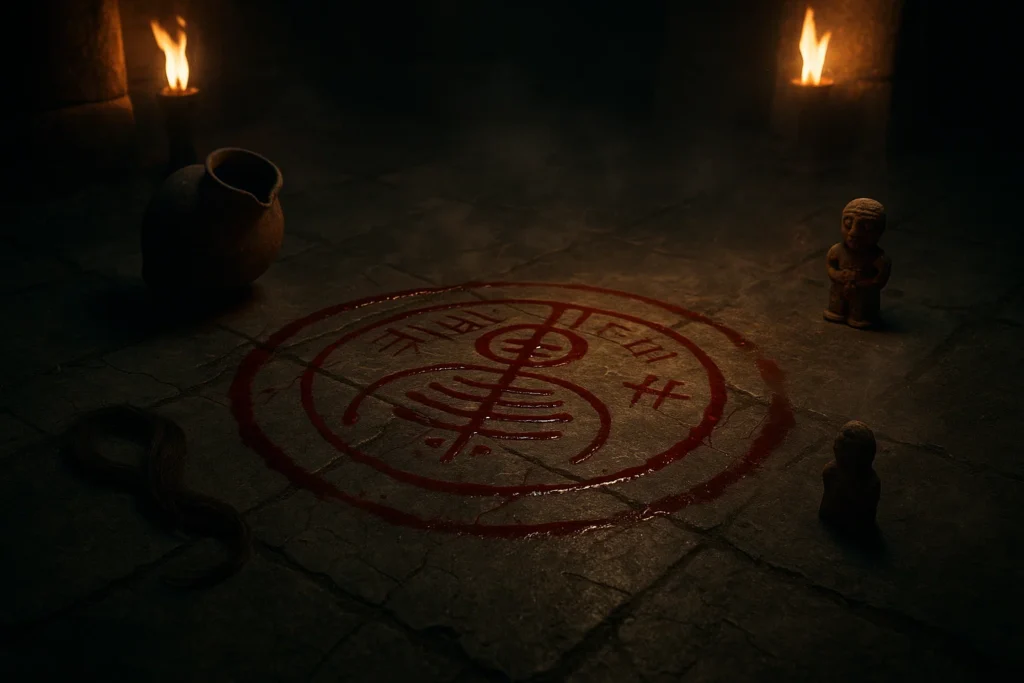
The ceremonies against the Edimmu were complex procedures performed by the ašipū. These rituals often followed a diagnostic phase to determine the specific spirit afflicting the victim. They involved a combination of incantations, libations, and symbolic offerings.
Key ceremonial practices included:
- The Funeral Repast and Libation: The most critical ritual was to symbolically give the Edimmu what it lacked: a proper burial meal and drink. The exorcist would offer a funeral repast (food) and libations (water or other liquids) in a ritually pure manner, often to the Earth or a specific designated area. This act was designed to satisfy the ghost’s hunger and thirst, providing it with the sustenance it needed to pass into the Underworld.
- The Ritual of Proper Burial: In cases where the body’s neglect was the issue, the ceremony often included a symbolic or actual burial of the remains, or an effigy of the deceased, on consecrated ground. This was the ultimate step toward the permanent destruction or pacification of the spirit, as it corrected the ritual failure that had given rise to it.
- Invoking Divine Authority: The ceremony always included incantations that invoked powerful, benevolent deities, particularly the god of wisdom and magic, Ea (Enki), to confer the ritual power and authority needed to compel the demon to depart.
Amulets and Talismans
The primary defense against the Edimmu was not a physical amulet or talisman worn on the body, but rather the correct execution of the funerary rites and the powerful ritual acts of the exorcist. Since these demonic entities were immaterial, they were also less susceptible to physical charms designed to repel material or semi-material demons.
However, the general protective measures used in Mesopotamian households and on vulnerable individuals would have served as a collective defense against all evil spirits, including the Edimmu.
These general apotropaic practices included:
- Protective Figurines: Burying or placing clay figurines of benevolent protective demons or spirits (apkallu, ugallu, etc.) around the house to ward off evil.
- Amulets of Protective Deities: Wearing amulets depicting powerful deities or demons known for their protective qualities against evil, such as Pazuzu, who, despite being a demon himself, was often invoked to protect against other demons (like Lamashtu).
- Ritual Use of Water: Water, as a domain of Ea, the god of wisdom and exorcism, was integral to ritual purification, a key element in countering all malevolent spiritual influences.
You may also enjoy:
Bakeneko: A Supernatural Cat Yōkai in Japanese Folklore
January 27, 2026
Who Was Ravana in Hindu Mythology and Why Was He Feared?
October 3, 2025
The Ghul: The Flesh-Eating Demon of Arabian Folklore
October 1, 2025
Abura-sumashi: The Potato-Headed Yōkai That Punishes Greed
October 23, 2025
Lamia: The Queen Cursed to Devour the Children of Others
January 7, 2026
Who Is Ahriman, and Why Is He Pure Evil Incarnate?
January 8, 2026
Frequently Asked Questions
What is the Edimmu of Mesopotamia?
The Edimmu (or ekimmu) is a class of malevolent, incorporeal ghost or wind spirit in ancient Mesopotamian religion (Sumerian, Akkadian, Babylonian). They are the souls of the deceased who were denied a proper burial or were killed by an untimely, violent death, condemning them to eternally roam the Earth, preying on the living. The term derives from the Akkadian word ekēmu, meaning “to seize” or “to take away.”
Who are the most common Edimmu names?
Unlike major demons like Lamashtu or Pazuzu, the Edimmu does not have specific individual names that appear repeatedly in primary texts. They are collectively referred to as the class name Edimmu or ekimmu, sometimes specified as the “Edimmu who has no burial” or the “Edimmu of the steppe” (ekimmu ša šēri), indicating their origin as a wandering, neglected spirit.
Are the Edimmu exclusively evil?
Yes, the Edimmu are considered exclusively malevolent or evil spirits. They belong to the broader category of spirits called the utukku, which could be either good or evil. However, the Edimmu are specifically classified among the utukkū lemnūtu (“evil demons”), whose inherent nature is to harm the living, cause disease, and inspire misfortune as a direct result of their eternal, resentful restlessness.
What is the difference between an Edimmu and an Utukku?
The difference is hierarchical: Utukku is the general category for spirits or demons in Mesopotamian mythology, encompassing both benevolent and malevolent entities. The Edimmu is a specific type of malevolent spirit within the utukku class, defined by its origin as the ghost of a person who was not properly buried. Therefore, every Edimmu is a utukku, but not every utukku is an Edimmu.
How were the Mesopotamian funerary rites intended to prevent a person from becoming an Edimmu?
Proper Mesopotamian funerary rites, which involved burial with grave goods and the regular provision of food and drink offerings (libations) to the deceased’s mouth-pipe (a terracotta tube leading to the grave), were essential. These practices ensured the soul (eṭemmu) was nourished and satisfied, allowing it to pass peacefully to the Underworld and thus preventing it from becoming a starving, vengeful Edimmu condemned to wander the Earth.
What other demons were often grouped with the Edimmu in incantation texts?
In ancient incantation series (like Utukkū Lemnūtu), the Edimmu was often grouped with other malevolent entities known as the Seven Evil Demons or “evil wind” demons. These typically included the Lilû (a male demon), the Lilītu (a female demon/succubus, a precursor to Lilith), the Rabisu (a lurking demon), and various forms of utukku and gallu demons, all collectively blamed for bringing disease and calamity.
Does the Edimmu have any known historical parallels in other cultures?
Yes. The concept of a restless, malevolent ghost arising from an improper death or burial is widespread. The Edimmu is often compared to the Preta (“hungry ghost”) of Hindu and Buddhist traditions, a spirit suffering from insatiable hunger and thirst due to past misdeeds. It is also compared to certain types of revenants or angry ghosts found in various global mythologies.
