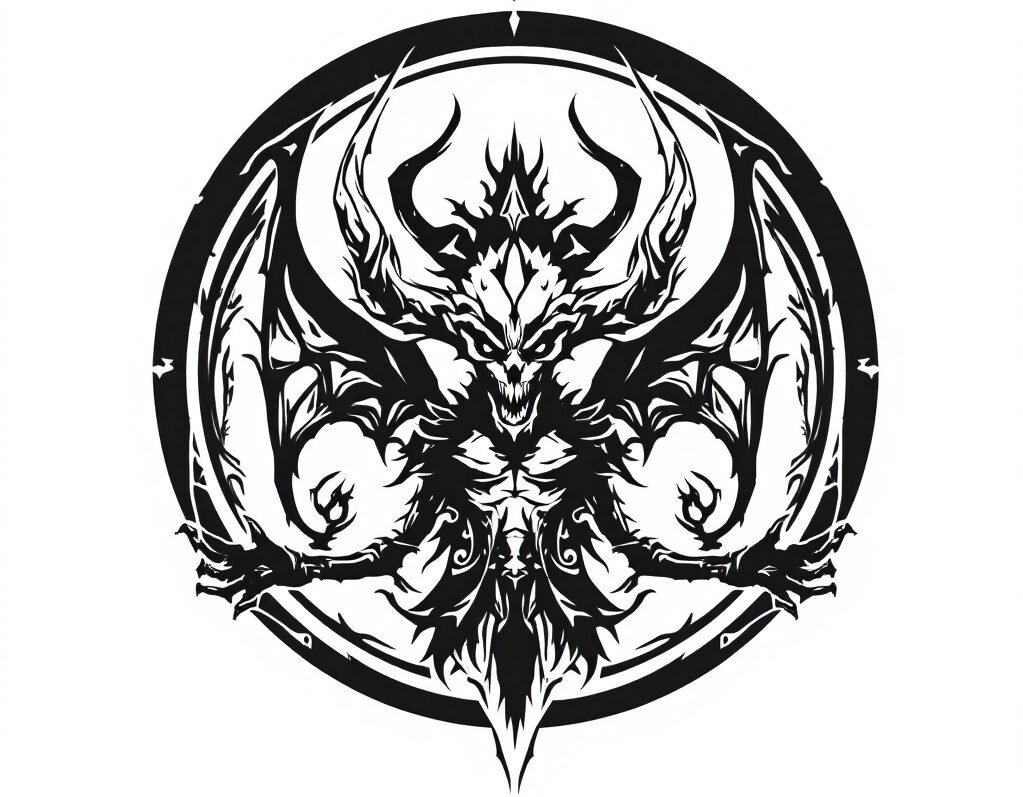
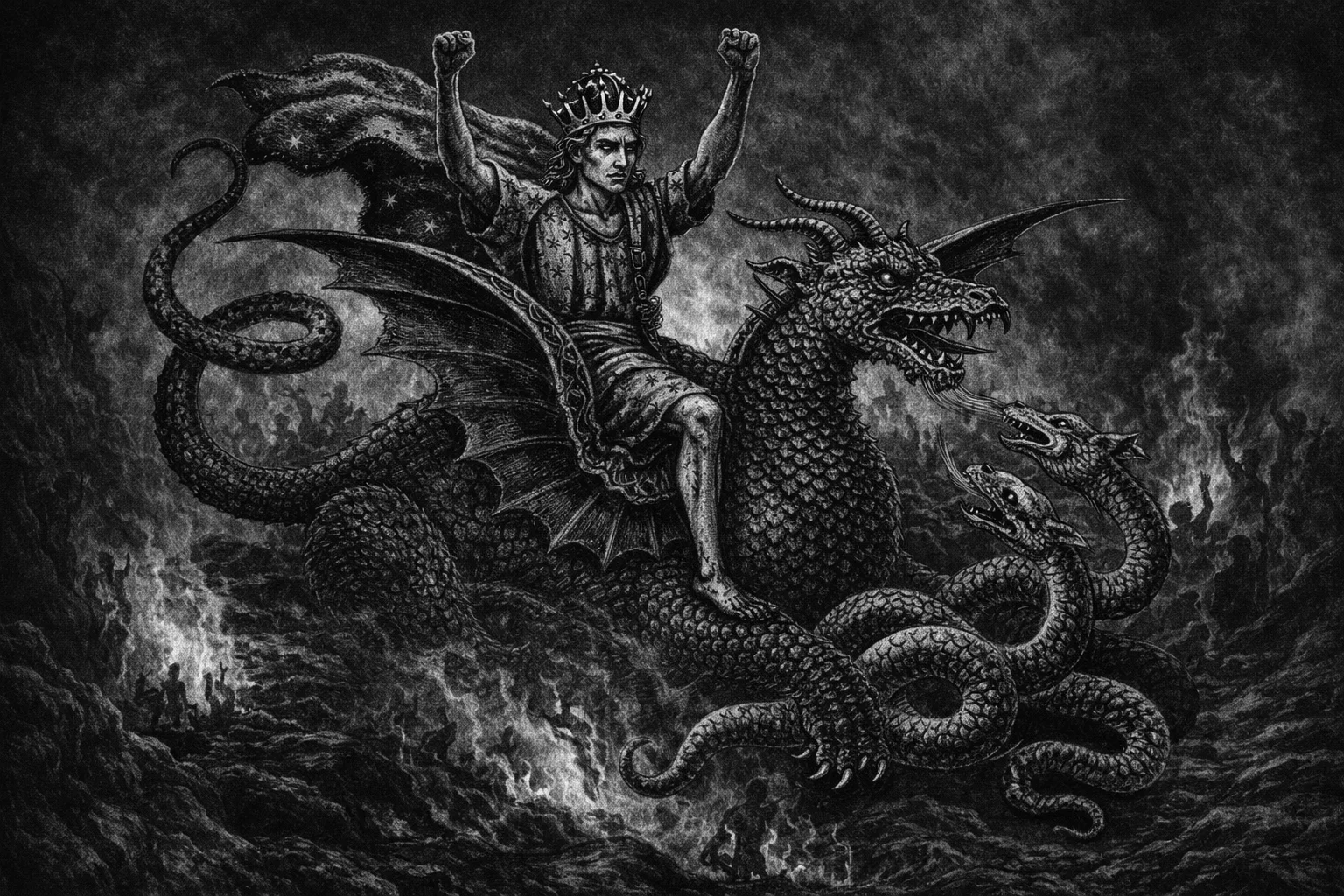

Many cardinal kings are known for their specific infernal domains. Still, Ariton stands out as the “Stagnant Watcher” in the elemental hierarchy. Unlike Oriens, who is associated with aggressive movement, or Paimon, known for intellectual pride, Ariton is closely linked to the heavy presence of the northern or eastern gates.
He acts as a bridge between the earth’s hidden treasures and the deep’s secrets. In the Abramelin system, Ariton is more than a commander of legions; he rules the boundary where material wealth meets spiritual decline.
This article compares modern lore with relevant texts such as The Book of the Sacred Magic of Abramelin the Mage and the Ars Goetia to create a historical profile based on evidence. [View Full Bibliography ↓]
Summary
Key Takeaways
| Attribute | Details |
| Names | Ariton, Egin, Egyn, Egina |
| Title | King of the East, Sub-Prince of the Infernal Hierarchy |
| Gender | Male |
| Role | Overseer of hidden treasures, granter of familiars, and master of illusions. |
| Rank | One of the Four Kings of the Cardinal Points. |
| Hierarchy | Subordinate to Lucifer, Leviathan, Satan, and Belial; commands numerous sub-spirits. |
| Legions | Directly commands 22 sub-spirits and shares command over many more. |
| Powers | Reveals the past and future, discovers hidden wealth, and creates phantom sights. |
| Associated Figures | Oriens, Paimon, Amaimon (his fellow directional kings). |
| Weaknesses | Subjugated by the Seal of Solomon and the authority of the Holy Guardian Angel. |
| Opposing Angel/Saint | Archangel Raphael (traditionally associated with the East). |
| Pantheon | Christian Occultism / Solomonic Grimoires. |
| Primary Sources | The Book of the Sacred Magic of Abramelin the Mage, The Grimoire of Armadel. |
Who or What is Ariton?
Ariton is an infernal king whose power is connected to the East, both geographically and spiritually. In medieval and Renaissance demonology, he is not just a single demon but a high-ranking leader in the underworld. His main role is to connect the top princes of Hell with the lesser spirits who handle tasks in the physical world.
As a Sub-Prince, the demon is known for his control over knowledge and the elements linked to sunrise. He is called the “King of the Orient,” a title that is important in ritual magic because many believed spirits from the East were especially powerful in the morning.
Unlike lower-level demons, he is said to have a sharp mind. He can give detailed information about the world’s hidden workings to those who can command him.
DEMONS ARE REAL — AND THE BIBLE PROVES IT Limited-Time: Up to 20% OFF!
No myths. No exaggeration. Just Scripture. Clinton Arnold’s landmark biblical theology of the powers of darkness. What the Old & New Testaments actually teach about Satan, demons, and spiritual warfare. Essential reading for every pastor, counselor, and believer facing the unseen battle. The book seminaries and deliverance ministries swear by.
Demons are real • Scripture is clear • Victory is yours • Clinton Arnold’s definitive biblical study.
“Ariton” Meaning
The origin of the name has several interpretations in language and occult history. Most researchers of the Abramelin text think it comes from the Greek word arritos, meaning “unspeakable” or “secret.” This fits with Ariton’s role as a keeper of secrets and a revealer of mysteries that people cannot usually access.
In some versions of the Abramelin manuscripts, the name is spelled Egyn or Egin. This version is often connected to the Hebrew root Agon, which means “struggle” or “contest.” In the Grimoire of Armadel, the name is used in ways that highlight his kingly role over the element of Air and the East.
Over time, these names have merged, but Ariton remains the most accurate name in the Abramelin system. The shift from Egyn to Ariton shows how the names changed from older folk traditions to the Greek and Hebrew-influenced styles of Renaissance grimoires.
How to Pronounce “Ariton” in English
In English, the name is usually pronounced as AIR-ih-ton or AH-rih-ton, with the stress on the first syllable. The “i” sounds like it does in “bit,” and the “on” at the end is soft, like in “cotton.”
What Does Ariton Look Like?
Ariton is not usually described with the monstrous features found in Goetia spirits. Instead, he appears as a royal figure. In the few old texts that mention him, he is shown as a dignified human male or a king with a serious and commanding presence.
When Ariton appears, he is said to carry symbols of his rank, such as a crown or scepter, to show his rule over the East. Some stories say he may first appear as a ghost or shifting shadow before taking on a human form.
As a master of illusions, Ariton’s physical form is seen as a sign of his power rather than his true body. He doesn’t have wings or animal features in the main sources, and he maintains a calm, royal demeanor that sets him apart from the wilder demons of lower ranks.
You may also enjoy:
Rāga: The Seductive Demon of Passion and Desire in Buddhist Lore
October 16, 2025
Banasura: The Thousand-Armed Demon King
October 10, 2025
Apophis: The Great Serpent of Egyptian Chaos
November 11, 2025
What Is a Rakshasa? Meaning, Origins, and Dark Powers
January 23, 2026
Alû: The Mesopotamian Demon of Malevolence and Pestilence
November 10, 2025
Aim (Aym): The Great Duke of Hell in the Ars Goetia
November 11, 2025
Relevant Historical & Grimoire Records
While Ariton does not appear in the Canonical Bible, his historical record begins in the late Medieval period within the foundational grimoires of the European occult tradition.
“The Eight Sub-Princes are: Bael, Lucie, Sathan, Pasta, Ariton, Magot, Asmodee, Belzebud. […] To ARITON, for his part, belong 22 Spirits: Anader, Ekorok, Amiton, Igarak, Geloma, Elaton, Ikon, Iisaba, Goleg, Guisamon, Rigolon, Haven, Dahis, Akium, Hornibi, Magog, Oroia, Alpas, Nimerix, Herg, Karwas, Afferitz.” [The Book of the Sacred Magic of Abramelin the Mage, mid-15th Century (Original Hebrew/German traditions), Translated by S.L. MacGregor Mathers, 1898]
In this important 15th-century text, Ariton is not a solitary entity but one of the eight “Sub-Princes” who serve the four Superior Princes: Lucifer, Leviathan, Satan, and Belial. This structure is unique because it groups Ariton with figures like Asmodeus and Beelzebub, giving him a general leadership role over 22 specific spirits.
Unlike later Solomonic traditions that group demons by special skills, such as teaching logic or building towers, the Abramelin system sees Ariton as a key part of the infernal hierarchy. His main role is to govern his specific group of spirits.
Some believe the name Ariton comes from the Greek word Arithmon, meaning ‘number.’ In the 15th century, this idea reflected a belief that even the infernal world followed a strict, almost mathematical order.
Calling him a ‘Sub-Prince’ supports the Renaissance idea of a ‘Mirrored Kingdom,’ in which Hell mirrors the feudal and royal systems found on Earth.
“The four principal Spirits are these, viz.: Amaymon, King of the East; Corson, King of the West; Ziminiar, King of the North; and Gaap, King of the South. […] Some Magicians say that there be four Kings over the four Quarters of the World, viz.: Oriens, King of the East; Paymon, King of the West; Egyn, King of the North; and Amaymon, King of the South.” [The Lesser Key of Solomon (Ars Goetia), 17th Century (Compiled from earlier 16th-century manuscripts)]
In the 17th-century codification of the Ars Goetia, we see a significant shift and the emergence of the “Ariton-Egyn” duality. While the text refers to the King of the North as Egyn, historical cross-references by researchers such as A.E. Waite and Aleister Crowley identify Egyn and Ariton as the same entity.
This source shows how the entity changed from a ‘Sub-Prince’ to a ‘Cardinal King.’ This rise in rank mirrors the era’s growing focus on ‘Directional Magic,’ in which practitioners sought to balance the four corners of the universe.
This change is important: Ariton (as Egyn) is now more than a commander of 22 spirits; he becomes a symbol for the North. This shift moves from the Abramelin focus on personal spiritual purification to the Goetic focus on controlling the material world through ceremony.
The North was often linked to darkness and untouched earth, making Ariton the guardian of hidden secrets in the land.
Original:
“Ariton, un des huit sous-princes de l’empire infernal. Les rabbins lui attribuent la faculté de découvrir les trésors cachés, de faire voir le passé, le présent et l’avenir, et de donner des familiers.” [Dictionnaire Infernal, Jacques Auguste Simon Collin de Plancy, 1863 (6th Edition)]
Translated:
“Ariton, one of the eight sub-princes of the infernal empire. The rabbis attribute to him the faculty of discovering hidden treasures, of showing the past, the present, and the future, and of giving familiars.”
By the mid-19th century, Ariton had moved from secret manuscripts to public ‘Demonological Encyclopedias’ of the Romantic era. De Plancy’s Dictionnaire Infernal focuses less on complex hierarchies and more on what Ariton can do for people, such as providing wealth and information about the past, present, and future.
This version of Ariton shows how demonology became more accessible during the 19th-century occult revival. He is no longer seen as a cosmic king to be feared, but as a useful resource.
De Plancy’s mention of ‘The Rabbis’ is a common 19th-century way to add an old or exotic feel, even if the lore was not part of Jewish tradition. This period shifted the focus from fear to curiosity about the infernal.
BREAK THE TOUGHEST DEMONIC BONDAGE! Limited-Time: Up to 41% OFF!
Real-life deliverance secrets from Apostle Alexander Chisango – straight from the front lines in Africa. Generational curses • Witchcraft • Sexual bondages • Addiction strongholds. Step-by-step keys that actually work when everything else has failed. Hundreds set free – your breakthrough starts here!
Powers and Abilities
Ariton’s powers center on gaining knowledge and affecting the physical world through spiritual means. His main skill is revealing the past and future, not by prophecy, but through his long experience and careful observation. He can help practitioners see distant events as if they were present.
Ariton is also believed to control hidden treasures, knowing the location of every gold vein, gemstone, and buried hoard in his domain. He does not simply give wealth, but gives the ability to find it. He can also grant familiar spirits, lesser demons that serve the practitioner, to perform small tasks or offer protection.
Ariton also has the power to create illusions. He can fill the air with voices or make buildings and landscapes appear where none exist. He uses these tricks to test or deceive those who summon him. His control over Air allows him to stir or calm the winds, which often marks his arrival or departure during rituals.
You may also enjoy:
Edimmu: The Mesopotamian Wind Demon That Steals Life
November 6, 2025
Who Is the Demon Andras, The Great Marquis of Discord?
January 15, 2026
What Is a Tengu? Origins, Powers, and Dark Folklore
January 29, 2026
What Is a Qareen and Why Does It Follow Every Human Being?
October 8, 2025
Who Is Azazel, the Demon Blamed for Human Corruption?
February 24, 2026
Aamon: The Infernal Marquis of Lust, Feuds, and False Prophecies
September 29, 2025
Ariton vs Other Christian Demons
| Demon Name | Associated Sin/Temptation | Rank/Origin | Key Traits/Powers |
| Lucifer | Pride | Emperor / Biblical | Supreme ruler of the fallen. |
| Beelzebub | Gluttony | Prince / Philistine | Lord of the Flies; causes destruction. |
| Asmodeus | Lust | King / Book of Tobit | Breaks marriages; grants invisibility. |
| Belphegor | Sloth | Prince / Moabite | Inspires ingenious inventions via laziness. |
| Mammon | Greed | Prince / New Testament | Personification of wealth and avarice. |
| Leviathan | Envy | Grand Admiral / Biblical | Great serpent of the deep abyss. |
| Paimon | Disobedience | King / Ars Goetia | Teaches arts and sciences; loud voice. |
| Belial | Lawlessness | Prince / Dead Sea Scrolls | Hostility and Worthlessness. |
| Astaroth | Vanity | Grand Duke / Phoenician | Teaches liberal sciences; knows all secrets. |
| Bael | Deceit | King / Ars Goetia | Grants the power of invisibility. |
| Adrammelech | Idolatry | Chancellor / Assyrian | In charge of the wardrobe of Hell. |
| Moloch | Child Sacrifice | Prince / Canaanite | Associated with fire and purification. |
| Azazel | Rebellion | Chief / Book of Enoch | Taught man the art of warfare. |
| Abaddon | Destruction | King / Revelation | Lord of the locust plague. |
Rank in the Hierarchy of Hell
In the hierarchy of Hell, Ariton has a strong middle rank as a Sub-Prince, just below the ‘Four Superior Spirits.’ He serves these higher beings as their chief officer, turning their broad commands into specific actions in the physical world.
Ariton is often grouped with three other kings: Oriens, Paimon, and Amaimon. Together, they represent the four corners of the world. Some texts confuse Ariton and Oriens, but the Abramelin system keeps them separate, with Ariton often called the ‘King of Kings’ among the sub-princes.
Ariton commands 22 spirits who serve only him, but he also shares control over hundreds more with the other kings. He has few rivals at his level because the higher princes keep strict order. However, he is known to be ‘hard to bind,’ showing he is proud and resistant, and that he requires a strong spiritual force to control him.
SPEAK THEIR TRUE NAMES… IF YOU DARE
Limited-Time: Up to 40% OFF!
Over 1,700+ demons – true names, ranks, infernal seals, powers & forbidden histories. The expanded & revised masterpiece by occult legend Michelle Belanger. Now with 200+ new entities, dozens of never-before-seen illustrations from ancient grimoires. The ultimate arsenal for demonologists, magicians, and the deliciously curious.
Metaphysics of Directional Anchoring
In some traditions, Ariton is placed as the King of the Eastern Gate, which creates a tension with his link to the element of Water—a secondary domain often overlooked compared to his more famous peers.
In classical occult philosophy, the East is usually connected to the element of Air, which stands for dawn, rising intellect, and the quick movement of spirits like Oriens.
By placing a ‘Watery’ king like Ariton at the ‘Airy’ gate of the East, medieval grimoires created the idea of a thickened atmosphere. This means Ariton does not stand for the fresh breeze of inspiration, but for the heavy, humid fog of early morning. He is seen as the patron of unclear vision, when the sun rises, but the world is still covered in night’s dampness.
The change from the Greek word Arithmon (meaning “number” or “order”) to Ariton suggests the spirit shifted from one of mathematical precision to one focused on collecting and keeping things. This reflects a shift from late-antique Neoplatonism, where numbers were seen as divine plans, to the Renaissance magician’s practical worries about finding ‘buried gold’ and ‘sunken treasures.’
Ariton stands for the idea of the Hoarder of Potential. He rules over things taken out of daily use and placed in the ‘stagnant’ care of the earth or sea. Unlike the wandering Paimon, Ariton is a ruler who stays in one place, showing that his power comes from keeping and holding, not from discovery.
From a social and historical view, Ariton’s importance in the Abramelin system—a text focused on the practitioner’s purification—makes him the main guardian of the ‘unrefined self.’ Since he commands spirits that ‘overthrow’ and ‘disturb,’ he represents the chaotic urges that must be controlled before reaching the Holy Guardian Angel. He stands for Inertia as a harmful force.
For 15th-century practitioners, the biggest threat to spiritual alchemy was not just active evil, but the heavy, watery burden of personal history and secrets. Ariton is the king of these secrets, knowing where the ‘bodies are buried’ both in the land and in the human mind.
Mystical Correspondences
| Attribute | Details |
| Planet | The Sun (as King of the East/Sunrise) |
| Zodiac Sign | Leo |
| Element | Air |
| Direction | East |
| Color | Yellow or Gold |
| Number | 4 (Representing the four kings) |
| Crystal/Mineral | Topaz |
| Metal | Gold |
| Herb/Plant | Frankincense |
| Animal | Eagle or Hawk |
Ariton’s cosmic ties are closely linked to the rising Sun, showing his role as King of the East. His connection to the Sun is not gentle, but about the harsh, revealing heat that uncovers what was hidden at night. This link gives him the power to reveal secrets, matching his role in the Abramelin text as a spirit who ‘knows all things.’
Ariton is connected to the element of Air, which carries sound and illusions. Because Air is changeable and spreads everywhere, his influence is believed to be ‘everywhere at once’ in his domain. The East is the main direction for summoning him, as it is where the day begins.
These connections help explain his evil nature: he is not a demon of the dark earth, but of the high, cold air and bright light, using clarity and intelligence to trap others.
You may also enjoy:
The Kumbhanda: Grotesque Demons of Buddhist Hell
November 13, 2025
Nasnas: The Monstrous Demon Hybrid That Haunted Pre-Human Earth
November 12, 2025
Banasura: The Thousand-Armed Demon King
October 10, 2025
What Is Akaname, The Filth-Licking Yōkai?
October 28, 2025
What Is the Akkorokamui, Japan’s Colossal Sea Monster?
November 14, 2025
Andhaka: The Blind Demon Born From Cosmic Darkness
February 6, 2026
Bibliography
Author’s Note: While working on this demon’s profile, I noticed a clear difference between the strict, directional king in the Steganographia and the wealth-giving ‘Sub-Prince’ in the Abramelin manuscripts. It was interesting to see how 19th-century writers like de Plancy turned these complex hierarchies into simpler, treasure-hunting figures for their readers. This research focuses on the older, more demanding grimoire traditions to preserve Ariton’s original role as a guardian of the stagnant North, rather than the simpler familiar-provider seen in modern digital lore.
- Bane, Theresa. Encyclopedia of Demons in World Religions and Cultures. McFarland & Company, 2012. Internet Archive.
- Barrett, Francis. The Magus, or Celestial Intelligencer; Being a Complete System of Occult Philosophy. Printed for Lackington, Allen and Co., 1801. Internet Archive. Including works by Johannes Trithemius.
- Abraham ben Simeon, of Worms. The Book of the Sacred Magic of Abra-Melin, the Mage. Translated by S. L. MacGregor-Mathers, The de Laurence Co., 1939. Internet Archive.
- De Laurence, L. W. The Lesser Key of Solomon, Goetia. Project Gutenberg, 7 Nov. 2023. Originally published by De Laurence, Scott & Co., 1916.
- Weyer, Johann. Pseudomonarchia Daemonum. Edited and translated by Joseph H. Peterson, digital edition, 2000. Twilit Grotto: Esoteric Archives.
- Collin de Plancy, Jacques. Dictionnaire infernal: répertoire universel des êtres, des personnages, des livres, des faits et des choses qui tiennent aux esprits. 6th ed., Henri Plon, 1863. Internet Archive.
- Trithemius, Johannes. Steganographia: Hoc Est: Ars Per Occultam Scripturam Animi Sui Voluntatem Absentibus Aperiendi Casu. Published by Ioannis Alberti, 1608. Internet Archive.
- Hershkowitz, Isaac. Angels and Demons in Early Modern Musar Literature: A Big Data Analysis. The Journal of Jewish Ethics, vol. 9, no. 1, 2023, pp. 29-54. Academia.edu.
- Gasdia, Russell. Frightful Demons and Faithful Prayer: Possession, Exorcism, and Religious Sentiments in Johann Weyer’s De Praestigiis Daemonum and Reginald Scot’s The Discoverie of Witchcraft. Academia.edu.
- Reed, Jennifer. Christian Demonology | Origin, Demons & Importance. Study.com. Accessed 20 Mar. 2026.
