Barbatos is quite unique when compared to other demons because he is a translator between human understanding and the mysterious patterns of nature. Unlike most Goetic spirits, who are known for causing harm, he is more like a seeker of knowledge, uncovering “hidden treasures” that often relate to lost history and mended friendships, not just actual gold.
By bringing back the old practice of reading omens from bird songs, the demon acts as a reminder of pre-Christian divination. He shows how people in the Middle Ages tried to control and understand the wild, prophetic traditions from earlier pagan times.
This demon profile is based on a careful comparison of the Ars Goetia and the Pseudomonarchia Daemonum, making sure that the ranks and seals mentioned match the original 16th-century texts. [View Full Bibliography ↓]
Summary
Key Takeaways
| Attribute | Details |
| Names | Barbatos |
| Title | Great Duke, Earl |
| Gender | Male |
| Role | Revealer of secrets, reconciler of feuds, interpreter of animal tongues, and breaker of magical enchantments. |
| Rank | Duke and Earl |
| Hierarchy | Serves under the four Kings of the cardinal directions (often associated with the East); commands four noble kings as his subordinates. |
| Legions | 30 Legions of Spirits |
| Powers | Forceful reconciliation of friends and rulers, the extraction of knowledge from animal vocalizations, and the neutralization of protective wards on hidden wealth. |
| Associated Figures | King Solomon (as the binder), the four kings of the directions. |
| Weaknesses | Subservience to the seal of Solomon, constraint by the divine names of the Goetic circle. |
| Opposing Angel/Saint | Cahetel |
| Pantheon | Christian / Solomonic Occultism |
| Primary Sources | Ars Goetia, Pseudomonarchia Daemonum, Dictionnaire Infernal, The Discoverie of Witchcraft. |
Who or What is Barbatos?
Barbatos is both a Great Duke and an Earl of Hell. Traditional demonology says he was once part of the angelic Order of Virtues. However, some sources mention the Order of Powers instead. After the rebellion in Heaven, he was cast out and now leads thirty legions of spirits in the infernal ranks.
The demon is mainly known for sharing knowledge and helping with social situations. People seek him out to help with communication, both between people and between humans and animals.
Unlike many demons who focus on destruction, he is more interested in uncovering secrets and repairing broken relationships. However, his influence is still considered demonic.
“Barbatos” Meaning
The name Barbatos comes from the Latin word’ barbatus,’ which means ‘bearded’ or ‘the bearded one.’ This fits with how he is usually shown in old images, often as an older man or a philosopher with a beard.
The name Barbatos does not show up in early Semitic or Hebrew demonology. It became more common in late medieval and Renaissance Latin grimoires, where it shifted from a Latin term for a physical trait to the name of a Duke of Hell as occultists organized the spirits of the Goetia.
Most major texts keep the spelling ‘Barbatos,’ including the Pseudomonarchia Daemonum (1577) and the Ars Goetia (1641). The name suggests maturity, wisdom, and an ‘elder’ status, setting him apart from more monstrous demons in the same group.
How to Pronounce “Barbatos” in English
In English, Barbatos is usually pronounced as bar-BAY-tohs or bar-BAH-tohs, with the main stress on the second syllable. The ‘bar’ sounds like ‘car,’ and ‘tos’ uses a hard ‘t’ and either a long or short ‘o,’ depending on the accent.
What Does Barbatos Look Like?
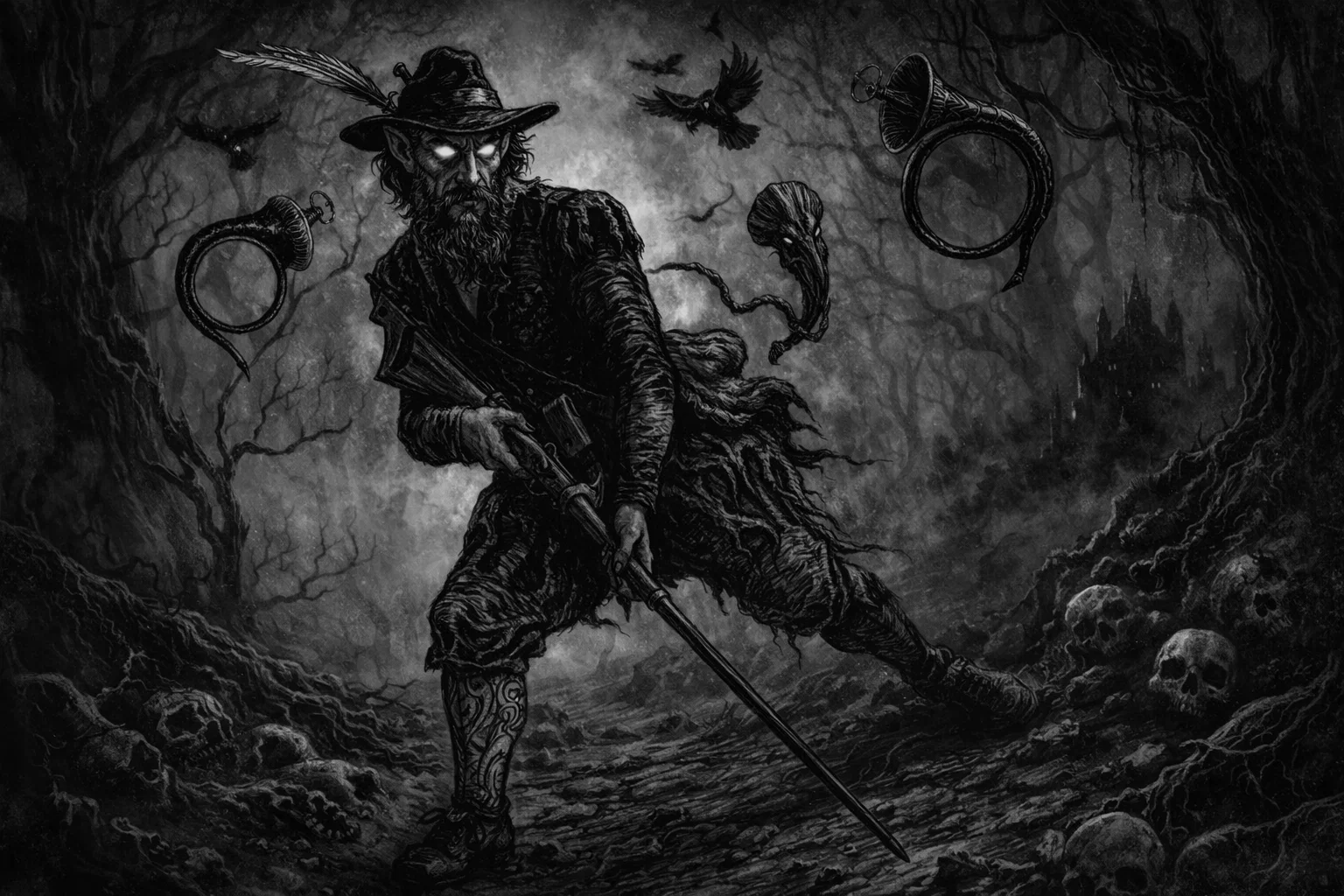
Barbatos is usually said to appear when the sun is in Sagittarius. He looks like a bearded man or an old philosopher and is rarely shown alone. The Ars Goetia and the Dictionnaire Infernal say he appears with four noble kings as his followers.
These kings are usually announced by troops or trumpeters, so Barbatos’s arrival feels more like a royal parade than a solitary, ghostly appearance. Some illustrations, like those in the Dictionnaire Infernal, show him dressed in simple woodland clothes, emphasizing his connection to nature and animal sounds.
Even though he has a high rank, the demon doesn’t have the obvious animal-human features seen in other Goetic spirits. He keeps a mostly human and dignified appearance.
Historical & Grimoire Records
While the demon does not appear in the Canonical Bible, his historical record begins in the Late Medieval period within the foundational manuscripts of European demonology.
Original:
“Barbatos, magnus dux & comes: apparet in signo Sagittarii cum quatuor regibus tubis canentibus. Intelligit cantus auium, canum latratus, mugitus boum, & omnium animalium: item abstrusos thesauros retectos à magis & incantatoribus. Ex ordine est Virtutum, partim regit triginta legiones. Nouit præterita & futura: conciliat amicos & potestates.” [Johann Weyer, Pseudomonarchia Daemonum, 1577]
Translation:
Barbatos, a great duke and earl: he appears in the sign of Sagittarius with four kings blowing trumpets. He understands the singing of birds, the barking of dogs, the lowing of bullocks, and of all living creatures: likewise, he detects hidden treasures laid up by magicians and enchanters. He is of the order of Virtues, and in part ruleth thirty legions. He knoweth things past and to come, and reconcileth friends and powers.
Weyer’s 16th-century description creates the idea of Barbatos as a ‘Civilized Hunter.’ Mentioning the ‘sign of Sagittarius’ and the ‘four kings’ points to a ritual time and a noble status, setting Barbatos apart from the wilder spirits in earlier traditions.
Weyer also says that Barbatos used to be part of the ‘Order of Virtues,’ one of the nine angelic groups, which explains his skill with natural laws and diplomacy rather than just destruction.
“The Eighth Spirit is Barbatos. He is a Great Duke, and an Earl, and appeareth when the Sun is in Sagittary, with four Noble Kings and their companies of great troops. He giveth the understanding of the singing of Birds, and of the voices of other creatures, as the barking of Dogs. He breaketh the Hidden Treasures that have been laid by the Enchantments of Magicians. He is of the Order of Virtues, of which some part he retaineth still; and he knoweth all things Past, and to Come, and conciliateth Friends and those that be in Power.” [The Lesser Key of Solomon (Ars Goetia), mid-17th Century]
The Ars Goetia is the main English source and mostly follows Weyer. However, it adds that Barbatos ‘still keeps’ some of his angelic nature from the Order of Virtues. This detail shows that he is not a typical demon, but still has some angelic qualities.
Translating Weyer’s Latin into English helped strengthen the idea of Barbatos as a ‘Reconciler.’ In the 17th century, when society was unstable, a spirit who could repair broken political relationships (‘conciliateth… those that be in Power’) was especially valuable to people practicing magic.
Original:
“Barbatos, grand-duc des enfers et comte, qui est sous la dépendance de Satanachia… Il se montre sous la figure d’un archer ou d’un chasseur. Il apprend à deviner le chant des oiseaux, le mugissement des bœufs, l’aboiement des chiens et le cri de divers animaux. Il connaît le passé et l’avenir, réconcilie les amis brouillés. Il commande trente légions et appartient à l’ordre des Vertus.” [Jacques Auguste Simon Collin de Plancy, Dictionnaire Infernal, 1863]
Translation:
Barbatos, grand duke of Hell and count, who is under the dependence of Satanachia… He shows himself in the figure of an archer or a hunter. He teaches how to divine the song of birds, the lowing of oxen, the barking of dogs and the cry of various animals. He knows the past and the future, reconciles quarreling friends. He commands thirty legions and belongs to the order of the Virtues.
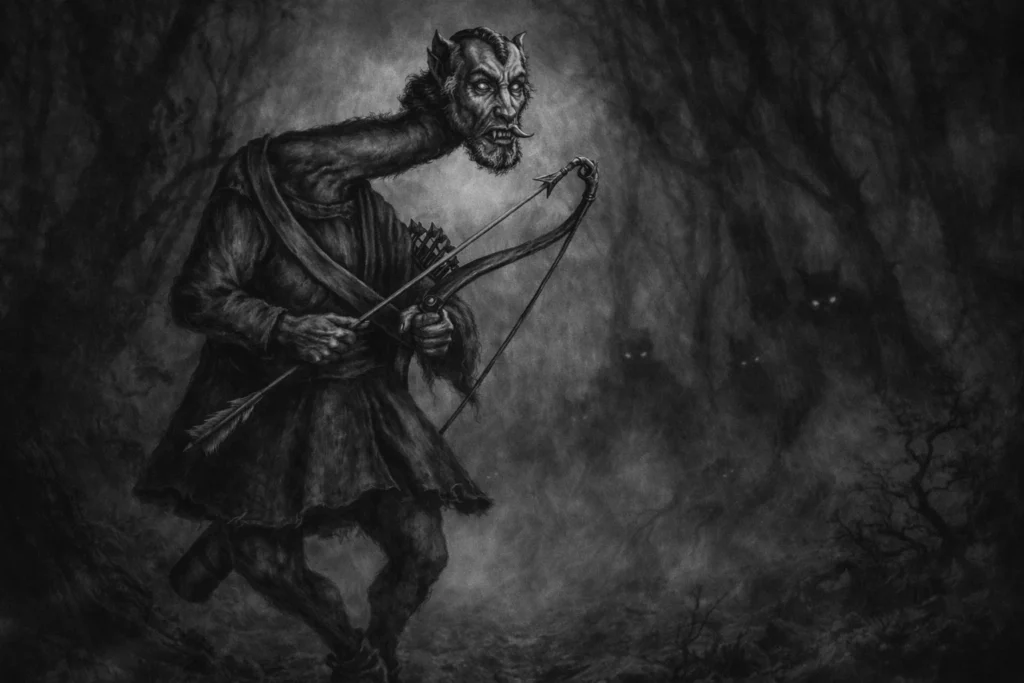
This 19th-century French source is the first to clearly change how Barbatos is pictured. Earlier books focused on his followers, but De Plancy describes him as an ‘archer or hunter.’ This likely comes from taking his link to Sagittarius, the Archer, very literally.
Also, adding the higher demon Satanachia as Barbatos’s commander shows a 19th-century trend to organize demons into a strict, military-like system, similar to the colonial and imperial governments of that time.
You may also enjoy:
Who Is the Jann in Islamic Mythology and Why Is He Feared?
October 2, 2025
Amdusias in the Ars Goetia: The Demon of Dark Music
December 2, 2025
The Ghul: The Flesh-Eating Demon of Arabian Folklore
October 1, 2025
Who Was Ravana in Hindu Mythology and Why Was He Feared?
October 3, 2025
Palden Lhamo: The Black Goddess of Blood and Protection
October 20, 2025
Powers and Abilities
Barbatos’s main powers are sharing knowledge and helping with social matters. He is known for helping people understand animal sounds, like those of birds, dogs, and cattle. This skill is more than just language; it is a way to learn secrets and notice changes in nature, since animals are thought to witness hidden things.
Barbatos can also remove magical protections. If spells hide treasures, he can break these barriers so people can find things that were meant to stay hidden. This makes him a spirit who reveals secrets, especially those protected by other magicians.
Barbatos also helps fix relationships between people. He can mend friendships and even help leaders get along. Sometimes, this power is used to influence politics or form alliances that help the person who called on him, all while making the demonic influence seem like simple peace.
The Ophic Legacy
To better understand Barbatos, we can compare him to figures like Melampus and the Pythian priestesses from ancient traditions. This shows he is more than just a ‘beast-whisperer’ as some basic grimoires suggest.
In the Ars Goetia, Barbatos’s power to help people understand the ‘singing of birds’ and ‘barking of dogs’ comes from thieromancy, the old practice of reading animal behavior as signs from the universe.
While other demons in the Lemegeton give simple predictions, Barbatos offers the rules for understanding them. He acts as a bridge between human logic and nature’s intelligence, showing that nature is always sending messages that need someone like him to interpret.
In both language and symbolism, Barbatos connects the earthly and the heavenly. Since he comes from the ‘Order of Virtues,’ a group of angels linked to miracles and natural laws, this explains his powers. He does not use ‘magic’ to break natural laws, but instead offers mastery by deeply understanding them.
This makes Barbatos a symbol of the Hermetic Scientist. By helping ‘friends and those in power’ get along, he uses the same idea of harmony in human relationships as he does with animals. He is a spirit of mediation, helping to resolve conflicts between groups, whether rival leaders or a hunter and his prey.
The ‘four kings’ who announce Barbatos with trumpets are similar to the spirits found at Roman crossroads. In a broader sense, the way Barbatos was described in the 16th century reflects the Renaissance interest in learning from nature. As people started to rely less on religious texts and more on observing the world, Barbatos became a symbol of this change.
Barbatos is known as the demon of the Acoustic Horizon. He stands at the edge of what we can hear but do not yet understand, turning the ‘noise’ of nature into messages or prophecies. Calling on Barbatos is not about asking for miracles, but about improving your own senses and social awareness.
You may also enjoy:
Alû: The Mesopotamian Demon of Malevolence and Pestilence
November 10, 2025
Mahakala: The Dark Guardian Who Consumes Evil
October 16, 2025
Who Is Hariti, the Mother of Ogres in Buddhist Mythology?
December 8, 2025
Aeshma: The Zoroastrian Demon of Wrath and Fury
January 13, 2026
Who Is Andromalius, and Why Is He the Last Demon of the Goetia?
January 20, 2026
Apophis: The Great Serpent of Egyptian Chaos
November 11, 2025
Barbatos vs Other Christian Demons
| Demon Name | Associated Sin/Temptation | Rank/Origin | Key Traits/Powers |
| Lucifer | Pride | Emperor / Fallen Seraph | Ruler of Hell; light-bearer. |
| Beelzebub | Gluttony | Prince / Order of Cherubim | Lord of the Flies; false gods. |
| Asmodeus | Lust | King / Ars Goetia | Destroyer of marriages; gambling. |
| Belphegor | Sloth | Prince / Moabite Origin | Invention of gadgets to ease labor. |
| Mammon | Greed | Prince / Biblical personification | Wealth and material obsession. |
| Leviathan | Envy | Prince / Order of Seraphim | Monstrous sea serpent; chaos. |
| Paimon | Subservience | King / Ars Goetia | Teaches all arts and sciences. |
| Astaroth | Vanity | Grand Duke / Order of Thrones | Knows past, present, and future. |
| Belial | Lawlessness | King / Ars Goetia | Grants senatorships and favors. |
| Bael | Deception | King / Ars Goetia | Power of invisibility. |
| Gusion | Curiosity | Duke / Ars Goetia | Reconciles friendships; honors. |
| Valac | Greed | President / Ars Goetia | Locates hidden serpents and gold. |
| Leraje | Conflict | Marquis / Ars Goetia | Causes gangrene in arrow wounds. |
| Andras | Violence | Marquis / Ars Goetia | Sows discord to kill the master. |
| Balam | Indiscretion | King / Ars Goetia | Gives perfect answers on the past. |
Rank in the Hierarchy of Hell
Barbatos has the titles of both Great Duke and Earl, showing he has a lot of power in the infernal hierarchy. He serves under the four Kings who rule the cardinal directions, especially the King of the East in many Solomonic traditions.
Barbatos is in charge of four noble kings who are below him. This creates a clear chain of command, with Barbatos acting as a middle manager between the highest rulers of Hell and the lesser kings who follow orders.
Unlike demons such as Andras or Flauros, who are known for causing destruction, Barbatos works with spirits such as Gusion and Astaroth, who focus on knowledge and social influence. His opposition is often viewed as a challenge to the divine order, since he represents the fallen Virtues, which were meant to keep the universe in balance.
Mystical Correspondences
| Attribute | Details |
| Planet | Venus (or sometimes the Sun) |
| Zodiac Sign | Sagittarius |
| Element | Fire |
| Direction | East |
| Color | Green or Copper |
| Number | 8 |
| Crystal/Mineral | Turquoise or Malachite |
| Metal | Copper |
| Herb/Plant | Sage or Burdock |
| Animal | Robin, Hound, or Bullock |
Barbatos is strongly connected to the zodiac sign Sagittarius, the Archer. This link fits his role as someone who ‘aims’ for hidden knowledge and bridges the gap between humans and animals.
Because Sagittarius is a fire sign, Barbatos is believed to have an active, changing energy that can break magical barriers. He is also connected to Venus, the planet linked to copper, which highlights his role in helping with reconciliation and reducing social tensions, even if it serves demonic goals.
Elementally, Barbatos is tied to the East and the element of Fire. The East is linked to dawn and to revealing what is hidden by night. The number 8, which is his position in the Ars Goetia, represents a bridge between the physical and spiritual worlds.
Barbatos’s Sigil
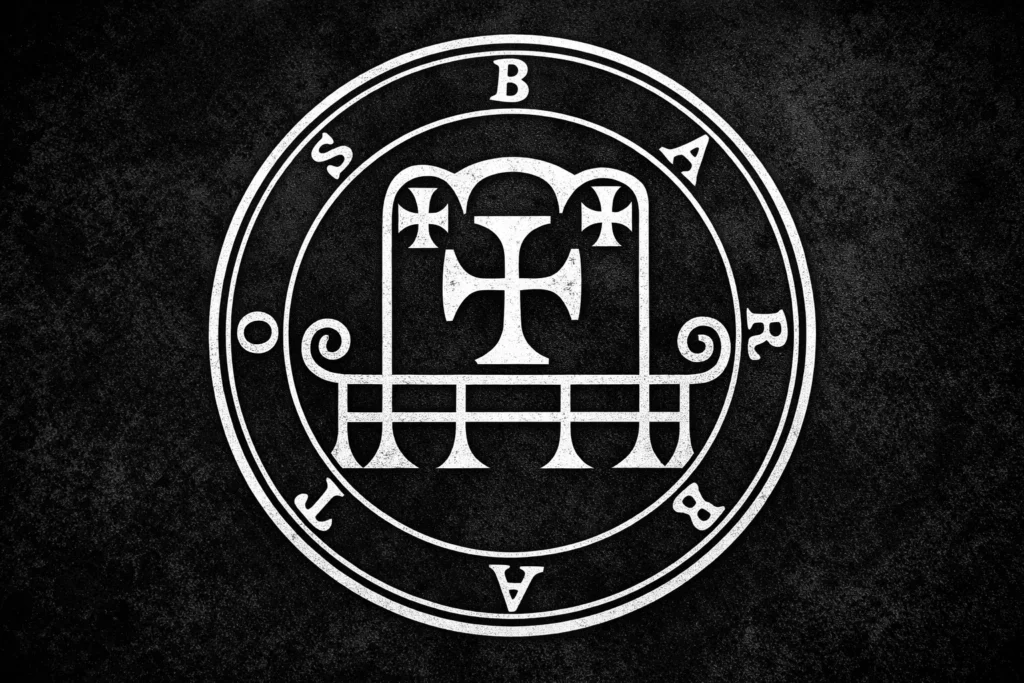
Barbatos’s sigil is a detailed geometric symbol used to focus on him during rituals. In earlier times, people would carve the sigil onto a copper ‘Lamen’ and wear it during ceremonies.
The sigil mainly acts as a contract. The Lesser Key of Solomon says a spirit will not appear or obey unless its seal is shown. In the past, the sigil also protected the magician, allowing them to control Barbatos and safely ask for his help.
You may also enjoy:
Ancient Demons: The Real Origins of the Setcheh Myth
November 11, 2025
What Is Baku? The Bizarre Yōkai That Eats Nightmares
January 28, 2026
Who Is Aka Manto, Japan’s Terrifying Red-Cloaked Yōkai?
October 24, 2025
Who Is Abalam in Demonology? The Demon King That Serves Paimon
September 30, 2025
Alû: The Mesopotamian Demon of Malevolence and Pestilence
November 10, 2025
The Kumbhāṇḍa: Grotesque Demons of Buddhist Hell
November 13, 2025
Bibliography
Author’s Note:
- Scot, Reginald. The Discoverie of Witchcraft. Edited by Brinsley Nicholson, Elliot Stock, 1886. Internet Archive. Reprint of the 1584 edition.
- Weyer, Johann. Pseudomonarchia Daemonum. Edited and translated by Joseph H. Peterson, digital edition, 2000. Twilit Grotto: Esoteric Archives.
- De Laurence, L. W. The Lesser Key of Solomon, Goetia. Project Gutenberg, 7 Nov. 2023. Originally published by De Laurence, Scott & Co., 1916.
- Solomon, King of Israel (attributed). The Key of Solomon the King (Clavicula Salomonis). Translated and edited by S. Liddell MacGregor Mathers, George Redway, 1889. Internet Archive.
- Collin de Plancy, Jacques. Dictionnaire infernal: répertoire universel des êtres, des personnages, des livres, des faits et des choses qui tiennent aux esprits. 6th ed., Henri Plon, 1863. Internet Archive.
- Porter, John. A Book of the Offices of Spirits: The Occult Virtue of Plants and Some Rare Magical Charms & Spells (Liber Officiorum Spirituum). Translated by Frederick Hockley, Teitan Press, 2011. Internet Archive.
- Plangiere, Jesuit Dominicane, translator. Grimoirium Verum (or The True Grimoire). Edited by Phil Legard, digital edition, 1999. Internet Archive.
- Clymer, R. Swinburne. The Grand Grimoire. The Philosophical Publishing Co., 1910. Internet Archive.
- McCown, Chester Charlton, editor. The Testament of Solomon. J. C. Hinrichs’sche Buchhandlung, 1922. Internet Archive. Edited from manuscripts at Mount Athos, Bologna, Holkham Hall, Jerusalem, London, Milan, Paris, and Vienna.
- Agrippa, Henry Cornelius (attributed). Henry Cornelius Agrippa’s Fourth Book of Occult Philosophy and Geomancy. Translated by Robert Turner, Askin Publishers, 1978. Internet Archive. Facsimile reprint of the 1655 edition. Including works by Petrus de Abano, Gerardus Cremonensis, and Georg Pictorius.