
Astaroth is an important demon in demonology and is often called a Great Duke of Hell. In the Ars Goetia, the first part of the Lesser Key of Solomon, he appears as the 29th spirit. He is said to command 40 legions of lesser spirits.
Astaroth is seen as a powerful leader in the infernal ranks and is often mentioned with Lucifer and Beelzebub as part of an unholy trinity.
Summary
Key Takeaways
| Attribute | Details |
| Names | Astaroth, Ashtaroth, Asteroth, Astarot |
| Title | Great Duke of Hell, Lord of Treasures, Prince of Accusers |
| Gender | Masculine (in demonic form), though derived from a feminine deity |
| Role | Sower of discord, tempter of sloth, and teacher of liberal sciences through deceit |
| Rank | Grand Duke; one of the first three of the infernal hierarchy |
| Hierarchy | Serves under Lucifer; superior to four sub-princes: Oriens, Paimon, Ariton, and Amaimon |
| Legions | 40 Legions |
| Powers | Grants knowledge of past and future, reveals secrets, and induces laziness |
| Associated Figures | Lucifer, Beelzebub, Astarte, Solomon |
| Weaknesses | The magical ring of Solomon, specific holy names, and the presence of St. Bartholomew |
| Opposing Angel/Saint | St. Bartholomew |
| Pantheon | Christian demonology with Semitic origins |
| Primary Sources | Ars Goetia, Pseudomonarchia Daemonum, Dictionnaire Infernal, The Book of Abramelin |
Who or What is Astaroth?
Astaroth is a major demon in Western occultism and Christian demonology, known as a Grand Duke of the Abyss. He is often shown as a treasurer or high-ranking advisor in the spirit world. Unlike lesser demons who cause physical harm, Astaroth is said to tempt people by offering secret knowledge or encouraging laziness.
As the 29th spirit in the Goetia, Astaroth is seen as very powerful and should be approached with great care. He is not wild or chaotic, but rather a creature of authority among demons. His main role is to reveal secrets and teach the ‘liberal sciences,’ but these gifts are often seen as ways to lead people away from faith and into pride or laziness.
DEMONS ARE REAL — AND THE BIBLE PROVES IT Limited-Time: Up to 20% OFF!
No myths. No exaggeration. Just Scripture. Clinton Arnold’s landmark biblical theology of the powers of darkness. What the Old & New Testaments actually teach about Satan, demons, and spiritual warfare. Essential reading for every pastor, counselor, and believer facing the unseen battle. The book seminaries and deliverance ministries swear by.
Demons are real • Scripture is clear • Victory is yours • Clinton Arnold’s definitive biblical study.
“Astaroth” Meaning
The name Astaroth comes from the Phoenician goddess Astarte, who was called Ashtoreth by the ancient Hebrews. In Hebrew, Ashtoreth is a plural form (Ashtarot) and was often used in the Old Testament to refer to goddesses in general or to the Canaanite fertility goddess.
Over time, the name changed from a female goddess to a male demon through a process called interpretatio Christiana, in which pagan gods were reinterpreted as evil spirits. Hebrew scribes probably changed the vowels in Astarte’s name, using those from the word bosheth, which means ‘abomination,’ to form Ashtoreth.
By the time medieval grimoires were written, the ‘th’ ending, which is common in Hebrew feminine plurals, became part of the name for a single male demon. In the Dictionnaire Infernal, the name Astaroth was set, and he was no longer linked to fertility or war but instead to the infernal treasury and the temptation to be idle.
How to Pronounce “Astaroth” in English
In English, Astaroth is usually pronounced as AS-tuh-roth or AS-tar-oth. The first part, ‘AS,’ rhymes with ‘pass.’ The middle is a soft ‘tuh,’ and the last part, ‘roth,’ rhymes with ‘moth’ or ‘broth.’ Some occultists say as-TAR-oth, stressing the second syllable, but the first way is more common in academic settings.
What Does Astaroth Look Like?
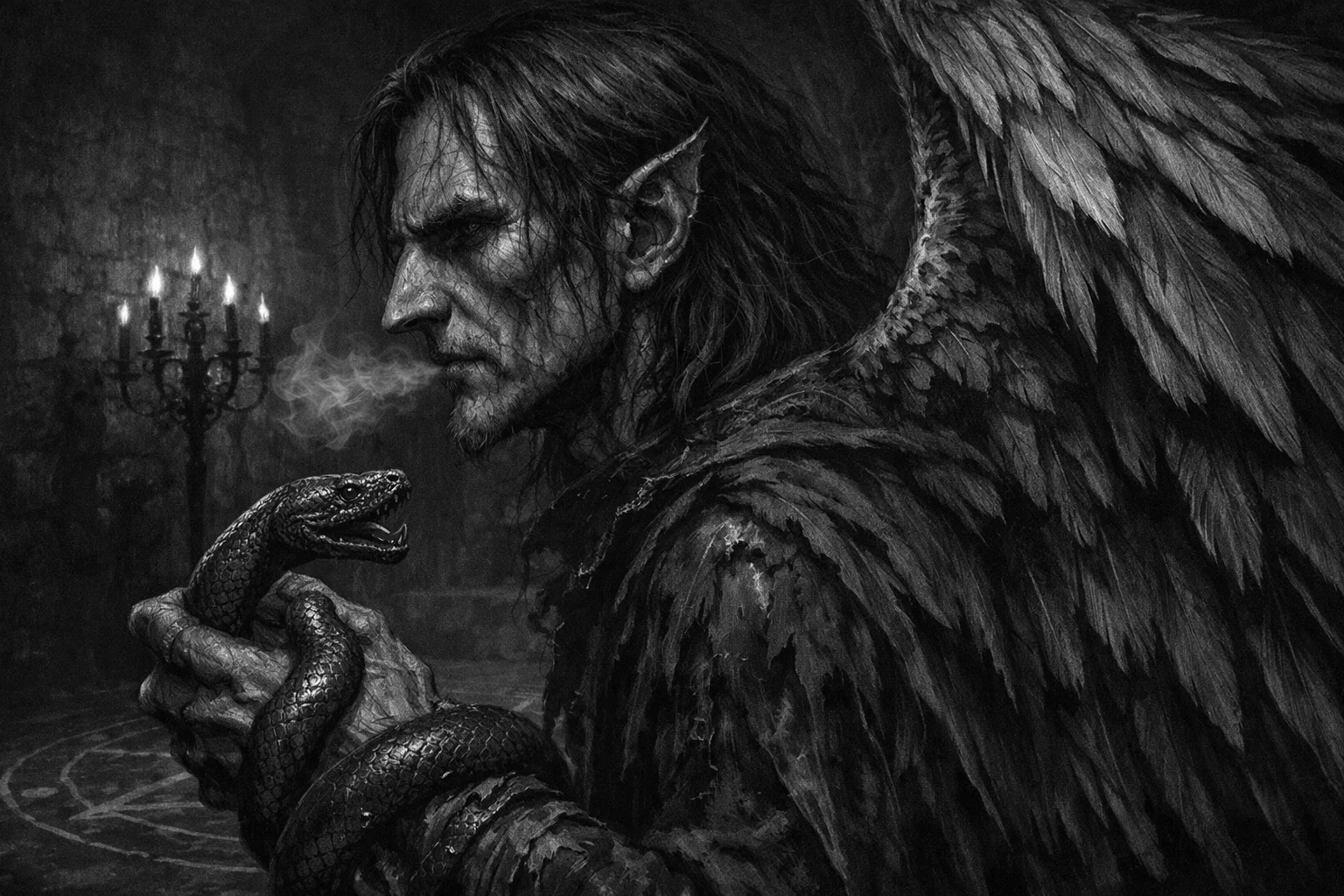
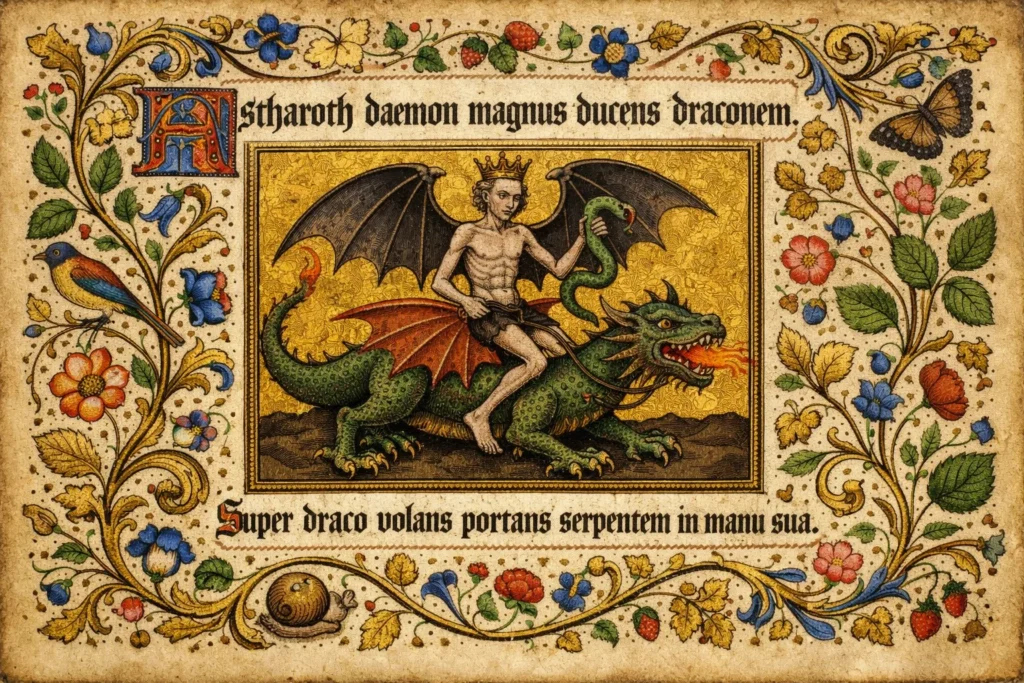
Astaroth is described in many grimoires as having a strange and unsettling appearance. In the Ars Goetia and the Pseudomonarchia Daemonum, he is shown as a ‘foul angel’. He is usually pictured riding a dragon or a dragon-like beast with a long tail.
He has a viper in his hands, symbolizing his poisonous influence and his link to the ancient serpent. Some say he still looks somewhat angelic, but he gives off a strong, foul breath that is said to be deadly or very harmful to anyone who inhales it.
To protect themselves from the smell, people were once told to hold a silver ring in front of their faces. Later images, like the woodcut in Collin de Plancy’s Dictionnaire Infernal, show Astaroth with thin, gaunt features and feathered wings, sitting on his reptilian mount.
You may also enjoy:
Tarakasura: The Dark Demon Who Ruled Hell on Earth
December 4, 2025
What Is Jorōgumo? The Deadly Spider Woman of Japanese Myth
February 2, 2026
Si’la: The Seductive Jinn Who Lures Travelers to Their Doom
October 9, 2025
Bali: The Benevolent Asura King of Hindu Mythology
October 10, 2025
What Is a Yūrei? The True Meaning of Japanese Ghosts
January 30, 2026
Yuki Onna: The Terrifying Demon Bride Who Feeds on Travelers
December 9, 2025
Origins
From Astarte to Ashtoreth
Astaroth’s story begins with the ancient Levantine goddess Astarte, known as Inanna to the Sumerians and Ishtar to the Akkadians. In the Bronze Age, Astarte was a major and widely worshipped goddess in the Near East. She was known as the Queen of Heaven and was connected to war, sexuality, and the morning star (Venus).
In Phoenician and Canaanite cultures, Astarte was shown as a strong warrior-queen or a symbol of fertility, and she was seen as an equal to major gods like Baal.
The process of turning her into a demon began when Israelite monotheism became dominant. For the writers of the Old Testament, Astarte was the main rival to Yahweh’s worship, so her name was changed to Ashtoreth in the Hebrew scriptures.
This was done on purpose to take away the goddess’s dignity. She was no longer seen as a heavenly queen but was instead labeled a foreign abomination. The Bible’s use of the plural form Ashtaroth became a way to group all ‘false’ female idols together, turning a powerful goddess into just another symbol of impurity.
Interpretatio Christiana
The change from a ‘false goddess’ to a male Grand Duke of Hell happened in the Middle Ages. Christian theologians used interpretatio Christiana to turn all pagan gods into evil spirits living in a structured Hell. By the 15th century, the Hebrew plural Ashtaroth had become the Latinized, singular male name Astaroth.
This change was implemented in important demonology texts such as the Livre des Espirts and the Pseudomonarchia Daemonum. In these works, Astaroth lost his old links to fertility and war and became a high-ranking demon official. His earlier connection to the ‘Morning Star’ was now seen as a link to Lucifer, which put him in the unholy trinity of Hell.
The War in Heaven and the Fall of the Seraphim
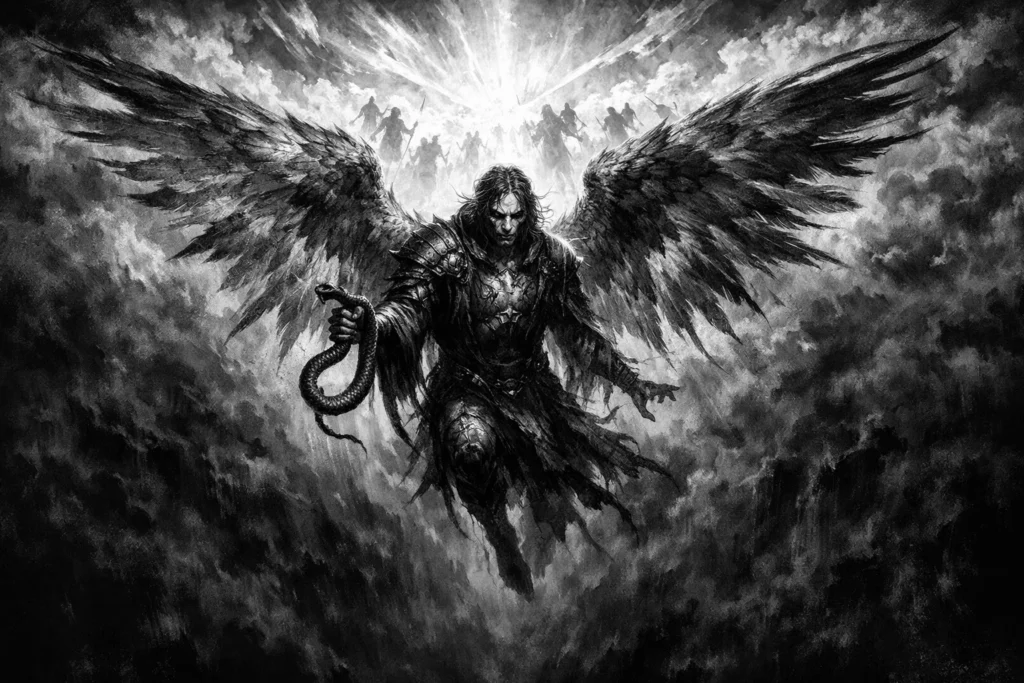
In the stories found in the Grand Grimoire and in the writings of exorcists like Sebastien Michaelis, Astaroth’s background is tied to the War in Heaven. Before the great rebellion, he was said to be part of the Order of Seraphim, or sometimes the Order of Thrones, which were the highest ranks among angels.
These stories say that Astaroth did not start the rebellion but was among the first of the top angels to join Lucifer. His main fault was intellectual pride and his tendency to convince other angels to join him with clever arguments. After losing to the Archangel Michael, he was thrown out of Heaven.
Unlike other fallen angels who lost all their beauty, Astaroth is said to have kept a ‘foul angelic’ look—a thin, twisted version of his old glory—as a lasting sign of his betrayal.
THE BOOK THEY BANNED FROM THE BIBLE Limited-Time: Up to 90% OFF!
Why was Enoch removed? The fallen Watchers • The birth of the Nephilim • Origin of demons • Names of the angels who became demons • Apocalyptic visions. The original source text that inspired all demonology. Read the apocalyptic visions the church didn’t want you to see.
Imprisonment and the Solomonic Legend
Following the fall, Astaroth’s history enters the realm of Solomonic mythology. In the Testament of Solomon and following medieval grimoires, it is claimed that King Solomon used a divine ring to bind Astaroth. The demon was allegedly forced to reveal the locations of hidden treasures and the secrets of the “Liberal Sciences” to the king.
This time of ‘imprisonment’ or ‘binding’ is an important part of his story because it showed that Astaroth could be controlled with certain rituals. This changed him from a cosmic rebel into a ‘spirit of commerce’ and a ‘teacher of hidden things,’ which is how he is still seen in the Ars Goetia.
Was Astaroth Ever Mentioned in the Bible?
Astaroth is not mentioned as a singular male demon in the Bible. However, the plural form Ashtaroth appears several times in the Old Testament, referring to the idols or the cult of the goddess Astarte.
| Source | Quote |
| Judges 2:13 | “And they forsook the Lord, and served Baal and Ashtaroth.” |
| 1 Samuel 7:3 | “And Samuel spake unto all the house of Israel, saying, If ye do return unto the Lord with all your hearts, then put away the strange gods and Ashtaroth from among you, and prepare your hearts unto the Lord, and serve him only: and he will deliver you out of the hand of the Philistines.” |
| 1 Samuel 12:10 | “And they cried unto the Lord, and said, We have sinned, because we have forsaken the Lord, and have served Baalim and Ashtaroth: but now deliver us out of the hand of our enemies, and we will serve thee.” |
| 1 Samuel 31:10 | “And they put his armour in the house of Ashtaroth: and they fastened his body to the wall of Bethshan.” |
Astaroth in Grimoires and Other Texts
Beyond the Bible, Astaroth is a central demon in the “Solomonic” literary cycle. These texts claim that King Solomon bound the demon and forced him to assist in the construction of the Temple or reveal hidden truths.
| Source | Quote |
| Ars Goetia | “The Twenty-ninth Spirit is Astaroth. He is a Mighty, Strong Duke, and appeareth in the Form of an hurtful Angel riding on an Infernal Beast like a Dragon, and carrying in his right hand a Viper. Thou must on no account let him approach too near unto thee, lest he do thee damage by his Noisome Breath.” |
| Pseudomonarchia Daemonum | “Astaroth is a great and a strong duke, comming foorth in the shape of a fowle angell, sitting upon an infernall dragon, and carrieng on his right hand a viper.” |
| The Book of Abramelin | “Astarot: One of the eight Sub-Princes. He can provide the knowledge of all things that can be asked of him.” |
| Dictionnaire Infernal | “Astaroth, grand-duc très-puissant aux enfers. Il a la figure d’un ange fort laid, et se montre assis sur un dragon infernal; il tient à la main droite une vipère.” |
Powers and Abilities
Astaroth’s powers mainly affect people’s minds and moral strength. Unlike demons who use physical force, his influence is more subtle and works on a psychological level. He is said to possess perfect knowledge of the past, present, and future, which enables him to manipulate people by revealing secrets they shouldn’t know.
He often uses the ‘Liberal Sciences’ as part of his power. Astaroth can quickly teach someone difficult subjects like math, astronomy, and philosophy. But this is seen as a trap, since the knowledge is meant to make people proud and pull them away from their faith.
Astaroth is also known as the main source of Sloth, one of the Seven Deadly Sins. He doesn’t make people lazy directly; instead, he fills their minds with doubt and distractions, making it feel pointless to do spiritual or physical work.
Astaroth is also said to have the power to reveal the location of hidden treasures. In 16th-century demonology, this could mean treasures of the mind or lost objects. Since he commands 40 legions, he can send spirits to watch any place on Earth, making his ‘vision’ almost everywhere in the physical world.
NAME THEM. BIND THEM. CAST THEM OUT! Limited-Time: Up to 40% OFF!
The ultimate deliverance thesaurus by Apostle John Eckhardt. Hundreds of demonic names & attributes exposed alphabetically – from Jezebel to Python, infirmity to poverty. Hundreds of demons named & defeated Identify → Bind → Cast Out!
The essential weapon for every prayer warrior, intercessor, and deliverance minister. Victory starts with identification.

Astaroth Myths, Legends, and Stories
The Fall of the Seraphim
In various occult commentaries, a narrative exists regarding Astaroth’s existence before the creation of the world. It is claimed that Astaroth was an angel of the order of Seraphim, the highest choir of angels who surround the throne of God.
During the rebellion of Lucifer, Astaroth allegedly joined the ranks of the insurgents, believing that the angelic host should not be subservient to the upcoming creation of humanity. After the defeat of the rebel forces by the Archangel Michael, Astaroth was cast into the abyss.
Unlike many other fallen spirits who became twisted and animal-like, Astaroth is said to have kept his ‘angelic’ look. However, it became ‘foul’ or ‘ugly’ over time. This is a reminder of his lost status and the seriousness of his betrayal.
The Debate with the Exorcist in the Magus
In later occult stories and some 17th-century accounts, Astaroth is described as a talkative demon who often complains. When summoned by a magician or during an exorcism, he doesn’t always growl or threaten. Instead, he tries to defend himself, saying he was punished unfairly and didn’t fall by choice but was misled.
This story is meant as a warning about Astaroth’s main trick: using sympathy to deceive. By acting like a tragic, misunderstood spirit, he tries to make people let their guard down, making them easier to influence.
You may also enjoy:
The Ghul: The Flesh-Eating Demon of Arabian Folklore
October 1, 2025
Who Is Astaroth in Demonology and the Ars Goetia?
February 20, 2026
Who Is Jann in Islamic Mythology and Why Is He Feared?
October 2, 2025
Edimmu: The Mesopotamian Wind Demon That Steals Life
November 6, 2025
Pazuzu: The Demon Who Fought Evil with Evil
November 4, 2025
Rāga: The Seductive Demon of Passion and Desire in Buddhist Lore
October 16, 2025
St. Bartholomew and the Temple of Astaroth
A Christian legend from the Golden Legend tells of the Apostle St. Bartholomew’s journey to India. In the story, there was a temple with a large idol of Astaroth. The demon in the idol claimed to heal the sick, but he was really just stopping the suffering he had caused, tricking people into worshipping him.
When St. Bartholomew arrived, he confronted the demon. The Apostle made Astaroth show his true, ugly form and then drove him out of the area. The demon had to destroy his own idols before escaping into the desert.
This story establishes St. Bartholomew as Astaroth’s main spiritual opponent and explains the demon’s ‘weakness’ from a religious perspective.
Astaroth vs Other Christian Demons
| Demon Name | Associated Sin/Temptation | Rank/Origin | Key Traits/Powers |
| Lucifer | Pride | Emperor / Fallen Seraph | Supreme ruler; source of all rebellion. |
| Beelzebub | Gluttony / Envy | Prince / Lord of Flies | Commanding lord of decay and false gods. |
| Asmodeus | Lust | King / Ars Goetia | Breaks marriages; grants invisibility. |
| Belphegor | Sloth / Discovery | Prince / Moabite Origin | Suggests ingenious inventions for wealth. |
| Mammon | Greed | Prince / Biblical | Personification of wealth and avarice. |
| Leviathan | Envy | Grand Admiral / Biblical | Monstrous sea serpent of the deep. |
| Belial | Lawlessness | King / Dead Sea Scrolls | The spirit of worthlessness and lies. |
| Azazel | Corruption | Chief / Book of Enoch | Taught smithing and weapon-making. |
| Pazuzu | Famine/Wind | King / Mesopotamian | Brings storms and locust plagues. |
| Bael | Invisibility | King / Ars Goetia | Speaks with a hoarse voice; grants wit. |
| Paimon | Obedience | King / Ars Goetia | Strongest of the sub-princes; loud voice. |
| Moloch | Sacrifice | Prince / Canaanite | Associated with the fire of child sacrifice. |
| Mephistopheles | Deception | Prince / Faustian Legend | Specializes in pacts and soul-buying. |
Rank in the Hierarchy of Hell
Astaroth has a very high rank in the infernal hierarchy. In the Grand Grimoire, he is called the Grand Duke and is part of the top trio of Hell with Lucifer (the Emperor) and Beelzebub (the Prince). This means Astaroth acts like a chief advisor to the ruler of Hell.
Astaroth’s connections with other demons follow strict feudal rules. He commands several spirits, like Sargatanas and Nebiros, who serve as his officers. Although he answers to Lucifer, some old texts show Astaroth as a rival to Beelzebub, showing how demons compete for power over human souls.
In the Book of Abramelin, Astaroth is listed as one of the Eight Sub-Princes, which means his power covers certain territories as well as ranking. He is said to rule over large ‘estates’ in the spiritual world.
Mystical Correspondences
| Attribute | Details |
| Planet | Venus (formerly), now associated with Mercury or Jupiter |
| Zodiac Sign | Capricorn or Libra |
| Element | Air (occasionally Earth) |
| Direction | West |
| Color | Brown or Copper |
| Number | 29 or 8 |
| Crystal/Mineral | Lapis Lazuli or Turquoise |
| Metal | Copper or Tin |
| Herb/Plant | Juniper or Sage |
| Animal | Viper or Dragon |
Astaroth’s cosmic connections come from his change from a heavenly goddess to a demon duke. He was linked to Venus because of his roots as Astarte, the morning star. But in demonology, he is often connected to Mercury because he teaches sciences and shares secrets. This change shows his clever use of Mercurial energy to spread laziness and confusion.
Astaroth is also linked to the Air element, which matches his foul breath and his power to move unseen through people’s thoughts. Air is tied to the mind, where Astaroth is most effective at planting ideas of laziness.
Copper was used in old talismans as a way to connect to his ancient ties with Venus. The West is also important for Astaroth, linking him to the setting sun and the coming darkness of the spirit world.
Astaroth’s Sigil
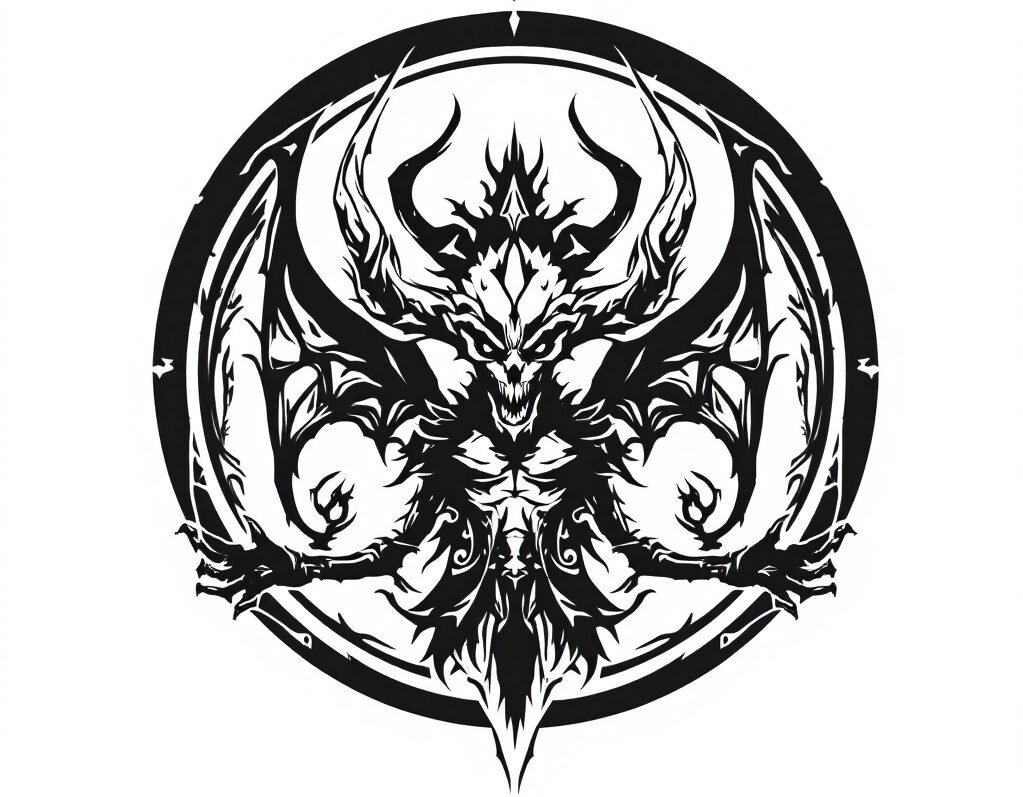
Astaroth’s sigil is a complex geometric symbol used in Solomonic magic to show his unique essence. In the past, people believed that drawing the sigil on paper or metal could make Astaroth appear. Magicians would wear the sigil as a protective breastplate, called a Lamen, to show authority over the demon and protect themselves from his harmful breath.
Summoning and Rituals
In the past, calling on Astaroth was considered a complex and risky undertaking. Magicians, warlocks, and occult students performed these rituals to find forbidden knowledge or lost things. The ceremonies were usually done at certain times linked to his ruling planets. They always used a magic circle to protect the person performing the ritual.
A key part of these rituals was the ring of Solomon. The Ars Goetia says the person summoning Astaroth had to hold the ring to their nose to filter the air, because Astaroth’s presence carried a foul odor that could harm their organs.
The goal of these rituals was not to worship Astaroth, but to force him to answer questions truthfully by using the names of God. These practices were written about in forbidden books from the 16th and 17th centuries, and the Church often condemned anyone who tried to make deals with the Duke of Sloth.
You may also enjoy:
Bali: The Benevolent Asura King of Hindu Mythology
October 10, 2025
What Is a Dīv? The Terrifying Giant Demon of Persian Myth
January 22, 2026
Banasura: The Thousand-Armed Demon King
October 10, 2025
Demon Amy, the 58th Goetic Spirit: Origin, Powers, and Rank
January 12, 2026
Erinyes: The Chthonic Goddesses Who Enforced Blood-Guilt
November 20, 2025
Who Is Abaddon, the Demon of the Abyss, in the Bible?
September 29, 2025
Frequently Asked Questions
When is Astaroth the strongest?
According to demonologists from the 16th century, Astaroth is strongest in August. During this month, he is said to be best at causing laziness and moral decline. In ceremonial magic, people often try to summon him on Wednesdays to match his planetary links and make sure he obeys.
What color is associated with Astaroth?
In modern occult practices, brown or copper is the main color linked to Astaroth, showing his old connection to copper and Venus. Some people also use green candles in rituals to honor his past as a fertility god, or black candles to show his current role as a Grand Duke of the Abyss.
Is Astaroth the same as the goddess Astarte?
Astaroth is the demon form of the ancient Semitic goddess Astarte, also known as Ishtar or Inanna. Astarte was a goddess of war and love, but medieval Christian demonology turned her into a male grand duke. Early Church writers did this to stop people from worshipping pagan gods, changing both the name and the traits in books like the Ars Goetia.
What specific “Forbidden Knowledge” does Astaroth provide?
Astaroth stands out because he is one of the few demons said to tell the truth about the ‘Fall of the Angels.’ He shares details about how spirits were created, why the rebellion happened, and claims he was punished unfairly. He is also known for giving ‘intellectual sovereignty,’ teaching people advanced math and philosophy that focus on logic instead of faith.
What is the meaning behind Astaroth’s sigil?
Astaroth’s sigil is a geometric symbol with three dots at the points of its star shape, which are thought to show his high rank among fallen spirits. Occultists see the central Venus-like sign with an upside-down cross as a symbol of the solar chakra and the ‘pillars of the soul.’ In the past, the sigil was used as a ‘telephonic link’ to call the demon and protect the magician from his harmful breath.
Does Astaroth have a specific animal symbol?
Besides the dragon he rides, and the viper he has, Astaroth is sometimes shown as a donkey. This idea became popular through Ulrich von Lilienfeld’s Concordantiae Caritatis, where the donkey stands for the sin of sloth, which Astaroth represents. In other traditions, he is linked to a wolf or a large dog, depending on the grimoire.
