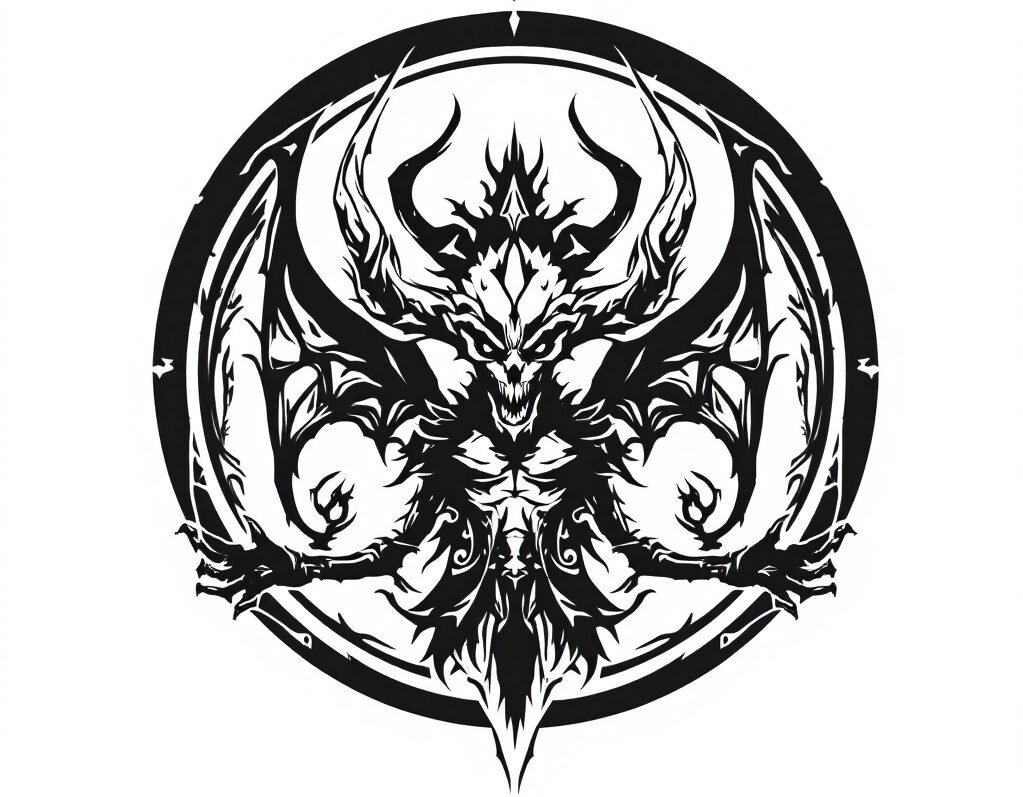
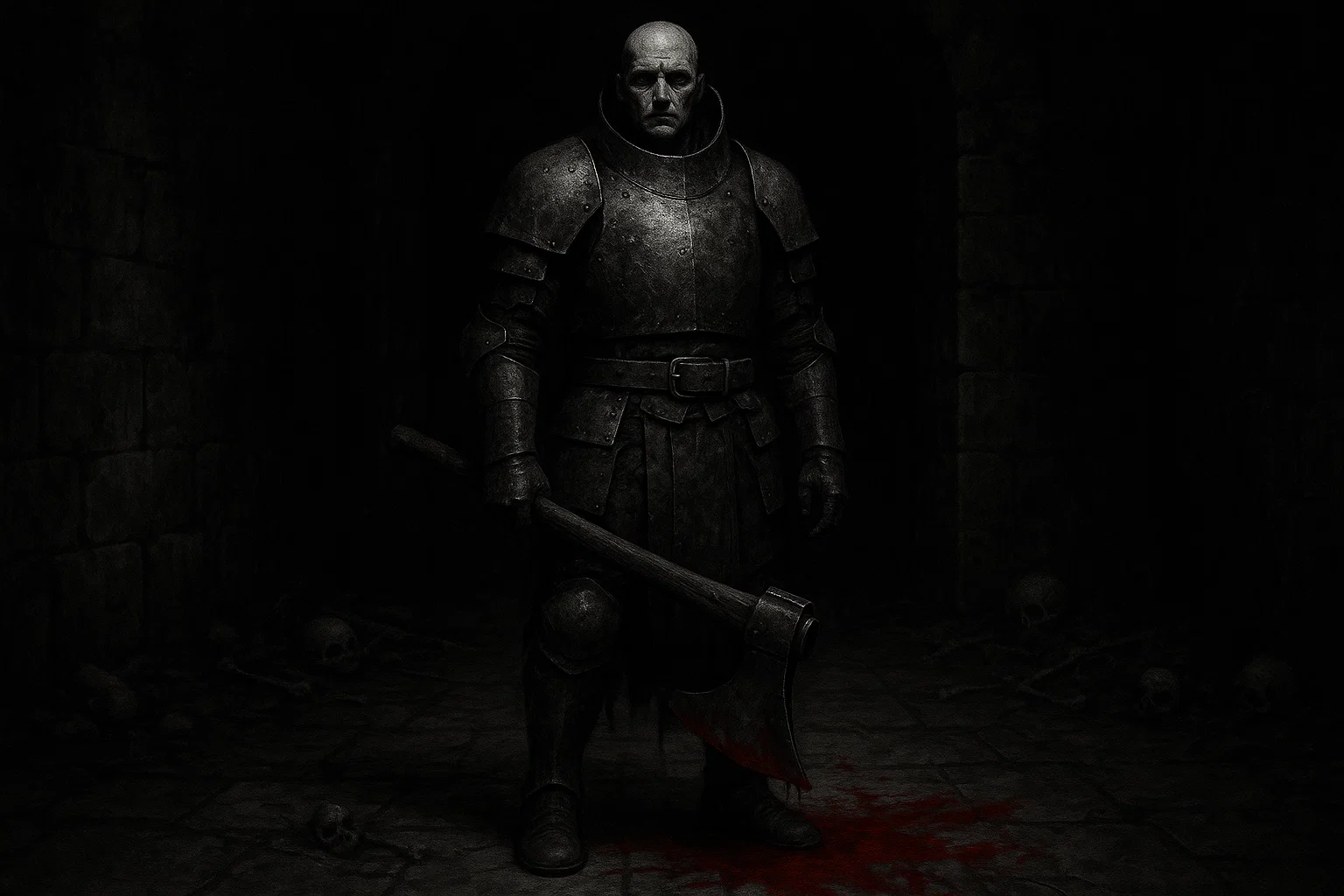

Alastor is a powerful demonic entity primarily recognized in Christian demonology for its role as a tormenting or avenging spirit.
While the demon is not listed among the 72 spirits in the Ars Goetia or the prominent arch-demons of the hierarchy of Hell, its name has been adopted into later occult and theological contexts. In these contexts, he is often identified not as a singular entity but as a class of evil spirits or an executioner serving a higher demonic authority.
The entity’s transition from an epithet of the Greek god Zeus—signifying the enforcer of justice for kinslaying—to a Christian demon highlights a syncretic process where pagan concepts of divine retribution were demonized.
Summary
Key Takeaways
| Attribute | Details |
| Names | Alastor, Alástōr, Alestor |
| Title | Chief Executioner of Hell, The Executioner, Avenging Spirit |
| Gender | Male |
| Role | Avenger of evil deeds, personification of a curse or blood-guilt, possessing entity, tormenting spirit |
| Rank | Minor Demon, or a generic class of evil spirits; cited by some sources as Chief Executioner to the monarch of Hell |
| Hierarchy | Serves under the monarch of Hell (i.e., Lucifer), has no known lesser demons serving under him in this context. |
| Legions | None |
| Powers | Relentlessly pursues the guilty, incites humans to murder and commit other sins, personifies familial curses, inflicts vengeance |
| Associated Figures | Zeus Alastor (Greek epithet), Nemesis (Greek goddess of retribution), Erinyes (Greek Furies), Lucifer (as his superior) |
| Weaknesses | Not explicitly documented in traditional sources; generally, holy names, prayers, or symbols would repel this class of entity. |
| Opposing Angel/Saint | None specifically named in extant literature |
| Pantheon | Christian Demonology (with strong Greek and Zoroastrian influences) |
| Primary Sources | Hesychius of Alexandria, Etymologicum Magnum, Plutarch’s Parallel Lives, Dictionnaire Infernal (Collin de Plancy), Occultopedia |
Who or What is Alastor?
Alastor is a lesser-known demon in Christian demonological hierarchies, primarily functioning as a personification of vengeance and generational curse. Its inclusion in the infernal hierarchies is largely a syncretic adoption from classical Greek mythology. Here, Alastor (Ἀλάστωρ) was not originally a demon but an epithet for Zeus when he acted as the avenger of kinslayers and other severe transgressions.
In the context of the demonic, Alastor is considered either a singular tormenting spirit or a generic term for a class of evil spirits (alastores). The Dictionnaire Infernal—one of the most significant works of demonology—references Alastor as being the Nemesis of the infernal hierarchy.
Some later occult sources further solidify his sinister role by naming him the Chief Executioner of the monarch of Hell, whose purpose is to inflict punishment and exact relentless retribution upon sinners.
“Alastor” Meaning
The name Alastor derives from the Ancient Greek word Ἀλάστωρ (Alástōr).10 This term translates directly as “avenger” or, more broadly, “persecutor” or “tormenter.”
Linguistically, the Greek root is believed to be connected to ἄλαστος (álastos), an adjective meaning “unforgettable” or “not to be forgotten.“ This etymology powerfully reinforces the concept of inescapable divine or fated retribution, suggesting that the crimes avenged by an alastor are so severe that they can never be purged or forgotten.
In early Greek thought, the alastor was the personification of a curse or the spirit of vengeance that prompted the members of a family to commit fresh crimes to obtain satisfaction for past wrongs—essentially symbolizing blood-guilt that passed down through generations.
Historical evolution saw the term’s meaning degrade in common Greek usage by the 4th century BC, where alastor could simply be used as a general insult, approximating the meaning of “scoundrel.”
However, its mythological weight as the spirit of relentless revenge was preserved in the works of tragic writers and later in occult literature, where it was adopted into the Christian tradition. Here, he is often portrayed as an evil spirit (or possessing entity), carrying the original ominous connotation of inescapable vengeance into the demonic world.
How to Pronounce “Alastor” in English
The common English pronunciation for Alastor is /əˈlæstər/ or /əˈlæstɔːr/, often rendered as uh-LAS-tər or uh-LAS-tor.
What Does Alastor Look Like?
Unfortunately, physical descriptions of this demon in traditional demonology texts are scarce and lack the precise, detailed imagery found in texts on higher-ranking demons (such as those in the Ars Goetia).
In his Christian demonological role, Alastor is defined more by his function than his form.
He is most frequently referenced as a generic possessing entity or a tormenting spirit. As such, he is oftentimes understood to be incorporeal or capable of shifting form (with his primary manifestation being the internal torment or external curse he inflicts). Unlike demons with fixed zoological or composite forms, his description is often purely functional: he is the dark, unseen force that relentlessly pursues the guilty.
However, in the Dictionnaire Infernal, he is associated with the Zoroastrian concept of “The Executioner.” This given title implies a demon capable of dispensing swift and brutal physical punishment, suggesting an ultimate, terrifying form, likely anthropomorphic but with grotesque or unsettling features, suitable for a torturer.
Origins
Alastor’s origins trace back to the most ancient aspects of Greek mythology and concepts of justice, rather than a direct fall from Heaven as an angel in the Christian tradition.
The earliest documented appearances of the name are in Classical Greek literature. In these texts, Alastor is an epithet of Zeus (Zeus Alastor), signifying his role as the avenger of evil deeds (particularly kinslaying).
It is also mentioned as a daemon that relentlessly pursues the guilty, passing down the curse to their children for the sins of the fathers. The Greek tragic writers often invoked the name to designate any deity or malicious spirit who avenges wrongs committed by men. Therefore, its name was frequently associated with Nemesis (retribution) and the Erinyes (Furies).
The demon’s evolution into the Christian context is a prime example of demonization, where powerful pagan concepts are repurposed as entities of the adversary. By the time of the 19th-century compilation of the Dictionnaire Infernal by Collin de Plancy, Alastor had been fully absorbed into the infernal hierarchy.
De Plancy notes that the ancients called evil spirits alastores generically. He further connects the demon to Zoroaster’s concept of “The Executioner” and equates him with Azazel in Origen’s interpretations.
Was Alastor Ever Mentioned in the Bible?
The demon Alastor is not mentioned by name in the canonical texts of the Old Testament, the New Testament, or the Apocrypha. Its formal inclusion into a Christian demonological hierarchy occurred much later in occult and theological writings that synthesized classical pagan concepts of avenging spirits with the established Christian view of evil entities.
Alastor in Grimoires and Other Texts
The demon does not appear in the most famous Western grimoires (such as the Lesser Key of Solomon or the Pseudomonarchia Daemonum). However, he is mentioned in some other works of demonology and theological commentary.
| Source | Quote |
| Dictionnaire Infernal (Collin de Plancy, 1863) | Alastor est connu de Zoroastre sous le nom de l’Exécuteur, et d’Origène sous celui d’Azazel. Il est dans la hiérarchie infernale, la Némésis. Les anciens appelaient les mauvais esprits, des alastores. Plutarque raconte que Cicéron haïssait tellement Auguste qu’il avait conçu le projet de se tuer au dehors du foyer de ce dernier, afin de devenir son alastor. |
| The Parallel Lives: Cicero (Plutarch, referencing a historical context for the name’s meaning) | Sometimes he resolved to go into Cæsar’s house privately, and there kill himself upon the altar of his household gods, to bring divine vengeance upon him; but the fear of torture put him off this course.27 |
You may also enjoy:
Banasura: The Thousand-Armed Demon King
October 10, 2025
What Is the Akkorokamui, Japan’s Colossal Sea Monster?
November 14, 2025
Who Are the Yaksha, and Why Did Buddhists Fear Their Wrath?
October 20, 2025
Who Is the Demon Baphomet and What Does It Represent?
March 2, 2026
Who Is Abalam in Demonology? The Terrifying King That Serves Paimon
September 30, 2025
Allocer: Great Duke of Hell and the 52nd Spirit of the Ars Goetia
November 17, 2025
Powers and Abilities
Alastor’s powers and abilities revolve entirely around the themes of punishment, vengeance, and spiritual destruction. His functions are profoundly malign and offer no beneficial attributes to those with whom he interacts.
- Infliction of Curses: Alastor can personify and perpetuate familial curses and blood-guilt, ensuring that the sins of a progenitor are visited upon the next generations.
- Relentless Pursuit of the Guilty: His primary function is the unrelenting pursuit and torment of those who have committed great transgressions. His role is to punish those who committed kinslaying or other crimes that violated the sacred law.
- Incitement to Sin: As a possessing entity or evil genius of the household (as noted in Roman contexts), the demon can incite humans to murder and to commit other grave sins, driving the individual to further wickedness.
- Execution of Infernal Justice: He serves in the role of Chief Executioner of Hell, suggesting the power to inflict the most brutal and final forms of punishment and torture upon condemned souls.
- Torment and Psychological Affliction: He is inherently a tormenting spirit. The demon has powers over the mental and spiritual well-being of his victims, likely inducing guilt, despair, and madness.
Alastor’s Myths, Legends, and Stories
The demon is not the central character in any expansive or detailed narrative myth, legend, or story within the main body of religious or occult texts. Unlike major figures such as Beelzebub or Asmodeus, whose exploits are narrated across multiple sources, Alastor primarily exists as a conceptual entity—a name, a title, or a personification of vengeance.
The most substantial “story” related to the name is historical and classical, concerning the philosophical fear of becoming an alastor, as recounted by Plutarch and later cited by Collin de Plancy.
Cicero’s Hatred and the Fear of Becoming an Alastor
The historical anecdote referenced in texts discussing Alastor involves the Roman statesman Marcus Tullius Cicero and his intense hatred for the Emperor Augustus.
According to Plutarch, Cicero, fueled by hatred, considered a final, desperate act to ensure Augustus would suffer divine retribution. Cicero contemplated secretly entering the house of Caesar Augustus and committing suicide upon the altar of his household gods.
The belief underlying this plan was that such a violent, self-sacrificial death on a sacred altar would transform Cicero’s spirit into an alastor—a vengeful daemon—who would then be supernaturally bound to and relentlessly pursue the man he hated, thereby bringing divine vengeance down on Augustus and his house.
Cicero was reportedly deterred from this path only by the fear of being tortured beforehand.
Alastor vs Other Christian Demons
| Demon Name | Associated Sin/Temptation | Rank/Origin | Key Traits/Powers |
| Asmodeus | Lust, extravagance | Prince of Hell / Lesser Key of Solomon (Goetia) | Incites gambling, appears with three heads (man, ram, bull), commands 72 legions. |
| Mammon | Greed, avarice | Archdemon / Biblical/Apocryphal (Syriac Apocalypse of Baruch) | Personifies material wealth/gain, binds souls to earth. |
| Belial | Lawlessness, arrogance | King of Hell / Lesser Key of Solomon (Goetia) | Lies about his angelic origin, grants familiar spirits and dignity, commands 80 legions. |
| Beelzebub | Gluttony | Prince of Demons / Biblical (New Testament) | Lord of the Flies, causes pestilence, supreme commander of Hell’s forces. |
| Leviathan | Envy | Demon of Chaos/Mouth of Hell / Biblical (Old Testament) | A great sea monster/dragon, associated with watery depths and chaos, resists God’s creation. |
| Balaam | Covetousness, deceit | Grand Duke of Hell / Dictionnaire Infernal | Answers questions about past, present, and future, speaks with a hoarse voice, appears with three heads (bull, man, ram). |
| Bifrons | Witchcraft, necromancy | Count of Hell / Lesser Key of Solomon (Goetia) | Teaches astrology and geometry, changes corpses from their resting places, commands 26 legions. |
| Azael | Sexual corruption, weaponry | Fallen Angel / Book of Enoch | Corrupted mankind with cosmetics and jewelry, revealed the secrets of war and weaponry. |
| Andras | Discord, murder | Marquis of Hell / Lesser Key of Solomon (Goetia) | Sows discord, can kill the Master and his servants, appears as a winged angel with a raven head. |
| Purson | Truth, hidden things | Great King of Hell / Lesser Key of Solomon (Goetia) | Answers truly on all things divine and secret, carries a venomous serpent, commands 22 legions. |
| Abaddon | Destruction, ruin | Angel of the Bottomless Pit / Biblical (Revelation) | Leads a horde of monstrous locusts, personification of ruin and destruction. |
Rank in the Hierarchy of Hell
Alastor’s rank within the formal, structured hierarchies of Hell is inconsistent and generally low or functional, placing him outside the ranks of Kings, Dukes, and Marquises established by grimoires like the Lesser Key of Solomon. He is primarily recognized by two distinct roles that suggest a highly specialized, official status rather than a traditional nobility.
Firstly, Alastor is cited as the Chief Executioner to the monarch of Hell (traditionally Lucifer or Satan). This title implies a function akin to that of a high court official, serving directly the supreme ruler of the infernal realm. His authority would derive from the sovereign’s mandate to inflict punishment, making him an agent of pure, administered terror. This role places him over the souls undergoing punishment and distinguishes him from demons who incite sin.
Secondly, and perhaps more commonly, the term alastor is used as a generic designation for a class of evil spirits. In this sense, Alastor is not a single entity with a fixed rank but rather a type of malevolent daemon. This makes him comparable to terms like incubus or succubus—descriptions of a function rather than a title in a military hierarchy. These generic alastores are considered possessing, tormenting spirits, essentially the foot soldiers of relentless misfortune and generational curses.
Mystical Correspondences
| Attribute | Details |
| Planet | Saturn |
| Zodiac Sign | Capricorn or Aquarius |
| Element | Earth |
| Direction | North |
| Color | Black, Deep Indigo |
| Number | None explicitly documented |
| Crystal/Mineral | Onyx, Obsidian (stones of protection and retribution) |
| Metal | Lead |
| Herb/Plant | Cypress, Yew (plants associated with mourning and death) |
| Animal | Dog (as a pursuer or avenger), Serpent |
Alastor’s mystical correspondences align fundamentally with the ancient, dark, and restrictive energy of Saturn. This planet is traditionally linked to retribution, karma, sorrow, and time, all of which perfectly encapsulate Alastor’s core role as a spirit of inescapable vengeance and the chief executioner. The rough influence of Saturn fuels his function as a relentless punisher who ensures that wrongs are never forgotten.
His link to the zodiacal sign of Capricorn (ruled by Saturn) ties him to the earthly, restrictive nature of fate and the weight of generational burdens. In contrast, a potential association with Aquarius (co-ruled by Saturn) links him to cold, impersonal judgment.
The correspondence to the Earth element and the North direction anchors Alastor’s evil in the material world, reflecting his focus on tangible manifestations of divine or infernal justice, such as blood-guilt, physical torment, and familial ruin.
The cold, somber color Black and the heavy metal Lead—also associated with Saturn—symbolize the finality and gravity of his punitive function.
Alastor’s Sigil
There is no known, established, or standardized sigil or seal is associated with the demon Alastor.
Major demons of the Goetia, or those involved in high-level ritual magic, typically possess a unique geometric cipher (a sigil) used to bind and compel them.
However, the demon Alastor was not the focus of an extensive practical summoning tradition. Hence, a specific, historically used magical seal for Alastor is missing from the key grimoires.
Summoning and Rituals
In historical occult, the generic alastor was often perceived as the result of a curse or transgression, rather than an entity to be ritually called forth. The invocation of such a spirit would be indirect: a magician seeking vengeance would aim to direct a curse or use a ritual to appoint one of the generic alastores to the target.
Such a ritual would, by necessity, be of a deeply malignant nature, involving implements and times corresponding to his Saturnian and Earthly correspondences (e.g., conducted on a Saturday, using lead or onyx, and focusing on the direction North).
These rituals would be performed not to gain knowledge or treasure, but to ensure the complete spiritual and material ruin of the target by the ultimate executioner of Hell. The method would involve incantations that identify the target and their transgression, compelling the Executioner to fulfill his role in relentless, inescapable punishment.
You may also enjoy:
Ambri: The Imperial Duchess of Caspiel’s Empire
December 1, 2025
Jikininki: The Japanese Ghost That Feeds on Human Corpses
February 9, 2026
Edimmu: The Mesopotamian Wind Demon That Steals Life
November 6, 2025
Iblis, the Jinn King of Darkness and Deception
September 29, 2025
Si’la: The Seductive Jinn Who Lures Travelers to Their Doom
October 9, 2025
Who Is Baal in Christian Demonology?
February 25, 2026
Frequently Asked Questions
What is Alastor’s role in the Christian hierarchy of the Seven Princes of Hell?
Alastor is not listed as one of the traditional Seven Princes of Hell (such as Lucifer, Beelzebub, or Asmodeus). He is generally categorized in Christian demonology as a high-ranking functionary or a minor demon of vengeance. His title as the Chief Executioner of Hell places him as an officer responsible for administering infernal punishment, rather than a royal prince ruling over a specific domain or sin.
Is Alastor the same entity as the Greek Furies, or Erinyes?
No, Alastor is not the same entity as the Greek Furies (Erinyes or Eumenides). Still, he is closely related to their function. The Furies were goddesses of vengeance who punished those who swore false oaths or committed severe crimes, especially patricide. Alastor represents the spirit of vengeance itself or the curse that the Furies or Zeus would enforce, effectively acting as a malevolent spirit or daemon that carries out the specific task of relentless pursuit and torment.
Does Alastor have a positive or benevolent side in any tradition?
No, in Christian and later occult demonology, Alastor has no known positive or benevolent side. His function is strictly related to vengeance, punishment, and torment. While his Greek mythological origin was tied to Zeus’s justice, this concept was inverted during his demonization. As a demon, he embodies the destructive, malign aspect of retribution, seeking to incite sin and inflict perpetual suffering.
Which specific human vice or temptation is Alastor associated with?
Alastor is not traditionally associated with a single, primary human vice, such as Lust (Asmodeus) or Gluttony (Beelzebub). Instead, he is the demon of Retribution and Inescapable Guilt. His influence is to ensure the consequences of grave sins (such as kinslaying or breaking solemn oaths) are paid, and to incite the continuation of the sin or curse across generations.
