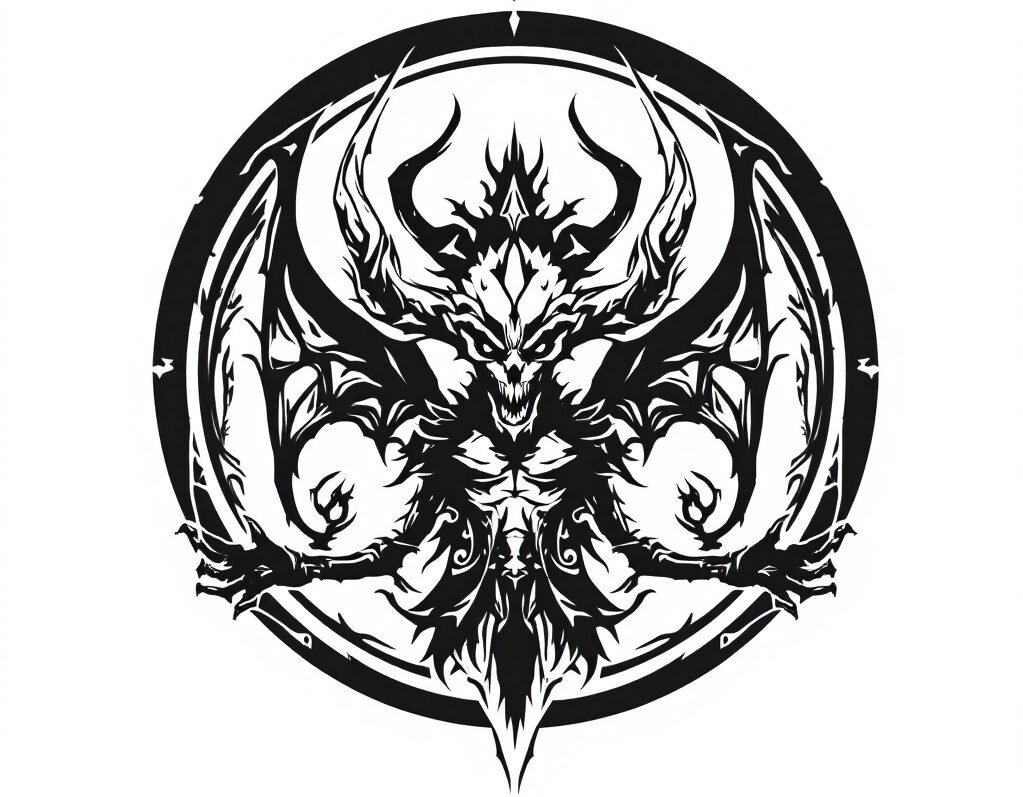
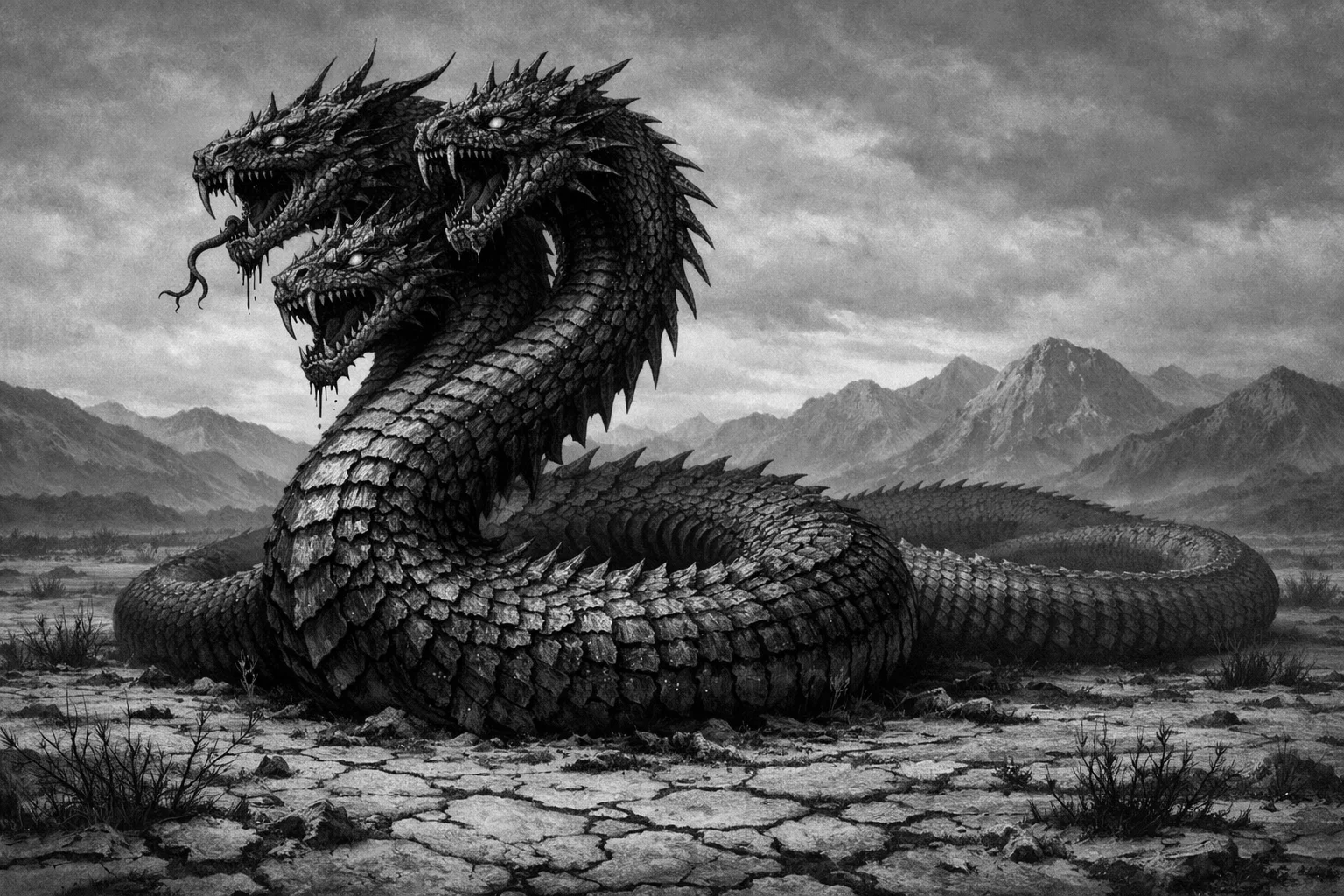

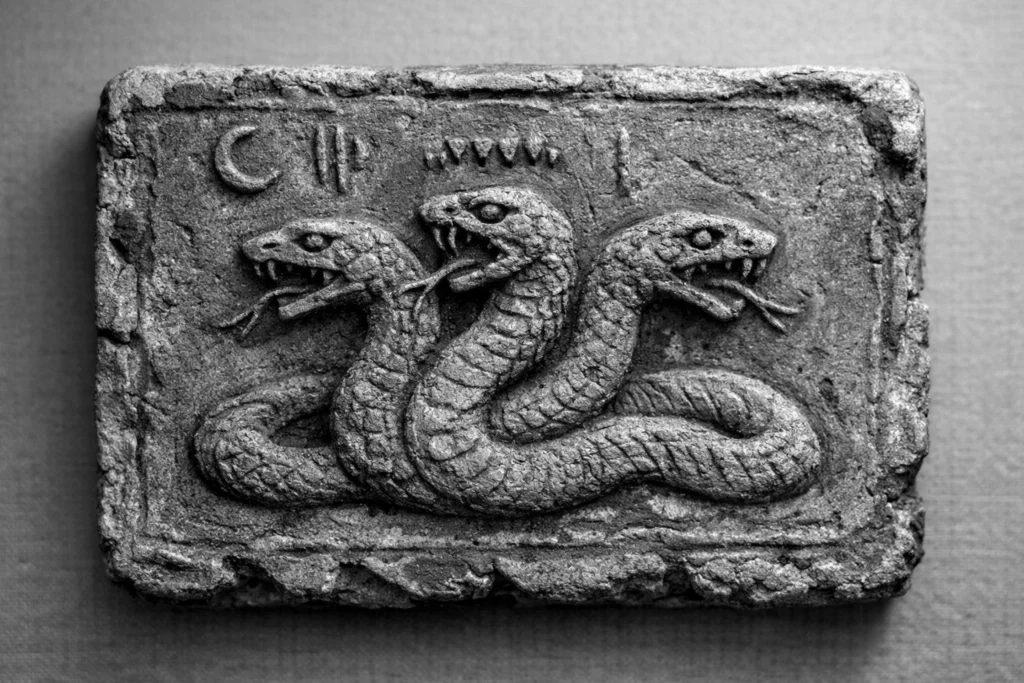
Azhi Dahaka is a powerful demon in Zoroastrianism. He is typically portrayed as a huge three-headed dragon or serpent. He was created by Ahriman (Angra Mainyu), who represents pure evil, to destroy the world of Asha, which stands for truth and order. The Avesta says he ruled as a tyrant for a thousand years until the hero Thraetaona defeated him.
In the Shahnameh, the Persian epic, Azhi Dahaka becomes Zahhak, an Arabian prince corrupted by Ahriman. In this story, two snakes grow from his shoulders and must be fed human brains each day. Whether shown as a dragon or a cruel ruler, Azhi Dahaka stands for deceit (Druj), greed, and the forces that fight against the creator Ahura Mazda.
Summary
Key Takeaways
| Attribute | Details |
| Names | Azhi Dahaka, Dahaka, Zahhak, Zohak, Bevar-Asp |
| Title | The Three-Headed Dragon, Lord of Deceit, King of the Thousand Senses |
| Origin | Ancient Iranian / Zoroastrian Mythology |
| Gender | Male |
| Genealogy | Created by Ahriman (Angra Mainyu) |
| Role | Cosmic adversary, agent of chaos, usurper king, bringer of drought |
| Associated Deity/Figure | Ahriman (Creator/Master), Thraetaona (Opponent), Kaveh the Blacksmith (Opponent) |
| Brings | Drought, famine, sin, lies, and the destruction of the animal kingdom |
| Weaknesses | Divine weapons of Thraetaona, confinement in Mount Damavand |
| Realm/Domain | The fortress of Bawri in Babylon (Kwirinta) |
| Weapon/Item | Venomous blood, snakes growing from shoulders (as Zahhak) |
| Symbolism | Evil, tyranny, drought, and the spiritual plague of Druj (Falsehood) |
| Sources | Avesta (Yasna, Yashts), Denkard, Bundahishn, Shahnameh |
Who or What is Azhi Dahaka?
Azhi Dahaka is a daeva (demon) of immense power and malice. Within the dualistic framework of Zoroastrian theology, he is the most formidable earthly lieutenant of Angra Mainyu. He has three mouths, three heads, and six eyes, possessing a thousand senses. His primary function is to diminish the prosperity of the world and to lead humanity away from the path of righteousness.
He is more than just a monster; he also takes power both politically and spiritually. Stories say he stole the Khvarenah (Divine Glory) from Yima (Jamshid), the first king, which started a thousand years of darkness. He is closely associated with drought and the loss of water, making him a main enemy to the ancient Iranians, who depended on farming and faith.
1,000+ SPIRITS, GODS & GODDESSES AWAITING YOUR CALL. Limited-Time: Up to 49% OFF!
The ultimate global spirit encyclopedia – 2,000+ entries from every culture on Earth. Fairies • Djinn • Demons • Loa • Angels • Deities • Ancestors Real names • True offerings • Ancient rituals that actually work. Judika Illes’ legendary masterwork – the one book every serious witch, mage, and spirit-worker owns.
Azhi Dahaka Meaning
The name Azhi Dahaka comes from the Avestan language. ‘Azhi’ means ‘serpent’ or ‘snake’ and is related to the Sanskrit word ‘Ahi.’ The meaning of ‘Dahaka’ is less certain. Some think it comes from a word meaning ‘to sting’ or ‘to burn,’ while others believe it means ‘man’ or ‘human,’ showing his mix of beast and evil ruler. In Middle Persian, the name changed to Dahak, and later to Zahhak in New Persian.
The etymological transition reflects the entity’s shift from a purely mythological dragon in the Gathas and Yashts to a human tyrant in later folklore. Despite this evolution, the name consistently retained its association with malevolence and biting.
When it comes to Bundahishn, he is sometimes referred to as Bevar-Asp, meaning “having ten thousand horses,” signifying his vast military might and the scale of his earthly dominion during his thousand-year reign.
How to Pronounce “Azhi Dahaka” in English
In English, Azhi Dahaka is usually pronounced as AH-zhee dah-HAH-kah. The ‘zh’ in Azhi sounds like the ‘s’ in ‘measure’ or ‘vision.’ The vowels are open and broad, like the ‘a’ in ‘father.’
Origins
Azhi Dahaka’s story begins with the ancient struggle between Ahura Mazda (Light) and Angra Mainyu (Darkness). Angra Mainyu created him to oppose the good world. He first appears in the Yashts of the Avesta, especially in prayers to the gods of water and wind.
In these early layers of myth, Azhi Dahaka is a supernatural monster inhabiting a fortress in Babylon. He is portrayed as an aspirant to divine power, famously offering sacrifices to Aredvi Sura Anahita (the goddess of waters) and Vayu (the god of wind), asking for the power to “make all the seven regions of the earth empty of men.”
The gods refused his requests because he was against the preservation of life. His rule marks a time when Asha (Truth) was hidden by Druj (Lie), leading to an age of suffering and environmental decline.
You may also enjoy:
Who Were the Hinn, the First Spirits of Creation?
November 12, 2025
Who Is Adrammelech in Demonology and the Bible?
October 1, 2025
Who Is Astaroth in Demonology and the Ars Goetia?
February 20, 2026
Amaymon: The Infernal King Who Commands Death and Decay
November 17, 2025
Apophis: The Great Serpent of Egyptian Chaos
November 11, 2025
What Is the Abumi-guchi Yōkai and Why Does It Wait Forever?
October 22, 2025
Genealogy
Azhi Dahaka does not have a normal family tree because he was created from evil. Later stories, especially in the Shahnameh, present him as having human ancestors corrupted by demons.
| Relationship | Details |
| Parents | Created by Angra Mainyu; in later myth, son of Mardas (a virtuous Arab king) |
| Siblings | None mentioned in primary theological texts |
| Spouse | Captured Savanghavach and Erenavach, the daughters of Yima |
| Children | None mentioned; his blood produces scorpions and venomous creatures |
Sources
Stories about Azhi Dahaka appear throughout Iranian literature, from the ancient Avesta to the Pahlavi texts and the epic Shahnameh.
| Source | Quote |
| Yasht 9.14 (Gosh Yasht) | “…Azhi Dahaka, the three-mouthed, the three-headed, the six-eyed, who has a thousand senses, that most powerful, fiendish Druj, that demon, baleful to the world…” |
| Yasht 5.34 (Aban Yasht) | “To her did Azhi Dahaka, the three-mouthed, offer up a sacrifice in the land of Bawri… he begged of her a boon, saying: ‘Grant me this, O good, most beneficent Aredvi Sura Anahita! that I may make all the seven regions of the earth empty of men.’” |
| Bundahishn 31.6 | “Dahak, whom they call Bevar-asp, was of the race of Taz… Angra Mainyu created him for the destruction of the world of righteousness.” |
What Does Azhi Dahaka Look Like?
In his earliest form, Azhi Dahaka is a huge serpent or dragon with three heads, three mouths, and six eyes. These features show his great power. His skin is covered in scales, and his body is filled with scorpions, lizards, and snakes instead of blood. If he were killed, these creatures would escape and spread across the world.
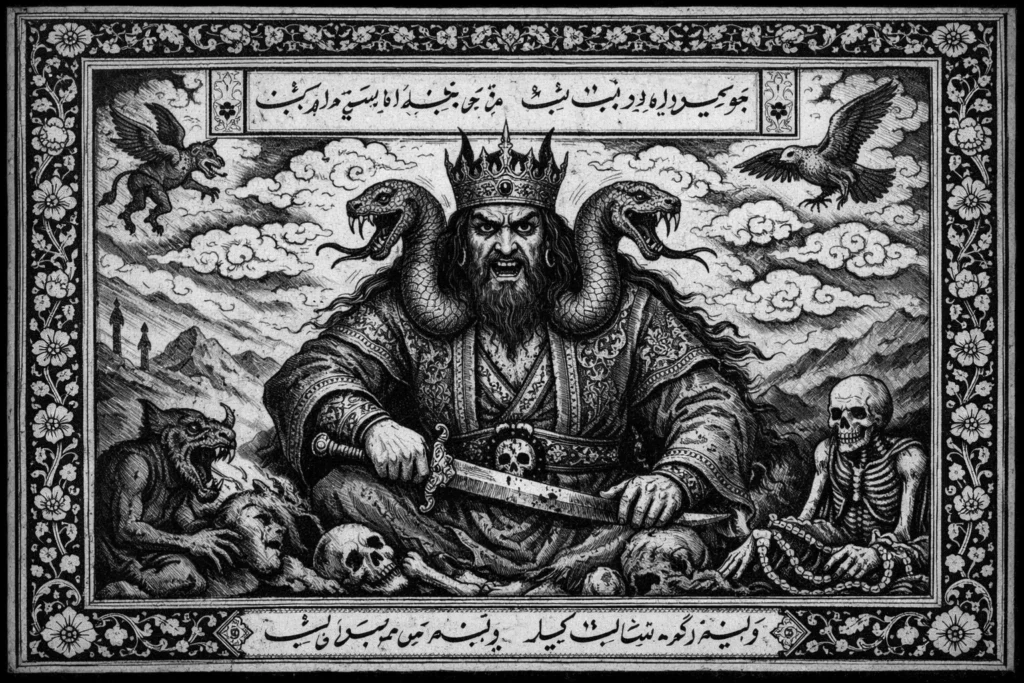
In later stories, Azhi Dahaka looks like a man but has two black snakes growing from his shoulders. These snakes appeared after Ahriman kissed him. They are alive and must be fed human brains every day, showing his role as a destroyer of human life and mind.
Enemies, Rivals, and Allies
Azhi Dahaka’s main ally and creator is Angra Mainyu (Ahriman), who made him the ‘strongest of the Druj.’ He works with other demons to upset the world.
His main enemy is the hero Thraetaona (Fereydun), chosen by the gods to stop the dragon. Thraetaona fought him with a bull-headed mace. Other enemies are Vayu, the god of wind, and Atar, the god of fire, who fought Azhi Dahaka to get back the Khvarenah (Divine Glory). In the final fight, Atar threatened to burn the dragon’s soul if he did not stop chasing the Light.
BREAK THE TOUGHEST DEMONIC BONDAGE! Limited-Time: Up to 41% OFF!
Real-life deliverance secrets from Apostle Alexander Chisango – straight from the front lines in Africa. Generational curses • Witchcraft • Sexual bondages • Addiction strongholds. Step-by-step keys that actually work when everything else has failed. Hundreds set free – your breakthrough starts here!

Connections to Other Ancient Demons
| Name | Genealogy | Type | Appearance |
| Apep | Egyptian | Chaos Serpent | Giant serpent of darkness |
| Tiamat | Babylonian | Primordial Chaos | Multi-headed dragon or sea serpent |
| Jörmungandr | Norse | World Serpent | Snake large enough to encircle Midgard |
| Lernaean Hydra | Greek | Water Monster | Multi-headed serpent with regenerative heads |
| Vritra | Vedic (Hindu) | Drought Demon | Colossal serpent or dragon |
| Illuyanka | Hittite | Storm Foe | Giant serpentine dragon |
| Lamashtu | Mesopotamian | Disease Demon | Lion head, donkey body, bird talons |
| Pazuzu | Mesopotamian | Underworld Demon | Humanoid with wings and a scorpion tail |
| Typhon | Greek | Storm Giant | Serpentine lower half, hundred dragon heads |
| Yam | Canaanite | Sea Deity/Demon | Multi-headed dragon or sea beast |
Azhi Dahaka Myths, Legends, and Stories
The Theft of the Divine Glory
When Yima (Jamshid) ruled, he became proud and left the path of truth. Because of this, the Khvarenah (Divine Glory) left him as a bird. Azhi Dahaka saw his chance and tried to take the Glory, hoping to use its power to rule the seven regions of the earth.
But Atar, the god of fire, also chased the Glory. They fought, and Atar threatened to burn the dragon. Azhi Dahaka did not receive all the Glory. Still, his actions broke the divine order, allowing him to take the throne and bring a thousand years of darkness and drought.
The Tyranny of Zahhak and the Blacksmith’s Apron
In the Shahnameh, Zahhak is a prince who kills his father to become king, aided by Ahriman in disguise. Ahriman later acts as a cook and gives Zahhak rich food to gain his trust. As a reward, Ahriman asks to kiss Zahhak’s shoulders. After the kiss, two snakes grow from those spots. These snakes could not be removed, as they grew back right away.
For years, Zahhak ruled by fear, ordering two young men to be killed each day to feed their brains to the snakes. This lasted until Kaveh, a blacksmith whose sons were taken, raised his leather apron as a flag of rebellion (Derafsh Kaviani). Kaveh then led the people to find the true heir, Fereydun (Thraetaona), who had been hidden away.
The Defeat and Binding at Mount Damavand
The hero Thraetaona, with help from the gods, faced Azhi Dahaka in his palace. He hit the dragon’s three heads with his bull-headed mace. But the gods warned him not to kill the beast, because if he did, the world would be filled with the venomous creatures that made up its blood.
Instead, Thraetaona chained the monster and locked him in a deep cave under Mount Damavand. People say Azhi Dahaka is still there, and his wild breathing causes the mountain’s volcanic activity.
Azhi Dahaka Powers and Abilities
Azhi Dahaka is extremely strong, both physically and magically. His main power is that he cannot be killed in the usual way, because his death would cause a disaster for the world. This makes him a ‘living prison’ for evil.
He has a thousand senses, so he can sense threats and movements everywhere. He is also a master of magic and can control the elements, especially by causing drought by stopping the rain:
- Environmental Manipulation: The ability to cause drought and famine by obstructing natural cycles.
- Venomous Blood: His internal fluids consist of thousands of scorpions and serpents.
- Immortality/Resilience: He cannot be killed without releasing a plague on the world.
- Triplicated Perception: Three heads and six eyes grant him enhanced sensory awareness.
- Spiritual Corruption: The power to spread the “Lie” (Druj) and turn men away from righteousness.
Rituals, Amulets, and Protective Practices
In ancient Iran, protecting against Azhi Dahaka meant guarding against evil and drought. People held rituals to honor Atar (Fire) and Aban (Water), since these were the dragon’s main natural enemies.
Incantations and Ceremonies
There are no known prayers to Azhi Dahaka, since he was seen as pure evil. But many prayers in the Yashts call on the gods who beat him. These prayers served as spoken charms to ward off the ‘Serpent’s’ influence:
“I confess myself a worshipper of Mazda, a follower of Zarathustra, one who hates the Daevas and obeys the laws of Ahura. For the defeat of the three-mouthed Azhi Dahaka, the most powerful Druj, I invoke the Khvarenah and the waters of Anahita.”
Amulets and Talismans
The most well-known talisman against Azhi Dahaka’s rule is the Derafsh Kaviani, or ‘Apron of Kaveh.’ Pictures of this leather banner were used in Persian history as signs of resistance against evil and unfair rulers.
Also, pictures of the hero Thraetaona fighting the dragon were later used as symbols to protect people from sickness and the ‘evil eye,’ which were believed to be small signs of the dragon’s evil.
You may also enjoy:
Who Is Agaliarept, the General of Hell Under Lucifer?
October 8, 2025
Azhi Dahaka: The Three-Headed Dragon of Zoroastrian Mythology
January 14, 2026
Pazuzu: The Demon Who Fought Evil with Evil
November 4, 2025
The Kumbhanda: Grotesque Demons of Buddhist Hell
November 13, 2025
Aim (Aym): The Great Duke of Hell in the Ars Goetia
November 11, 2025
Who Is the Demon Baphomet and What Does It Represent?
March 2, 2026
Frequently Asked Questions
What is Azhi Dahaka’s role in the end of the world (Frashokereti)?
Zoroastrian beliefs hold that Azhi Dahaka will break free from Mount Damavand at the end of time to attack the world once more. He is said to destroy one-third of all people, animals, and plants. In the end, the hero Keresaspa will return and kill the dragon with one blow, ending his evil before the world is renewed.
How did Azhi Dahaka die in Persian mythology?
In the earliest texts, Azhi Dahaka does not die when he first fights Thraetaona. Since his body is full of venomous creatures, killing him would poison the world. So, he is chained and locked inside Mount Damavand. He only dies at the end of time, when the hero Keresaspa kills him.
Is Azhi Dahaka a real historical monster or purely a myth?
Azhi Dahaka is a myth, but some historians think the story may represent foreign invaders or cruel rulers. In the Shahnameh, he is portrayed as an Arab king who seized the Persian throne. Researchers see this as a memory of old invasions, turned into a legend over time.
What is the difference between Azhi Dahaka and Zahhak?
The main difference is in their form and stories. Azhi Dahaka is the original Zoroastrian version, a real three-headed dragon made by Ahriman. Zahhak is the human version from the Shahnameh, aking with two snakes on his shoulders. The first is a monster, while the second shows how a man can be corrupted by power and evil.
Does Azhi Dahaka have any biological children?
In the main Zoroastrian beliefs, Azhi Dahaka has no children because he is a force of destruction. But his ‘blood’ is said to have created venomous creatures such as lizards, scorpions, and snakes. Some later stories say he had monster children, but these are not found in the main scriptures.
What does the “thousand senses” of Azhi Dahaka mean?
The Avesta says Azhi Dahaka has ‘ten thousand horses’ and a thousand senses. This means he is almost all-knowing and very aware. He cannot be surprised and is much smarter than any animal, making him a ‘master of deceits’ and a powerful sorcerer who can sense danger from anywhere.
